Shape identification Math Worksheets for Ages 6-7 - Page 2
31 filtered results
-
From - To
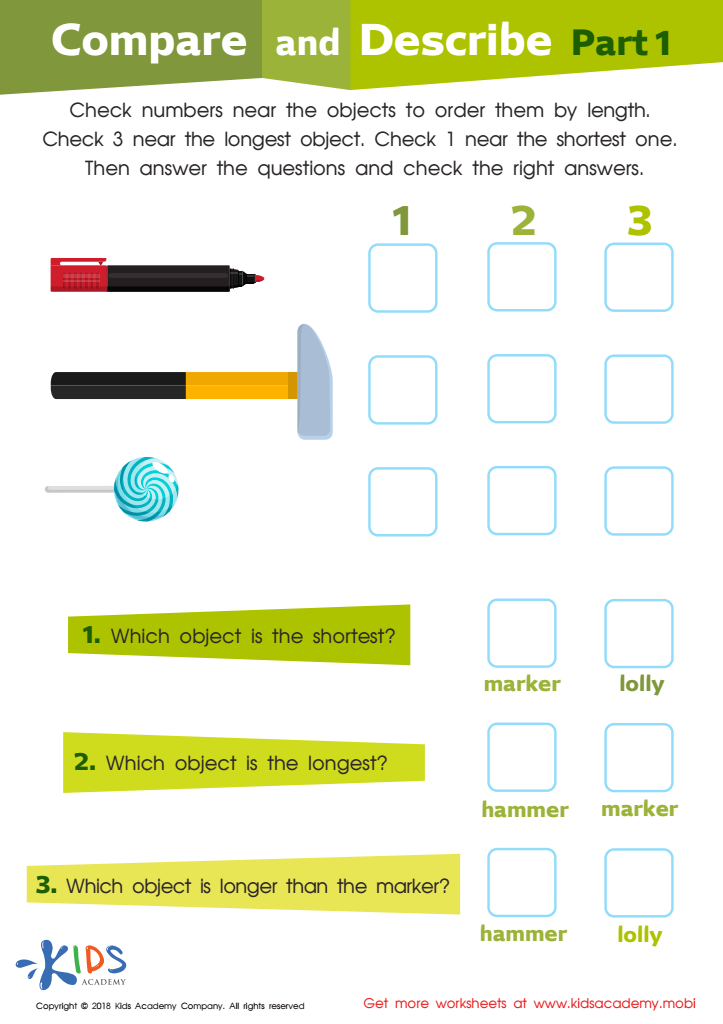
Compare and Describe: Part 1 Worksheet
 Assign to My Students
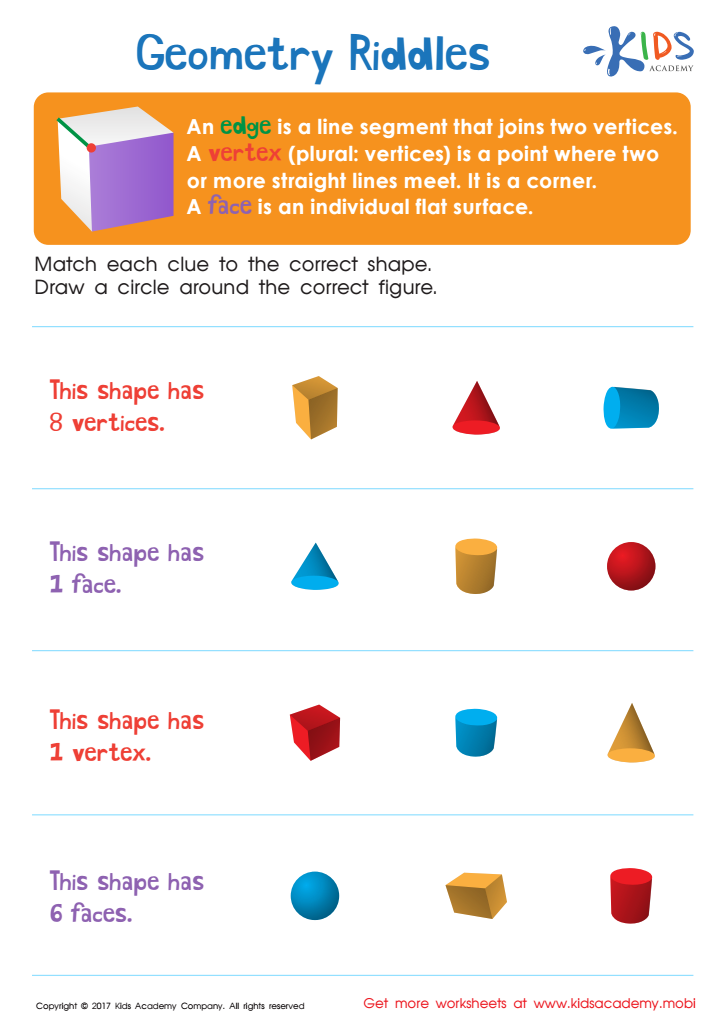
Geometry Riddles Printable
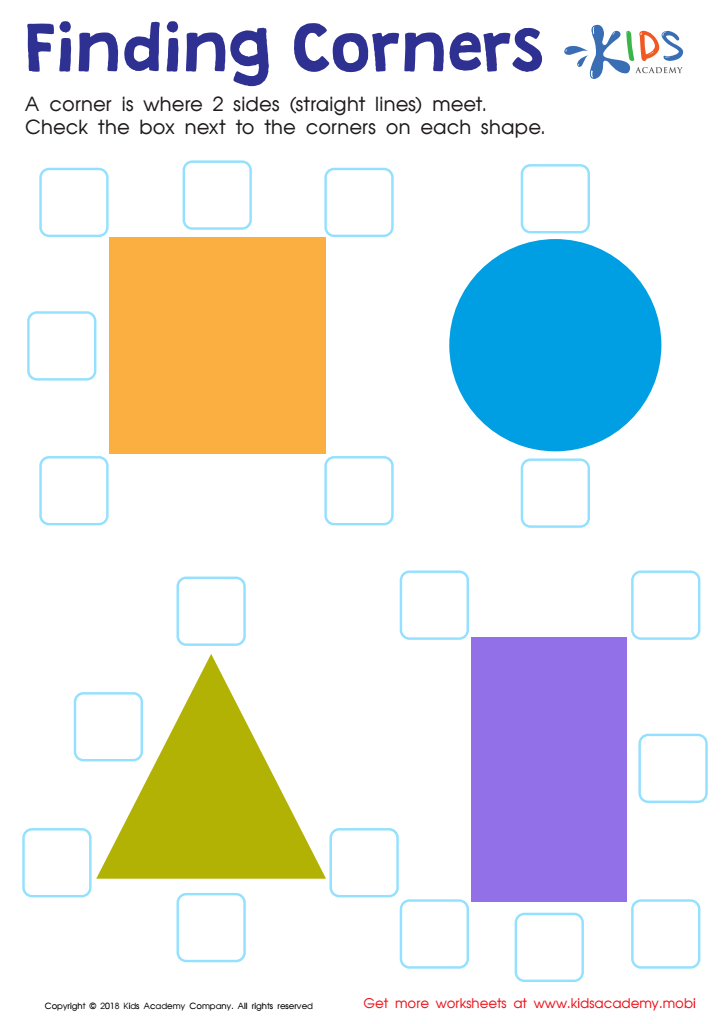
Finding Corners Worksheet
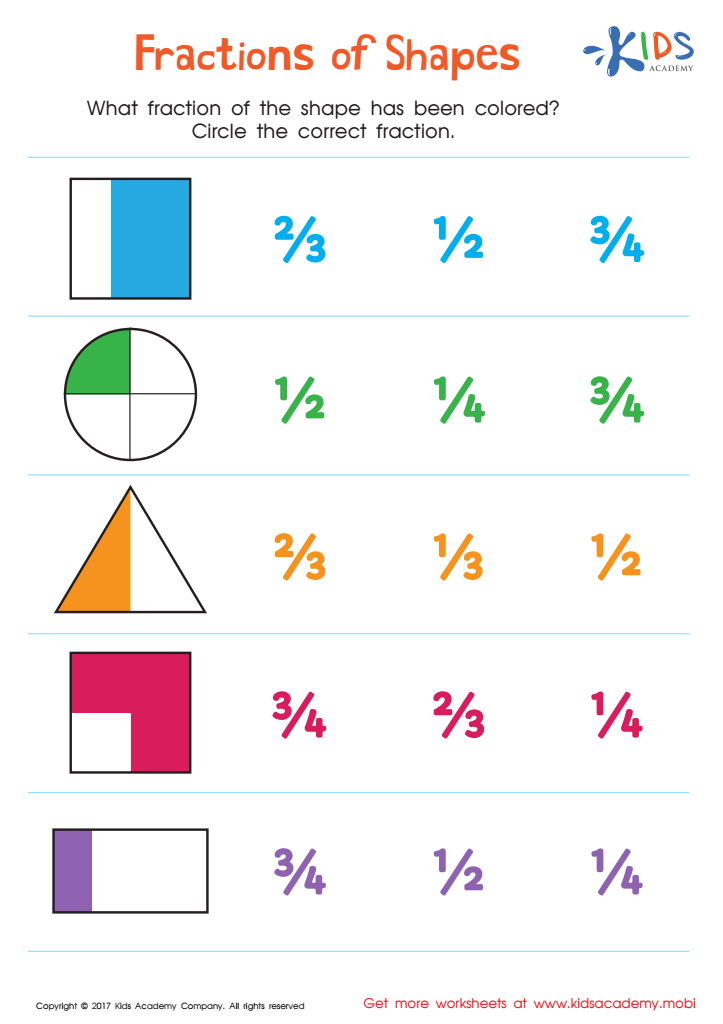
Fractions of Shapes: Math Concept Worksheet
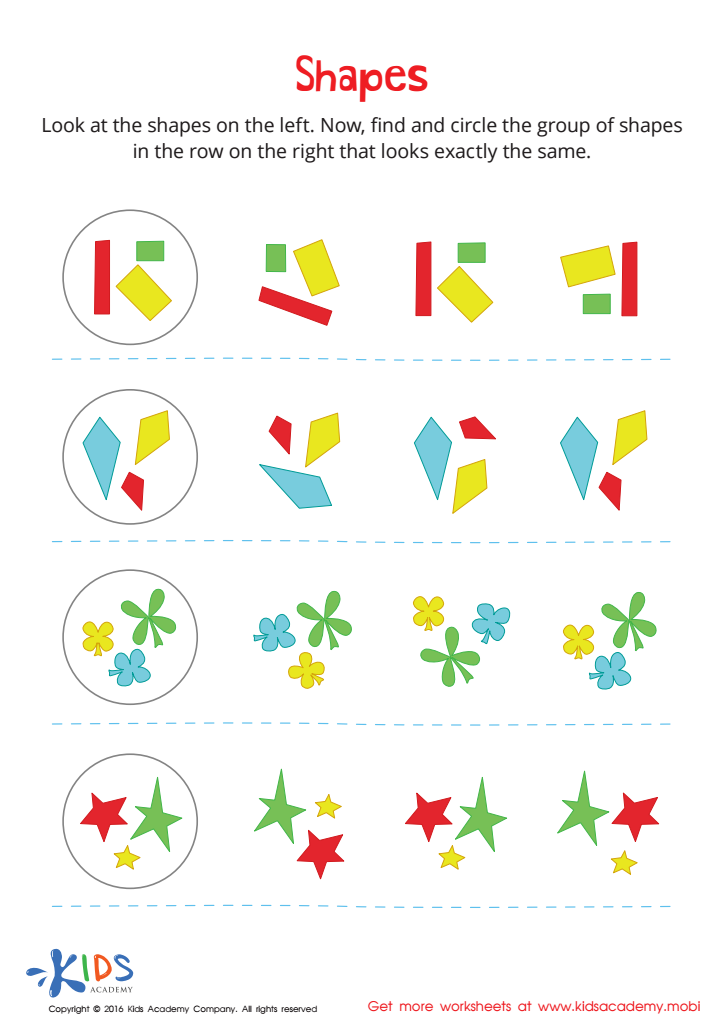
Shapes Worksheet


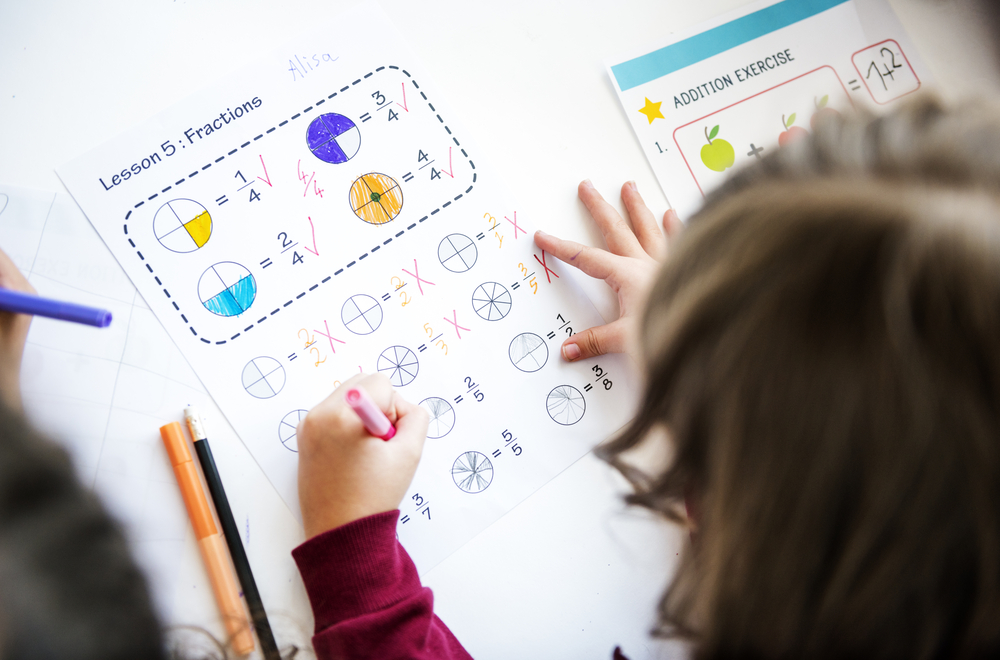



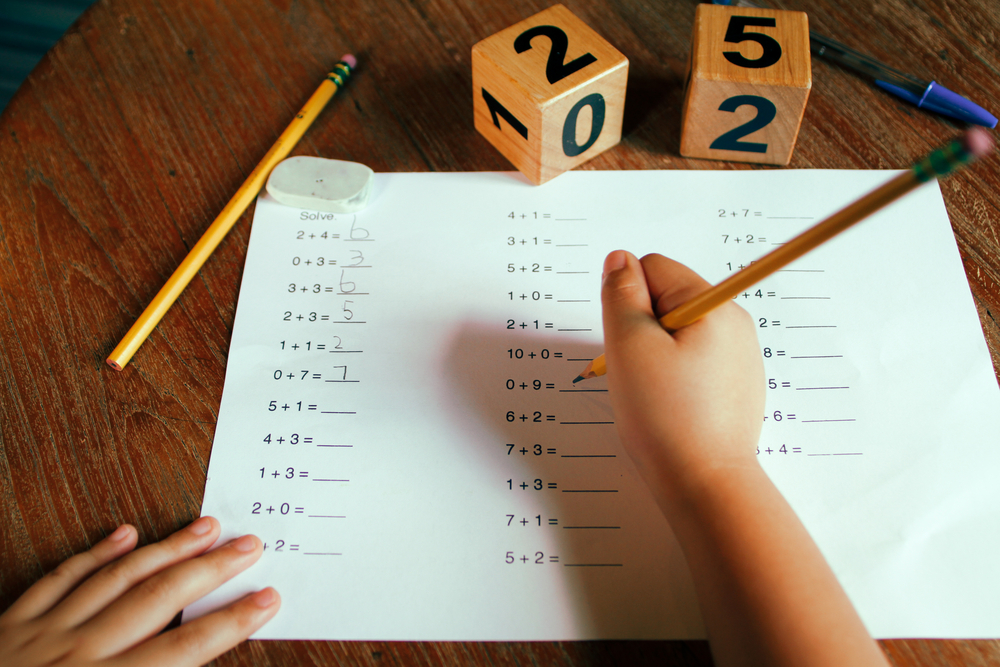

Shape identification is a crucial aspect of early mathematics education for children aged 6-7. At this developmental stage, children are not only refining their cognitive skills but also their ability to understand the world around them. Learning to identify shapes helps build the foundation for more complex mathematical concepts, such as geometry, spatial reasoning, and measurement.
Parents and teachers should care about shape identification because it fosters critical thinking and problem-solving skills. Recognizing and categorizing shapes boosts visual perception, encourages logical reasoning, and enhances fine motor skills during activities like drawing or crafting. Additionally, understanding shapes plays a significant role in developing language skills; children learn to describe their environment and communicate ideas effectively.
Incorporating shape identification into fun and relatable activities can spark a child’s interest in math and make learning enjoyable. Improved shape recognition can also enhance a child’s academic performance across multiple subjects as they gain confidence and competence in understanding patterns and relationships.
Ultimately, focusing on shape identification lays the groundwork for lifelong learning, helping children become more proficient thinkers, innovators, and active participants in their education. Therefore, parents and teachers should prioritize this vital area of learning in their child's formative years.








