Understanding more/less concept Math Worksheets for Ages 6-7
3 filtered results
-
From - To
Welcome to our "Understanding More/Less Concept Math Worksheets" page designed for children ages 6-7! Our engaging worksheets help young learners grasp essential mathematical concepts like greater than and less than through fun, age-appropriate activities. These interactive exercises promote critical thinking and number sense while encouraging kids to compare quantities and develop their problem-solving skills. With colorful visuals and relatable examples, students will explore the more/less concept in a stimulating and enjoyable way. Perfect for classroom use or at-home learning, our worksheets make math fun and accessible, fostering a solid foundation for future mathematical success! Start your child's learning journey today!
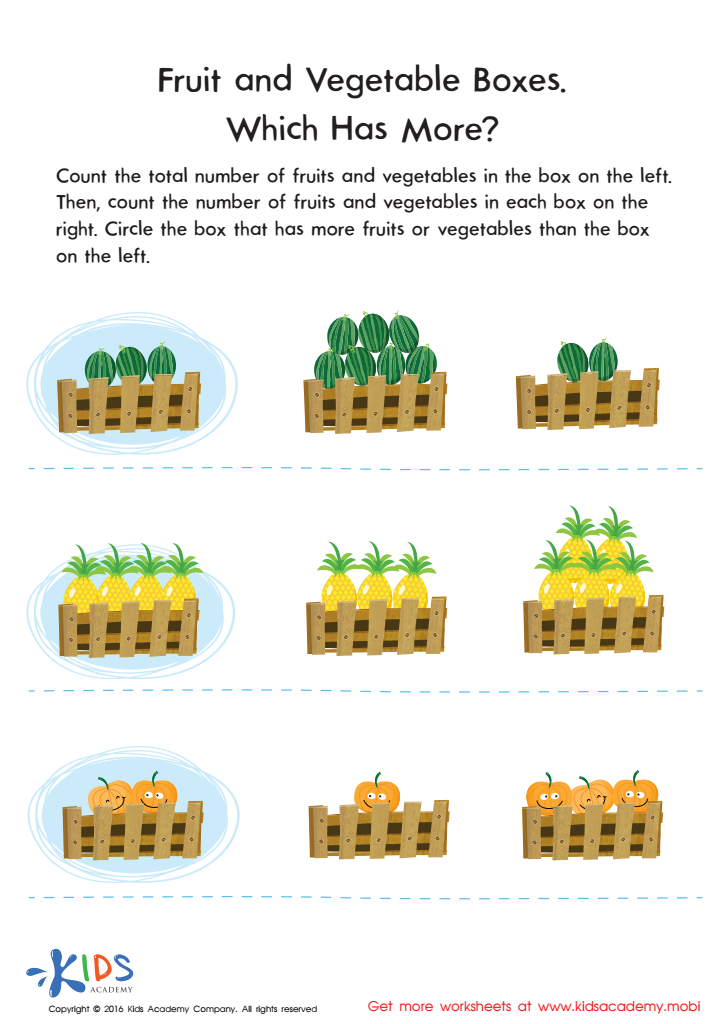
Which Has More? Size Worksheet
 Assign to My Students
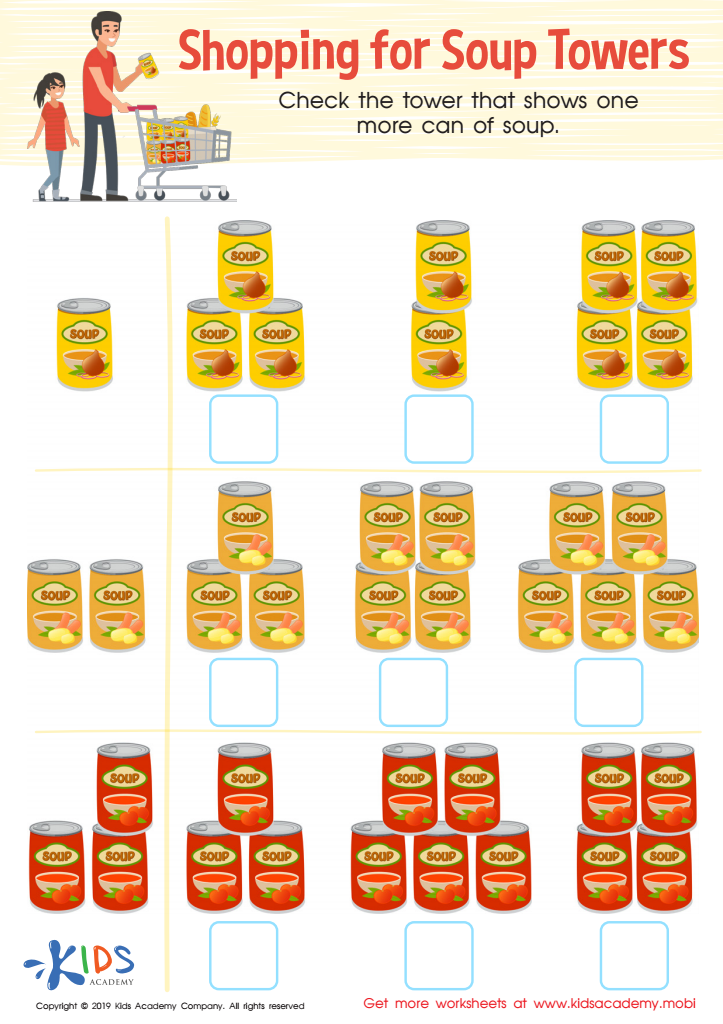
Soup Towers Worksheet
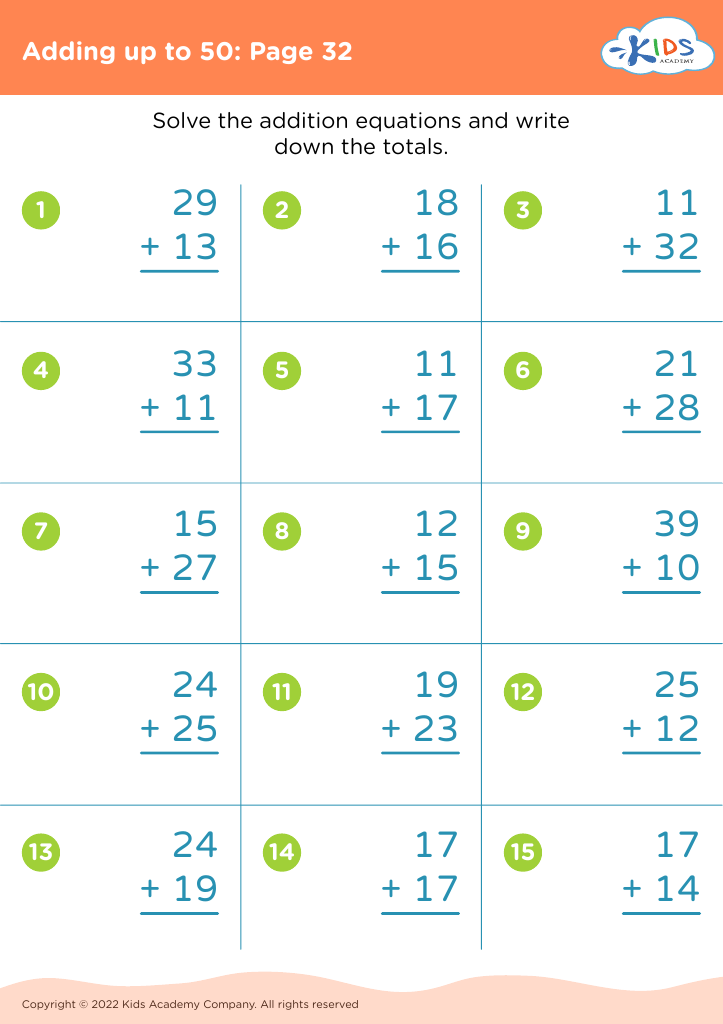







Understanding the concepts of "more" and "less" is fundamental for children aged 6-7 as it serves as a building block for their early math skills. At this age, children are developing critical thinking and problem-solving abilities, which are essential for their future mathematical learning. Grasping the concepts of more and less helps them engage with basic arithmetic and enhances their number sense, allowing them to compare quantities and make decisions based on numerical context.
Moreover, these concepts help children in everyday situations, such as understanding how much candy they have compared to friends or how to serve themselves food. This practical application reinforces their learning and fosters independence.
In an educational setting, proficiency in more and less enriches classroom activities, enabling teachers to create engaging lessons that draw from real-world examples. For parents, encouraging discussions about these concepts during home activities, like shopping or cooking, can further strengthen their child's understanding.
By prioritizing these foundational concepts, both parents and teachers play a crucial role in setting children up for success in math, paving the way for later competencies such as addition, subtraction, and even more advanced mathematical ideas. This proactive engagement ensures children develop a positive attitude toward math at an early age.








