Visual discrimination skills Math Worksheets for Ages 6-7
3 filtered results
-
From - To
Boost your child's math and observation skills with our Visual Discrimination Skills Math Worksheets for ages 6-7. These expertly designed worksheets focus on enhancing a child's ability to differentiate between numbers, shapes, and patterns, essential for early math success. Each engaging activity promotes concentration and critical thinking through visual comparison exercises, ensuring fun while learning. Perfect for in-class or at-home practice, these worksheets support the development of foundational math skills in a playful and effective manner. Download now to help your child build confidence and excel in math with ease.
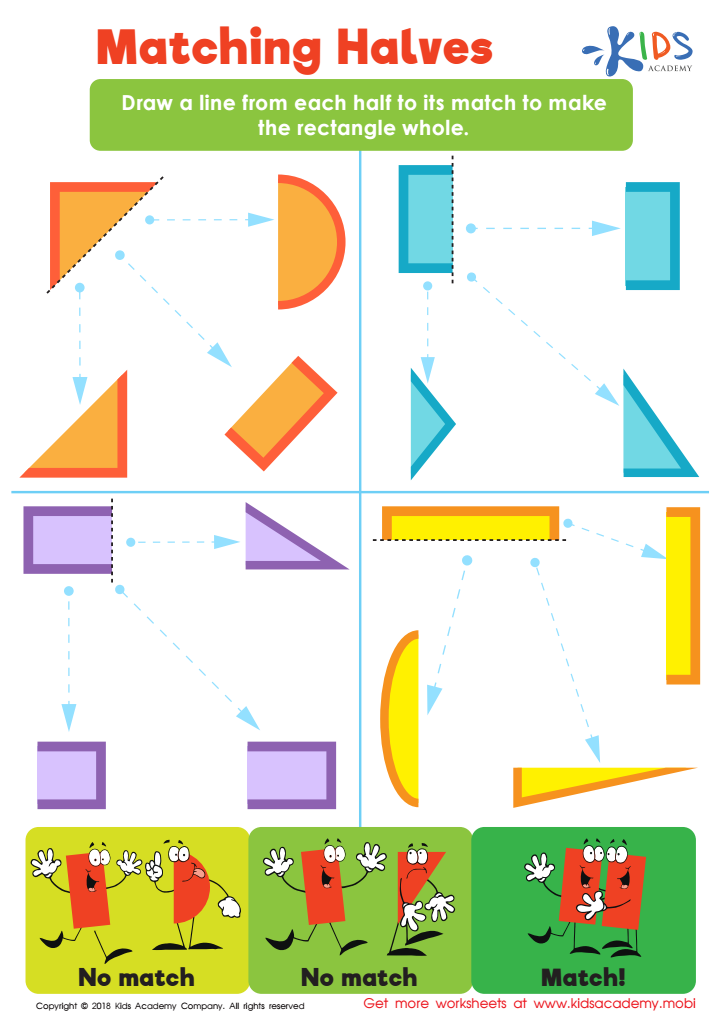
Matching Halves Worksheet
 Assign to My Students
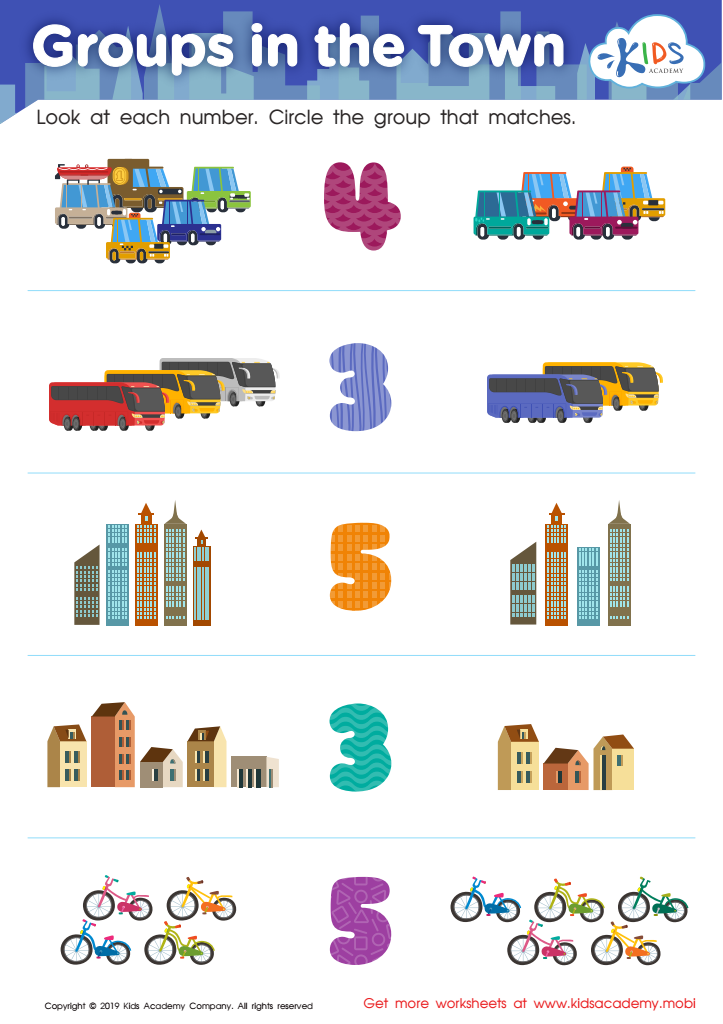
Groups in the Town Worksheet








Visual discrimination skills are crucial for children aged 6-7, especially in math, because they form the foundation for understanding more complex mathematical concepts. These skills enable children to recognize and interpret different shapes, numbers, symbols, and patterns accurately. For young learners, distinguishing between similar-looking numbers, like 6 and 9 or 2 and 5, as well as recognizing basic geometric shapes, is essential for performing arithmetic operations correctly.
Furthermore, visual discrimination aids in comprehending and solving word problems that involve visual components, such as diagrams and charts. When children can effectively discriminate visual information, they are less likely to make errors stemming from misidentifying numbers or symbols, leading to greater accuracy and confidence in their math work.
Parents and teachers should prioritize these skills because they influence a child’s ability to grasp fundamental math concepts and develop strong problem-solving skills. Activities like matching games, sorting exercises, and interactive math games that emphasize visual elements can enhance these skills. By fostering strong visual discrimination abilities, parents and teachers not only help children excel in math but also support overall cognitive development, aiding in lifelong learning and application beyond the classroom.








