Visual fraction representation Math Worksheets for Ages 6-7
3 filtered results
-
From - To
Discover engaging ""Visual Fraction Representation Math Worksheets"" ideal for kids aged 6-7! Unlock the magic of fractions with visually stimulating exercises that make learning fun and easy. These worksheets utilize vibrant images to help young learners grasp complex concepts like halves, thirds, and quarters. Tailored to boost mathematical comprehension, these worksheets are perfect for hands-on practice both in the classroom and at home. Lay a solid foundation for your child's math skills through interactive activities that encourage curiosity and analytical thinking. Start your child’s fraction learning journey with our expertly designed resources!
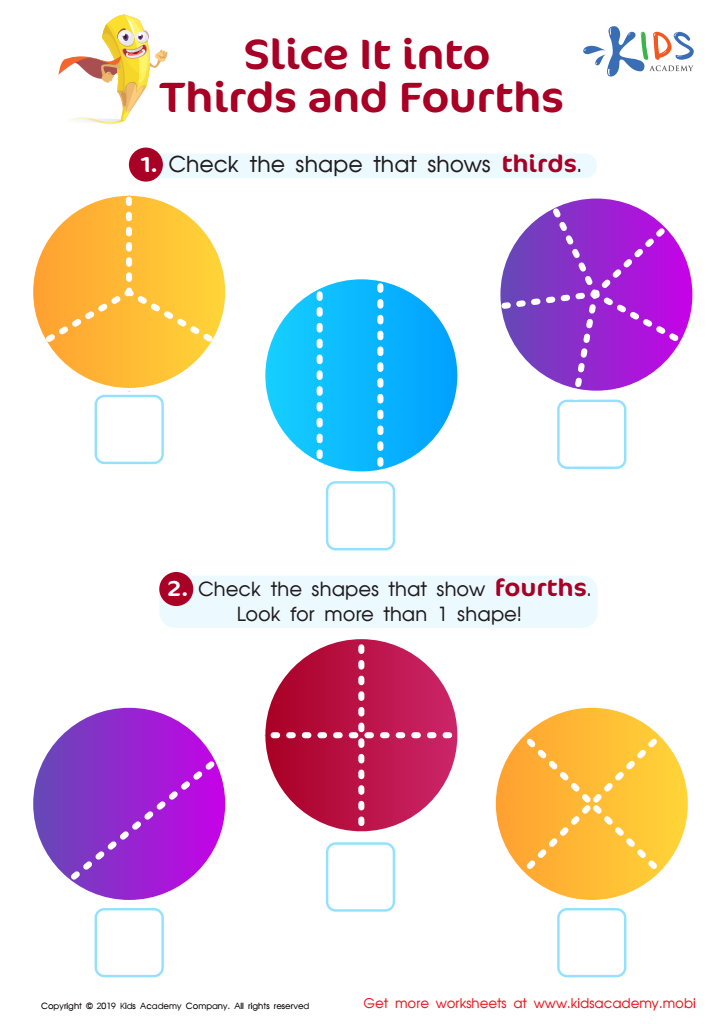
Slice in Thirds Fourths Worksheet
 Assign to My Students
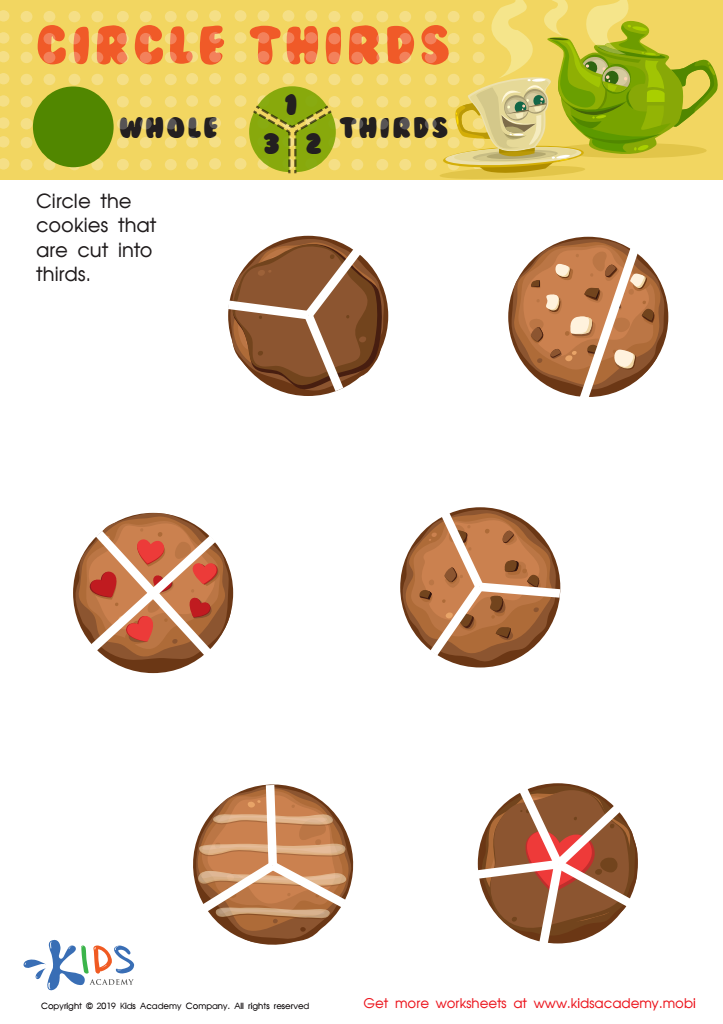
Circle Thirds Worksheet







Visual fraction representation for children aged 6-7 is crucial in laying a strong foundation for their mathematical understanding. At this age, kids are typically in the early stages of developing number sense and spatial awareness, key skills that visual representations can effectively target.
Firstly, visual fractions provide a concrete way for young learners to grasp abstract concepts. Instead of just hearing that a fraction like 1/2 represents one part of a whole cut into two equal parts, students can see it. They might see a pie chart divided into two equal slices, immediately grasping that each slice is half of the whole pie.
This visual aid is especially helpful in differentiating between numerator and denominator, terms that can be mystifying when presented only in numerical form. For example, showing 3/4 with a shaded bar where 3 parts out of 4 are colored provides an intuitive understanding.
Using visual representation also aids in connecting math to real-life contexts, making the subject more engaging and less intimidating. By interacting with visual fractions, kids are more likely to retain information, fostering long-term academic success. Moreover, this early exposure builds a strong foundation for more complex mathematical concepts they will encounter in later grades.
Parents and teachers should prioritize visual fraction representation to inculate a deep, intuitive understanding and love for math.








