
Mathematical reasoning Measurement Worksheets for Ages 6-7
4 filtered results
Difficulty Level
Grade
Age
-
From - To
Subject
Activity
Standards
Discover our engaging Mathematical Reasoning Measurement Worksheets tailored for children aged 6-7! These thoughtfully designed worksheets help young learners develop essential math skills, including comparing lengths, understanding weight, and grasping volume. Each activity is aligned with educational standards to ensure a comprehensive learning experience. With colorful visuals and relatable scenarios, children will gain confidence in tackling measurement concepts. Our worksheets promote critical thinking by encouraging students to solve problems using real-world contexts. Perfect for classroom use or at-home practice, these resources make learning measurement enjoyable and effective. Visit our site to enhance your child's mathematical reasoning today!
Favorites
With answer key
Interactive
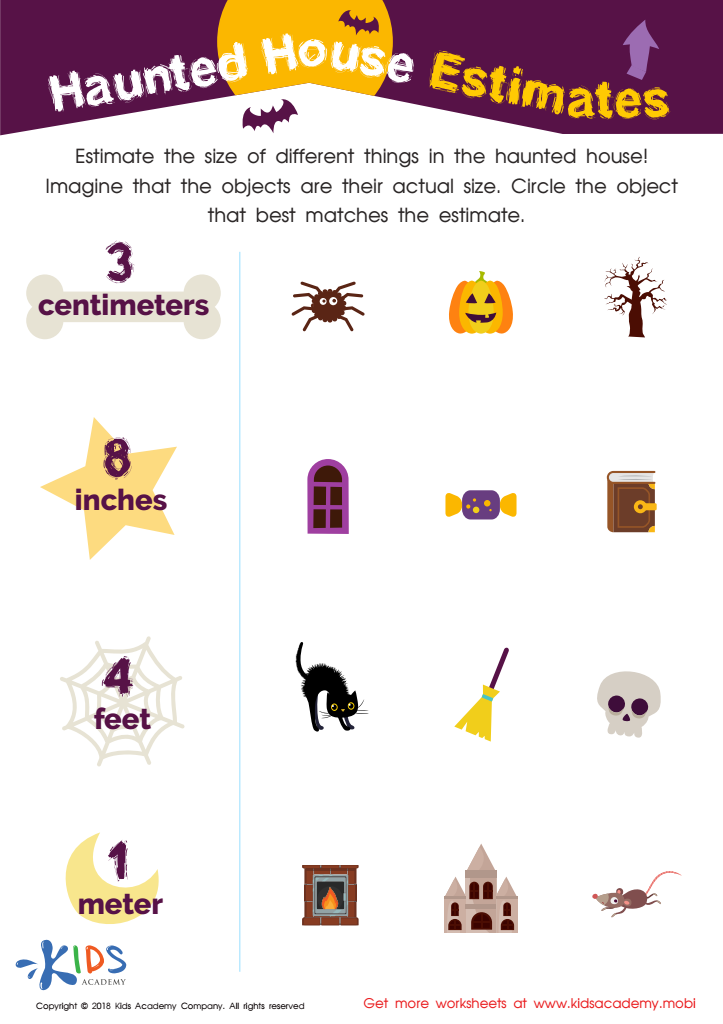
Haunted House Estimates Worksheet
Enliven your kid's learning with this printable worksheet! Have them estimate the size of objects and creatures in a haunted house, then circle the ones that match their estimates. They'll need to understand different measuring units beforehand. It's an exciting way to learn!
 Assign to My Students
Haunted House Estimates Worksheet
Worksheet
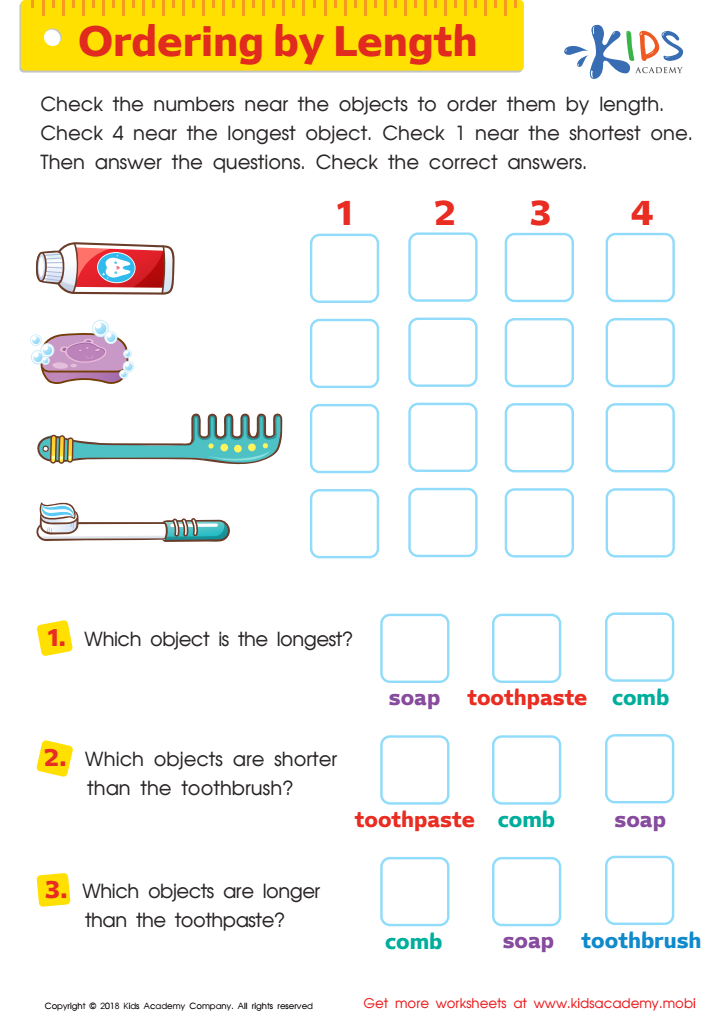
Ordering by Length Worksheet
Compare objects to learn about measurement! Before purchasing a ruler, get kids to understand length by comparing objects and labeling them as longer or shorter than others. Use this printable math worksheet to help children think about measurement. It will show pictures of objects and ask children to categorize them by length.
Ordering by Length Worksheet
Worksheet
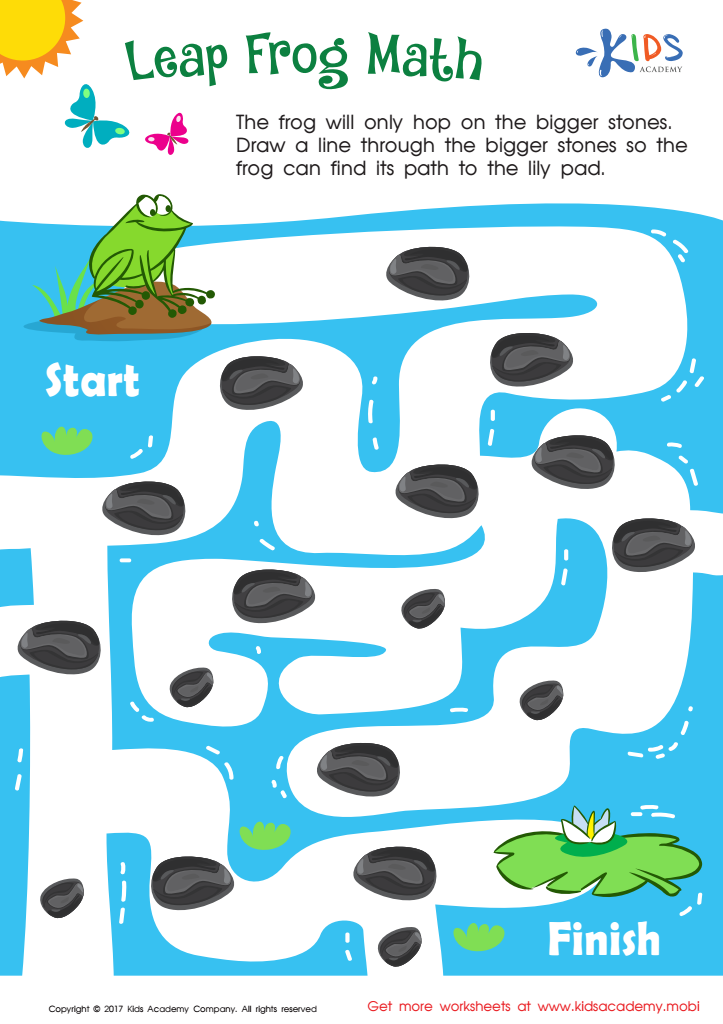
Math Puzzle Worksheet
Kids will use their math skills to help the frog get through the maze by selecting the larger stones. Perfect for kindergarteners, it develops the ability to identify size differences.
Math Puzzle Worksheet
Worksheet
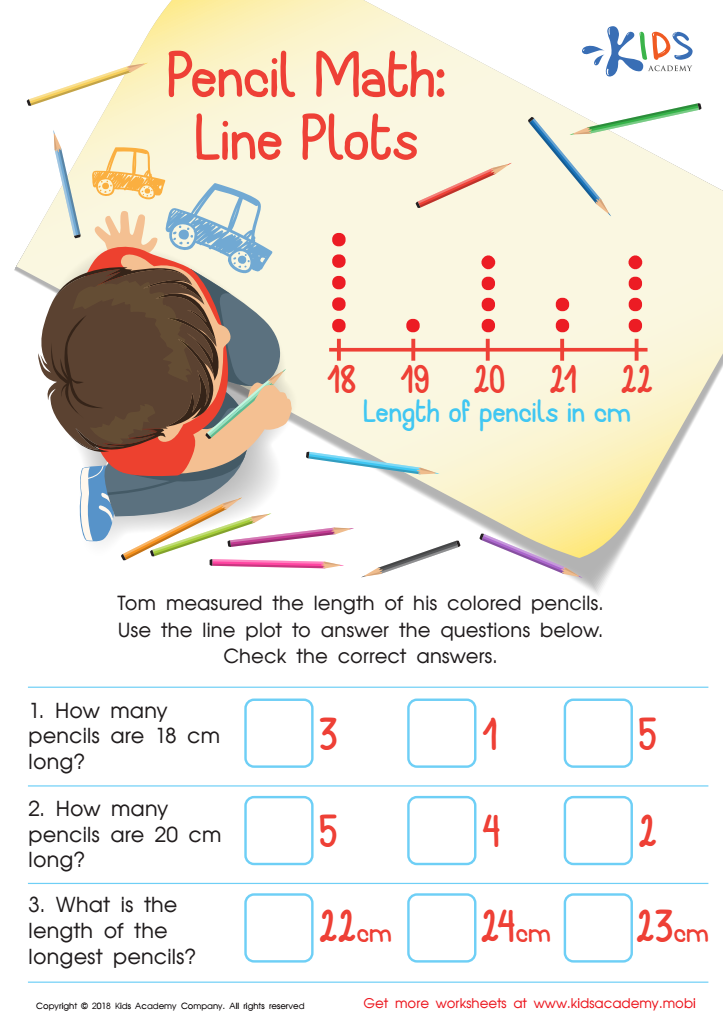
Pencil Math: Line Plots Worksheet
Your child will meet Tom in this worksheet, helping him find the length of his colored pencils. Tom has written the lengths in cm, and the line plot will help your kids answer the questions. Check the correct answers for each, including how many pencils are of a certain length. The line plot makes it easy to find the answers.
Pencil Math: Line Plots Worksheet
Worksheet
Join Kids Academy for Free
Who is primarily going to use this learning content?








Mathematical reasoning and measurement are essential components of early childhood education, especially for children aged 6-7. During this developmental stage, children begin to make sense of the world around them, and mathematical reasoning helps them think critically and solve problems. Understanding measurement fosters this reasoning by introducing concepts such as length, weight, and volume, which are tangible and relatable to children’s everyday experiences.
By improving their measurement skills, children learn to compare, contrast, and categorize objects, enhancing their analytical abilities. This foundational knowledge supports not only their mathematics skills but also their comprehension in science and various applied subjects.
Moreover, engaging with measurement activities helps children develop spatial awareness, a critical skill for future learning in geometry and even advanced mathematics. Encouraging discussions about measurement allows children to articulate their thoughts, enhancing their communication skills while building confidence.
Parents and teachers play a pivotal role in nurturing these skills. They can create engaging, real-life measurement tasks during activities, such as cooking or gardening, illustrating the relevance of mathematics in everyday life. Consequently, by fostering an early love for measurement, parents and teachers set the stage for a strong mathematical foundation that benefits children's long-term academic success.








