Reading comprehension Multiplication Worksheets for Ages 6-7
3 filtered results
-
From - To
Welcome to our Reading Comprehension Multiplication Worksheets for Ages 6-7! Designed to enhance early math skills while improving reading comprehension, these engaging worksheets provide a fun way for young learners to integrate critical thinking with multiplication concepts. Children will solve multiplication problems embedded in relatable stories and scenarios, encouraging them to read carefully and extract important information. Our resources promote both numerical understanding and literacy development, helping kids build confidence in problem-solving. Perfect for use at home or in the classroom, these worksheets create an interactive learning experience that lays a strong foundation for future academic success. Explore our collection today!
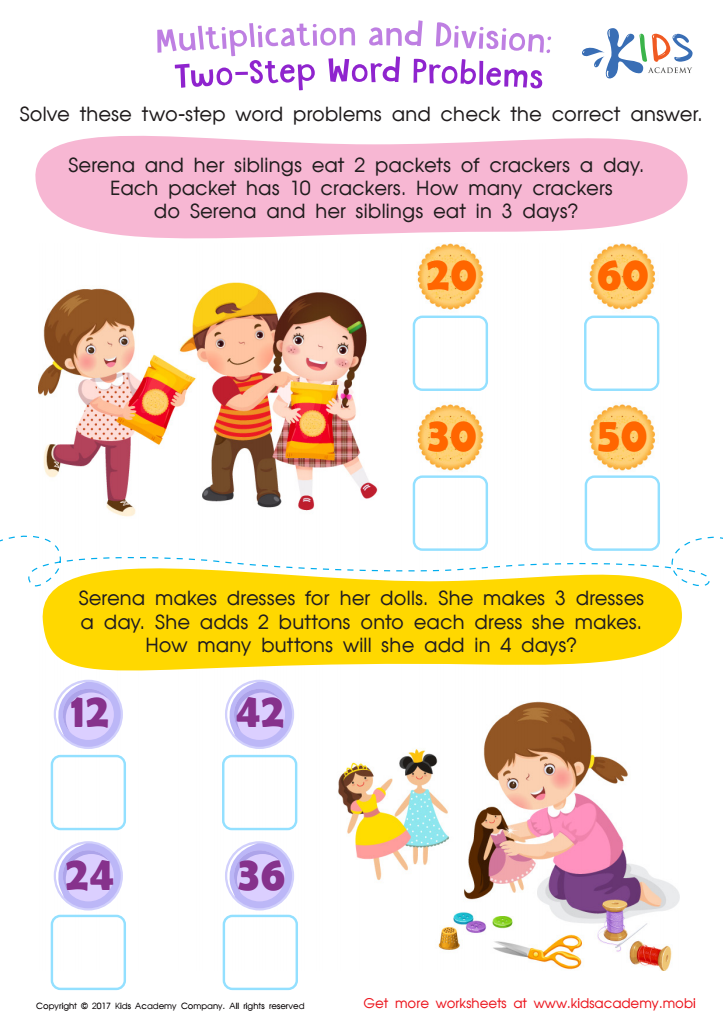
Two Step Word Problems Worksheet
 Assign to My Students
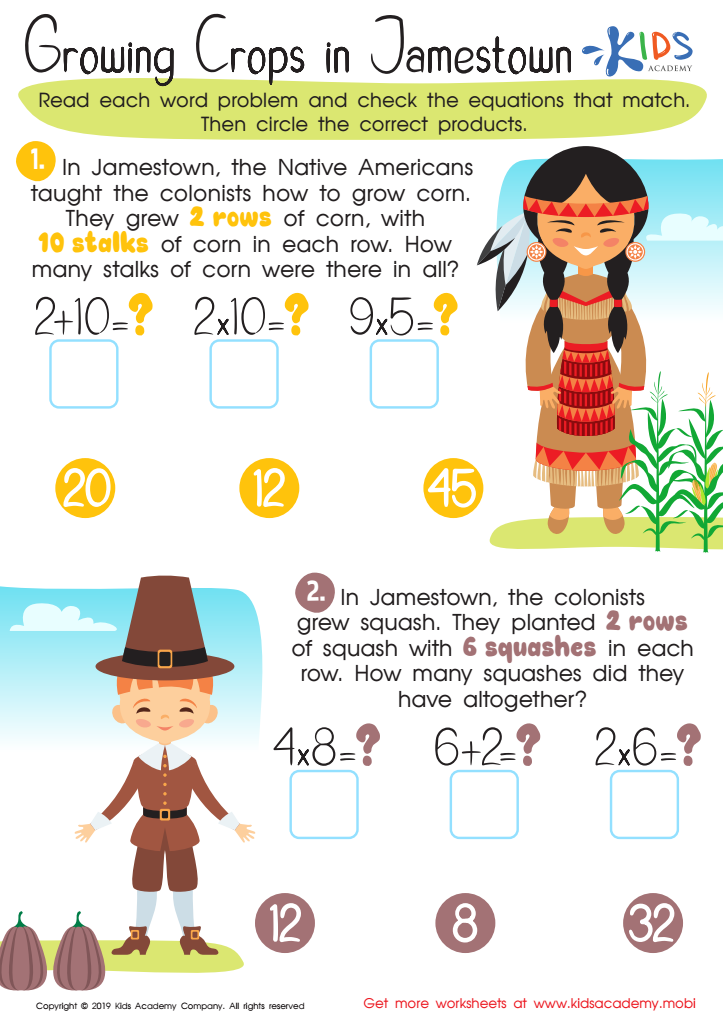
Growing Jamestown Worksheet
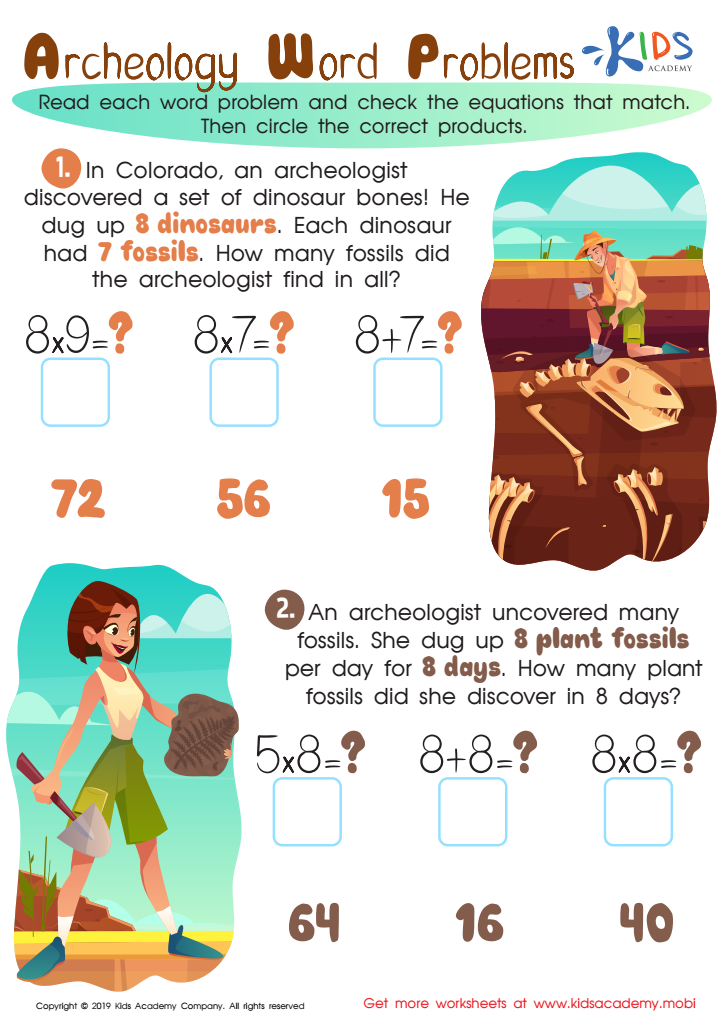
Archeology Word Problems Worksheet








Reading comprehension and multiplication are fundamental skills for children aged 6-7, serving as building blocks for future academic success. At this age, children are transitioning from learning to read to reading to learn. Strong reading comprehension allows them to understand and analyze information, which is essential not just in literacy but across all subjects, including math. When children can comprehend math-related texts, they can better grasp concepts, follow problem-solving steps, and apply skills in real-world scenarios.
Multiplication, on the other hand, is a critical mathematical operation that lays the groundwork for more advanced math topics, such as division, fractions, and algebra. Understanding multiplication helps children develop cognitive skills, such as pattern recognition and critical thinking, which are vital across disciplines. Learning multiplication through reading can enhance their vocabulary in math, enabling students to understand terms and problem statements better.
Moreover, when parents and teachers focus on these skills together, they create an enriching environment that fosters a love for learning. By integrating reading comprehension with multiplication practice, educators can create engaging lessons that inspire curiosity and confidence in children, encouraging lifelong learning and academic achievement. Prioritizing these skills is essential for preparing young learners for future challenges.








