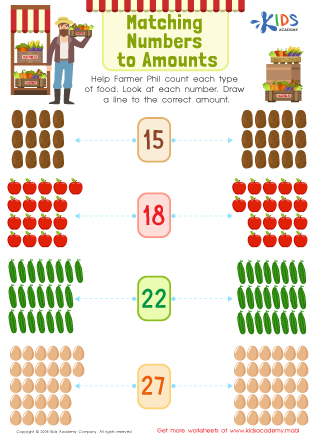
Understanding patterns Numbers 0–10 Worksheets for Ages 6-7
3 filtered results
-
From - To
Discover engaging "Understanding Patterns: Numbers 0–10" worksheets tailored for ages 6-7. Designed to captivate young learners, these printables develop key skills like number recognition, sequencing, and pattern formation. Through colorful and interactive exercises, children enhance their mathematical foundational understanding. Perfect for classroom settings or at-home practice, these worksheets cater to diverse learning styles, ensuring every child grasps early numeracy concepts. Foster a love for math with fun, educational activities that boost confidence and competence in numbers. Ideal for teachers and parents seeking comprehensive resources to support early grade math education. Start building strong math skills today!
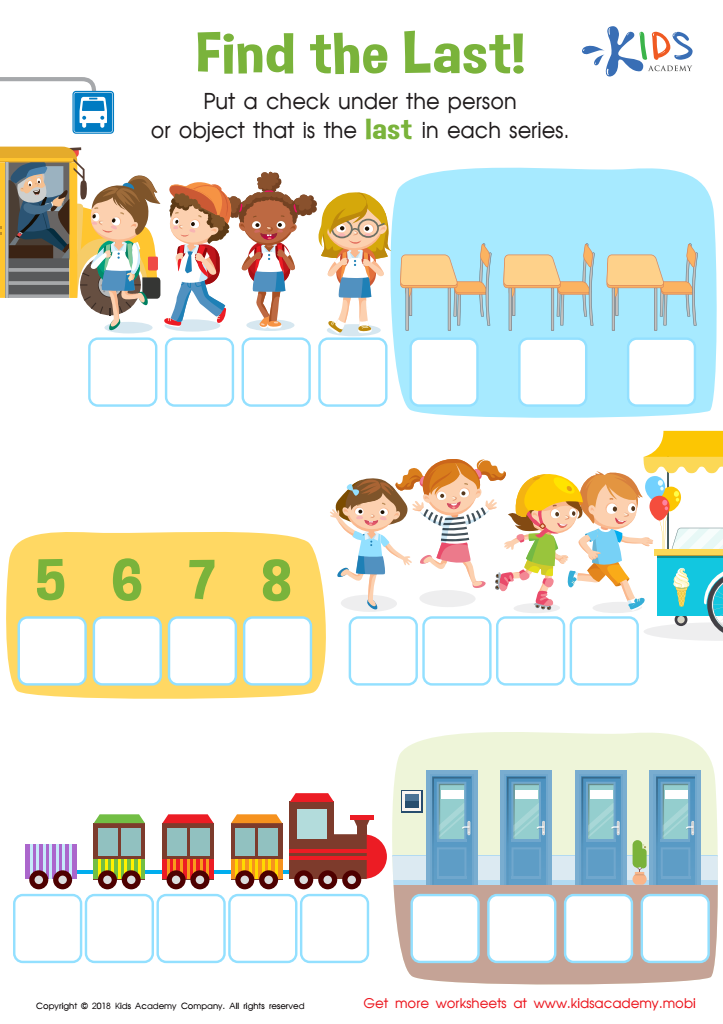
Find the Last! Worksheet
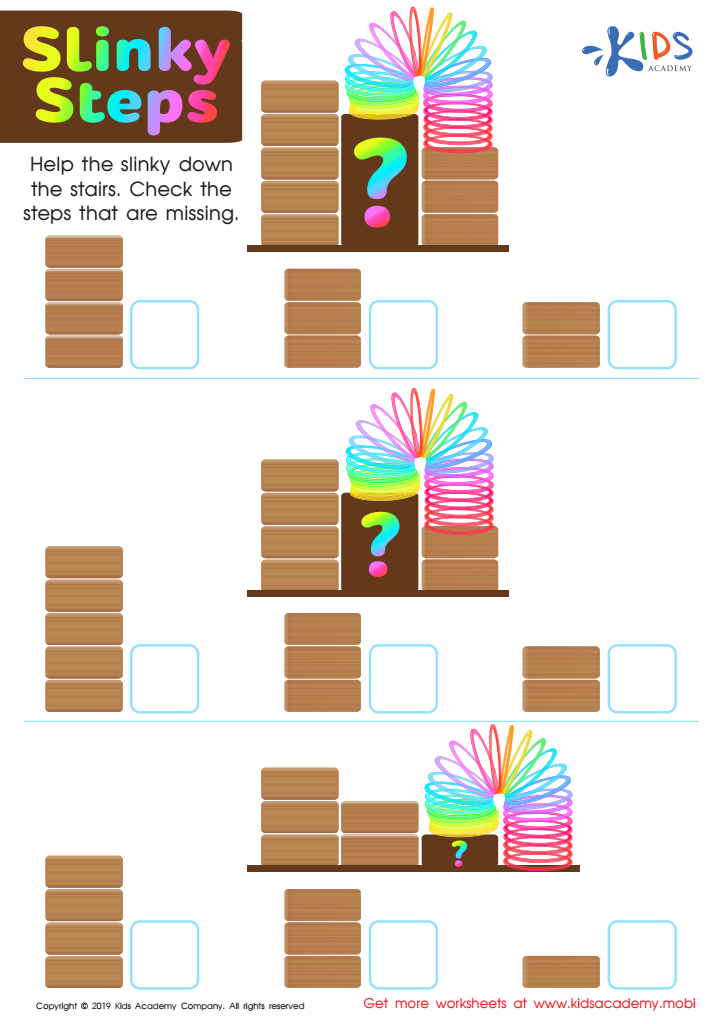
Slinky Steps Worksheet
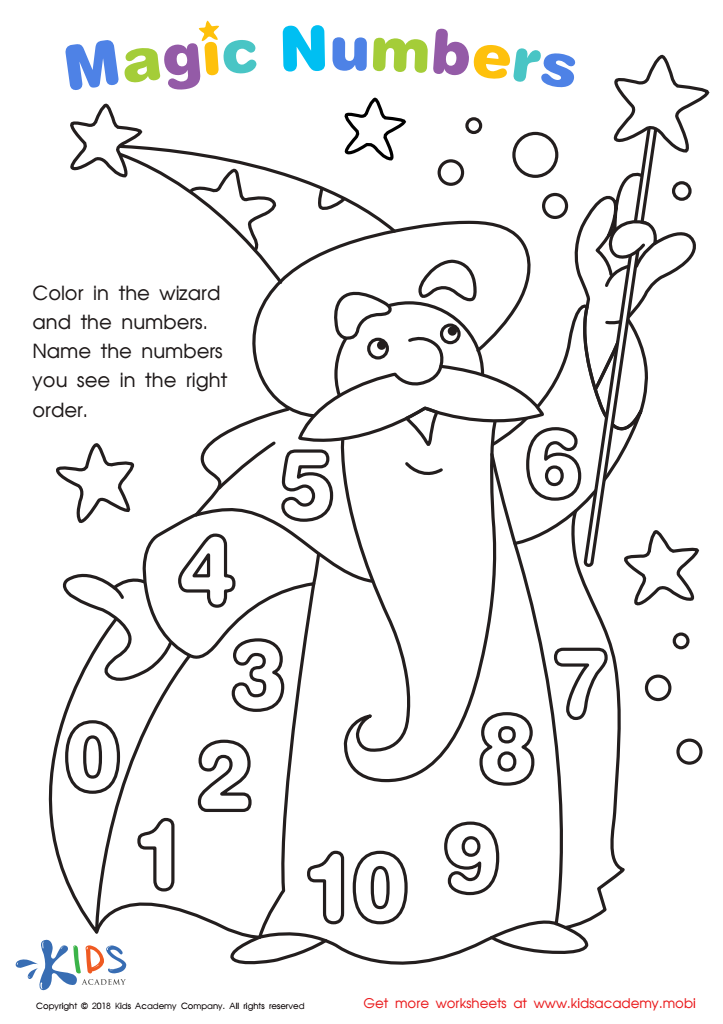
Magic Numbers Worksheet
 Assign to My Students








Understanding patterns and numbers from 0 to 10 is critical for young learners, specifically those aged 6-7, as it forms the bedrock for future mathematical learning and cognitive development. At this early educational stage, pattern recognition helps children identify relationships and make predictions, which are essential critical thinking skills. Recognizing patterns in numbers also aids in developing a solid number sense, an understanding of number relationships, and counting principles. Engaging with numbers between 0 and 10 sets the stage for more complex mathematical concepts like addition, subtraction, and eventually multiplication and division.
When teachers and parents actively nurture these skills, children benefit in multiple ways. Concrete experiences with patterns and numbers enhance memory and help internalize basic arithmetic operations. Furthermore, early mastery of these concepts leads to increased confidence and a positive attitude towards mathematics in later years. This foundational understanding also supports learning in other subjects, including science and reading, by fostering analytical and sequential thinking.
Adults play a vital role here: providing varied learning experiences and making the learning process engaging ensures children remain motivated. Simple activities like playing number games, using visual aids, and integrating patterns in everyday scenarios make learning both enjoyable and effective. Therefore, an investment in understanding and teaching numbers and patterns early on pays significant dividends in children's academic and overall intellectual growth.