Understanding Quantities Numbers 0–10 Worksheets for Ages 6-7
3 filtered results
-
From - To
Discover our "Understanding Quantities Numbers 0–10 Worksheets for Ages 6-7" at Kids Academy. Designed to engage young learners, these worksheets help children master counting, number recognition, and comparing quantities from 0 to 10. Through colorful illustrations and fun activities, students enhance their numerical skills while developing a strong mathematical foundation. Perfect for both classroom and home use, our printables provide an enjoyable learning experience, making math accessible and exciting. Equip your child with essential early math skills, laying the groundwork for future success. Explore today and turn learning into an adventure!
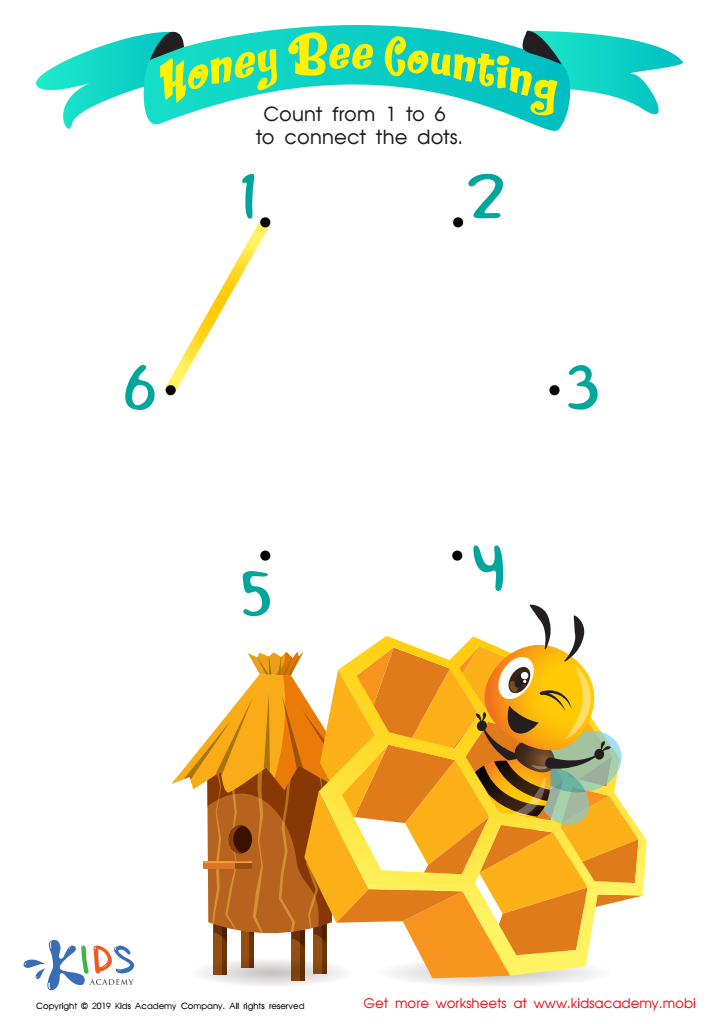
Honey Bee Counting Worksheet
 Assign to My Students
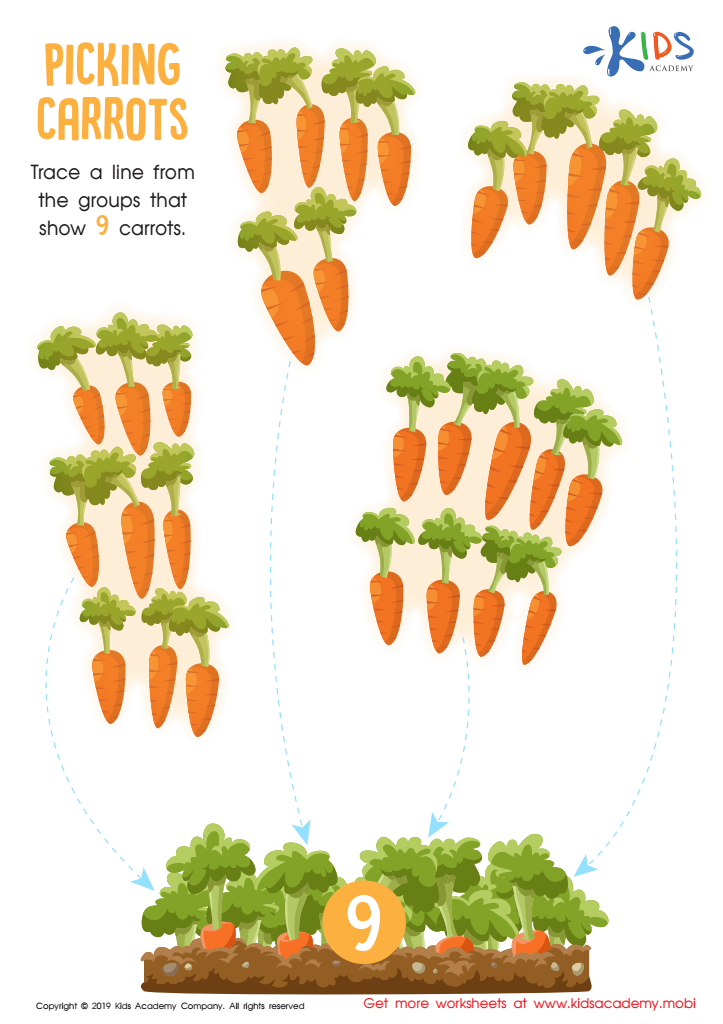
Picking Carrots Worksheet
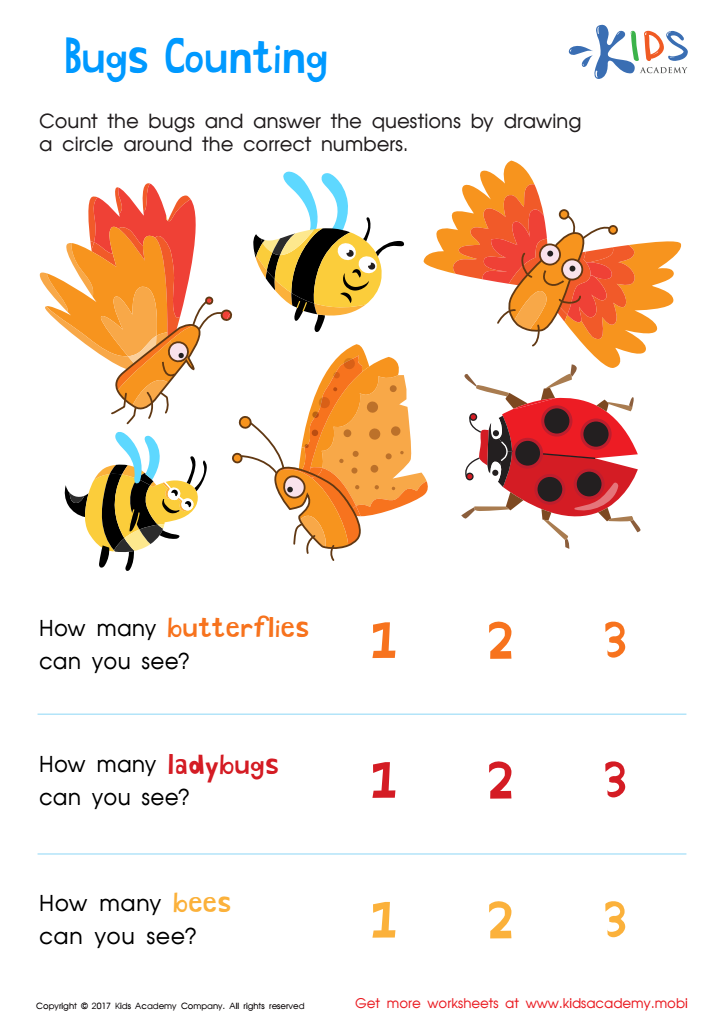
Bugs Counting Worksheet








Understanding quantities and numbers from 0 to 10 forms a crucial foundation in a child’s mathematical journey, particularly for ages 6 to 7. At this developmental stage, children are not just learning to count, but also to comprehend numerical relationships and quantities, the building blocks of arithmetic. Fostering a solid grasp of these basics aids in the seamless transition to more complex math concepts, such as addition and subtraction, thereby building confidence and reducing math-related anxiety.
Parents and teachers play a pivotal role in nurturing this understanding by providing a supportive and engaging environment. Interactive activities like counting games, object manipulation, and real-world applications—such as cooking or shopping—make learning tangible and enjoyable. When children understand quantities visually and physically, it reinforces abstract numerical concepts, making them more intuitive.
Moreover, this early numerical literacy boosts cognitive development in areas like problem-solving and logical thinking, essential skills for academic achievement and everyday functioning. Parents and teachers should prioritize developing these skills to ensure a strong educational foundation, fostering lifelong math competency and a positive attitude towards learning. In summary, a deep understanding of basic numbers and quantities equips children with the essential tools for future academic success and everyday life skills.