Number Recognition Numbers up to 100 Worksheets for Ages 6-7 - Page 2
27 filtered results
-
From - To
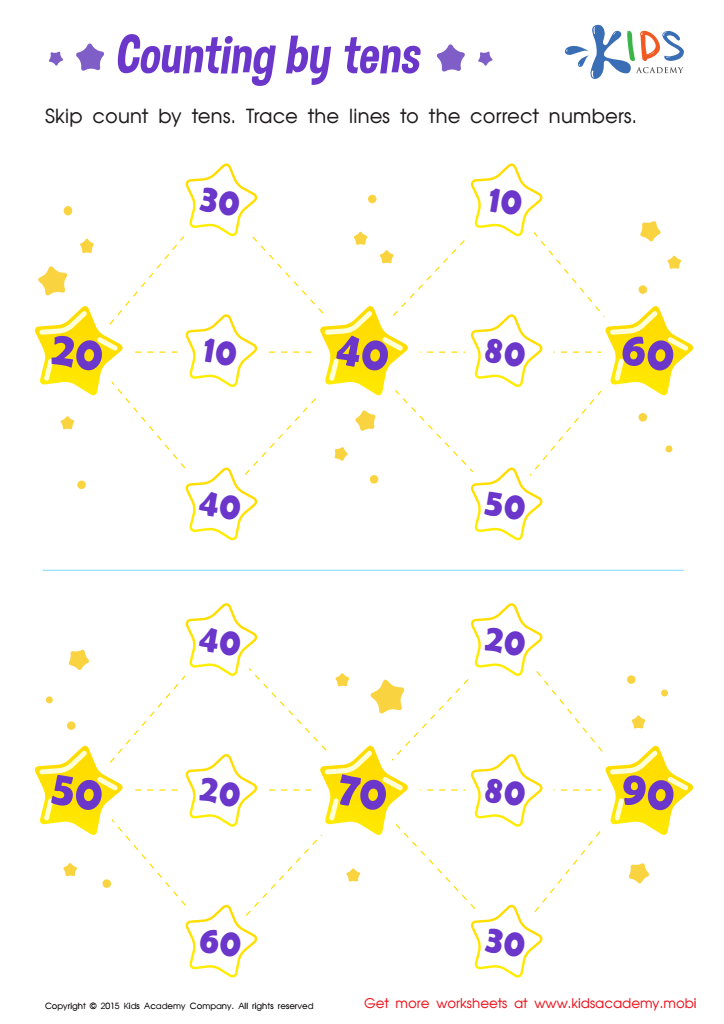
Learn Dozens: Counting by Tens Printable
 Assign to My Students
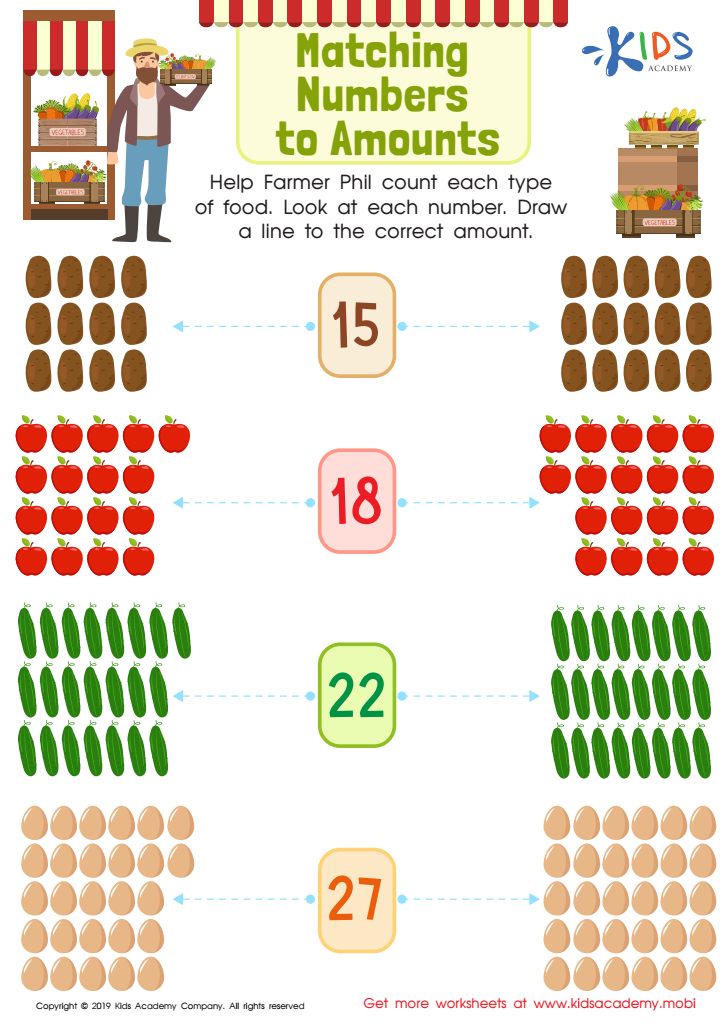
Matching Numbers to Amounts Worksheet

Counting on the City Skyline: Dot-to-Dot Worksheet








Number recognition is a fundamental skill for children aged 6-7, forming the basis for mathematical understanding and everyday functionality. For parents and teachers, fostering this ability is crucial as it directly impacts children's confidence and competence in math. Recognizing numbers up to 100 enables children to grasp essential mathematical concepts, such as addition and subtraction, and lays the groundwork for more complex operations encountered later in their education.
Moreover, number recognition enhances a child's ability to engage with their environment. It allows them to understand money, time, and quantity—valuable life skills that foster independence. Early mastery of these skills can also promote a positive attitude towards mathematics, transforming potential difficulties into enjoyable challenges.
Lastly, number recognition contributes to cognitive development, as it stimulates critical thinking and problem-solving abilities. By ensuring children can recognize and manipulate numbers, parents and teachers equip them with tools necessary for academic success and daily life. This foundational skill not only prepares children for future learning but also supports their emotional and social development, as they gain confidence in their abilities. Investing time and effort in number recognition ensures a well-rounded approach to education and fosters a lifelong love for learning.