Mental math skills Word Problems Worksheets for Ages 6-7
3 filtered results
-
From - To
Discover engaging and educational "Mental Math Skills Word Problems Worksheets" designed for children ages 6-7. Our worksheets make mastering mental math fun, enhancing critical thinking and problem-solving abilities. Filled with diverse word problems, these printables challenge young learners to quickly and accurately compute answers in their minds, improving numerical fluency and confidence. Ideal for classroom use or homeschooling, each worksheet is crafted to align with core math standards, ensuring your child develops essential skills in a structured manner. Visit our page for an abundance of free worksheets to boost your child’s mental agility and love for math.
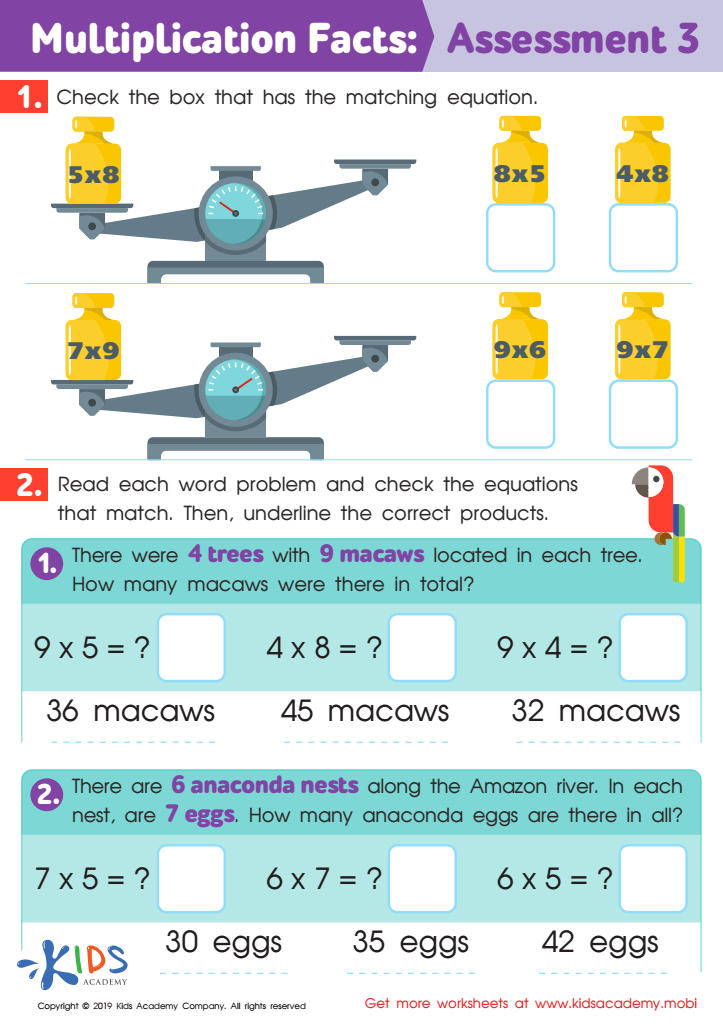
Multiplication Facts: Assessment 3 Worksheet
 Assign to My Students
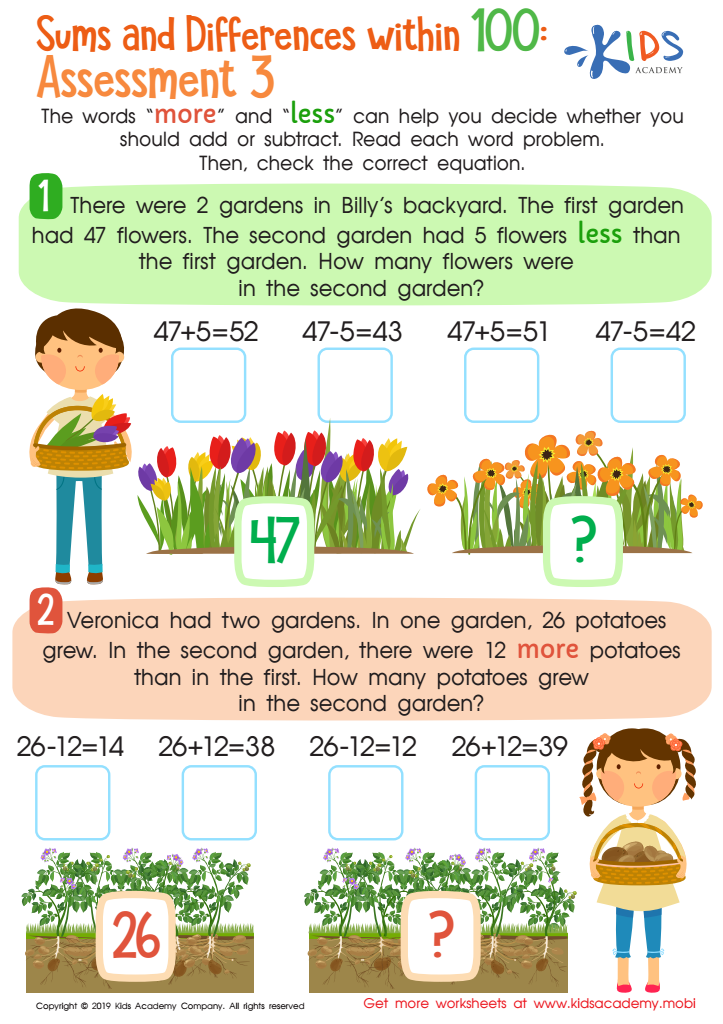
Sums and Differences Within 1 - Assessment 1 Worksheet
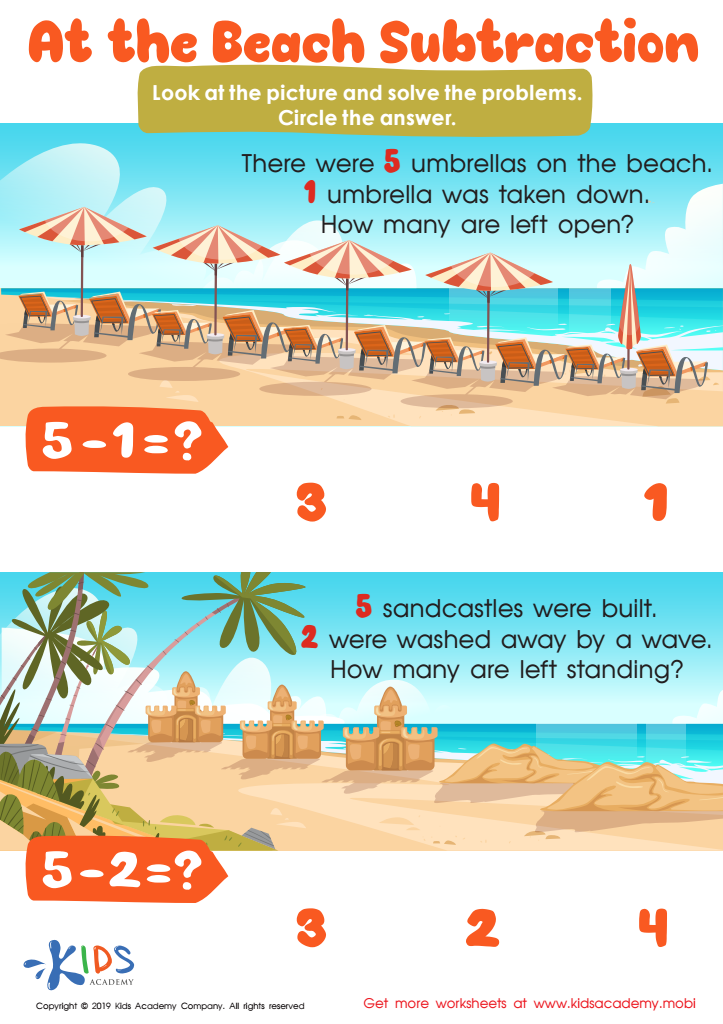
At the Beach Subtraction Worksheet







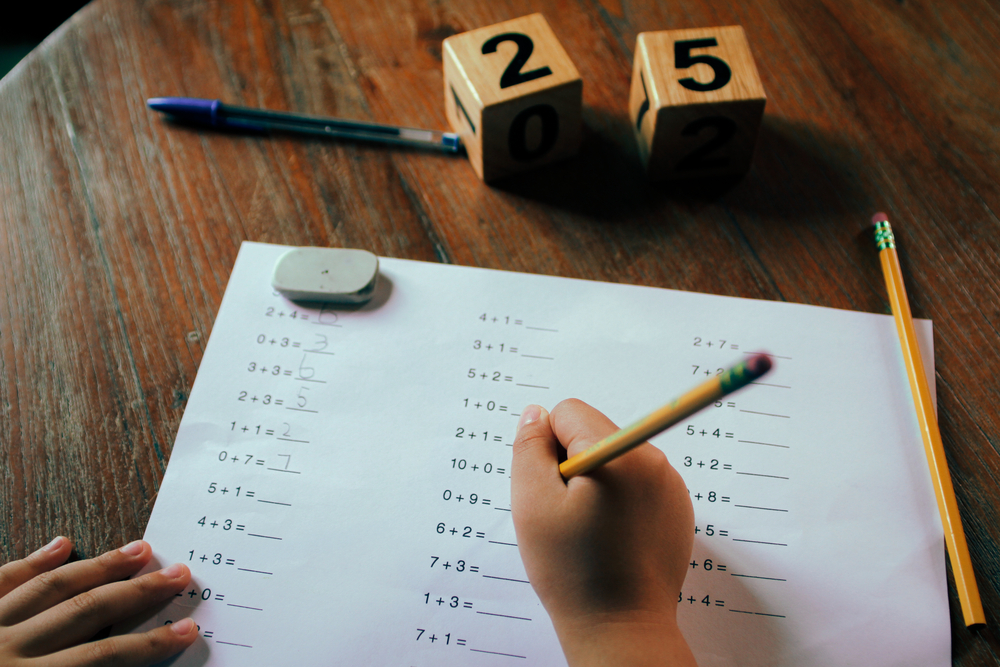
Mental math skills are essential for young children, particularly those ages 6-7, due to their foundational role in cognitive and academic development. At this impressionable age, children are developing crucial problem-solving abilities, critical thinking skills, and numerical fluency. Engaging in mental math word problems enables kids to enhance their ability to visualize, manipulate, and work with numbers in their minds, fostering a deeper understanding of mathematical concepts.
When young students are introduced to mental math problems, they are encouraged to think quickly and logically. These exercises not only improve their arithmetic skills but also bolster their confidence in handling real-world situations where quick calculation is necessary – such as making change or measuring ingredients. Additionally, the brain's demand for mental computation strengthens memory and focus, promoting overall cognitive development.
From a pedagogical perspective, mental math challenges help identify a child’s grasp of basic math concepts early on, enabling timely intervention if any difficulties arise. Moreover, solving word problems contextualizes math, demonstrating its practical applications and making learning more engaging and relevant. By prioritizing mental math skills, parents and teachers invest in a child’s academic success and lifelong problem-solving capabilities, laying a robust foundation for more advanced mathematical learning in the future.








