
Attention to Detail Building Vocabulary Worksheets for Ages 6-7
3 filtered results
Difficulty Level
Grade
Age
-
From - To
Subject
Activity
Standards
Our "Attention to Detail Building Vocabulary Worksheets for Ages 6-7" are expertly crafted to improve vocabulary while fostering meticulous attention to detail in young learners. These engaging activities guide children through exciting exercises that enhance their reading and critical thinking skills. Each worksheet presents fun and challenging tasks, from identifying differences to solving word puzzles, designed to captivate young minds. Perfect for parents and teachers aiming to bolster vocabulary development, these worksheets ensure that learning is both enjoyable and educational. Empower your 6-7 year-olds to become confident readers and meticulous learners with our thoughtfully designed worksheets.
Favorites
With answer key
Interactive
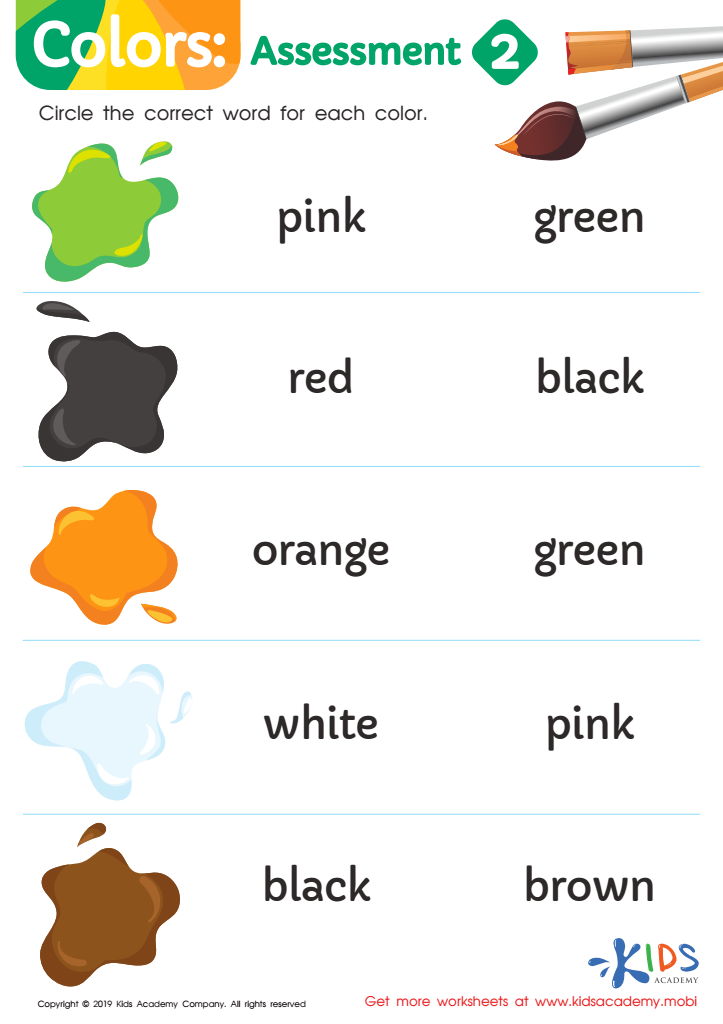
Colors: Assessment 2 Worksheet
Teach color words to young students to build fluency and confidence. Check knowledge with an assessment worksheet. Have students look at paint samples and circle the correct color word. This assessment helps parents and teachers measure a child’s accuracy when reading color words.
 Assign to My Students
Colors: Assessment 2 Worksheet
Worksheet











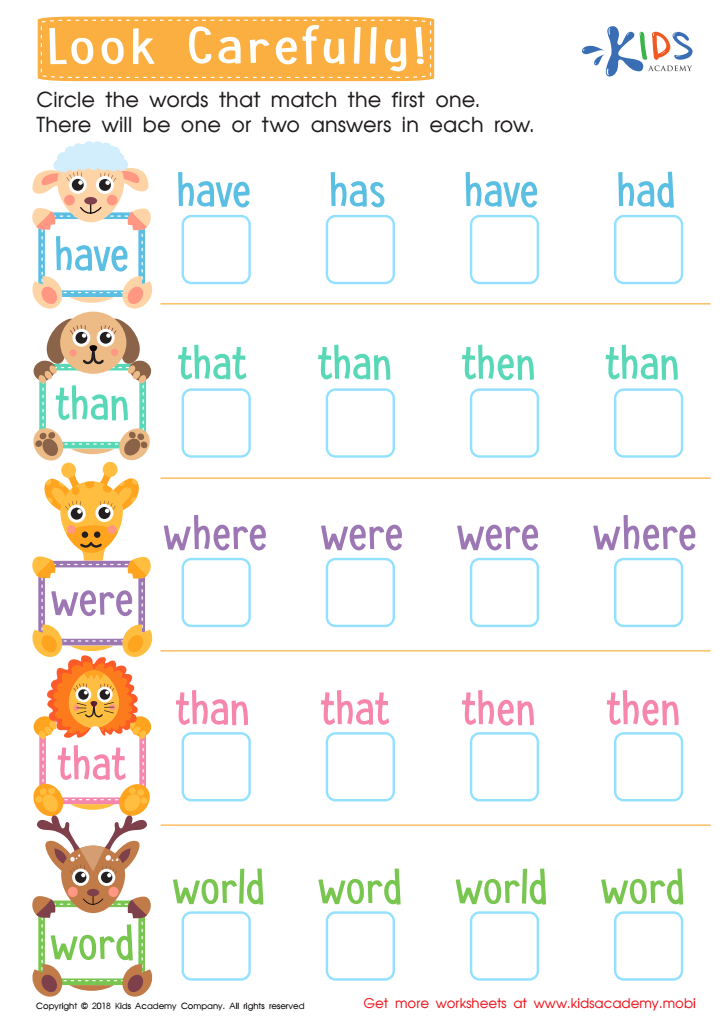
Look Carefully Worksheet
It's crucial to teach kids to identify sight words and become fluent readers. This free worksheet helps make it simpler for kids to learn the similarities and differences between similar words. They'll get practice by looking at the box word and selecting the one that matches from the row.
Look Carefully Worksheet
Worksheet
Join Kids Academy for Free
Who is primarily going to use this learning content?







.jpg)
Attention to detail and building a robust vocabulary are critical components of a child's developmental journey, particularly between the ages of 6 and 7. During this formative period, children are rapidly acquiring foundational skills that will shape their future learning and communication abilities.
First, attention to detail enhances observational skills, accuracy, and critical thinking. It helps children notice and comprehend the nuances of language and concepts, enabling them to engage more deeply with learning materials. When children are attentive to the intricacies of both verbal and written communication, they become more adept at identifying patterns, correcting errors, and understanding complex ideas.
Simultaneously, a strong vocabulary is essential for effective communication and comprehension. As children learn new words, they improve their ability to express thoughts, ask questions, and understand instructions. A rich vocabulary supports reading comprehension, which is crucial as they transition from learning to read to reading to learn. With a broad vocabulary, children are better prepared to grasp the vast world of knowledge presented in texts across various subjects.
Parents and teachers nurturing these skills provide children with the tools needed for academic success and effective communication. This attentiveness builds self-confidence, sparking a lifelong love for reading and learning, and lays the groundwork for future educational achievements.








