
Improve reading skills Building Vocabulary Worksheets for Ages 6-7
10 filtered results
Difficulty Level
Grade
Age
-
From - To
Subject
Activity
Standards
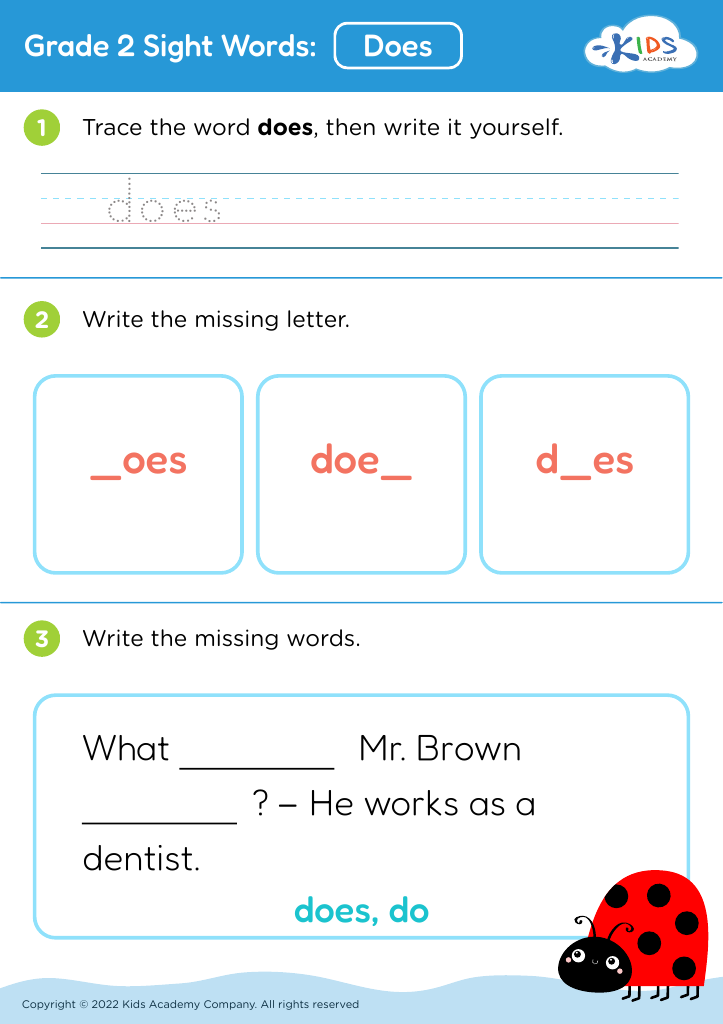
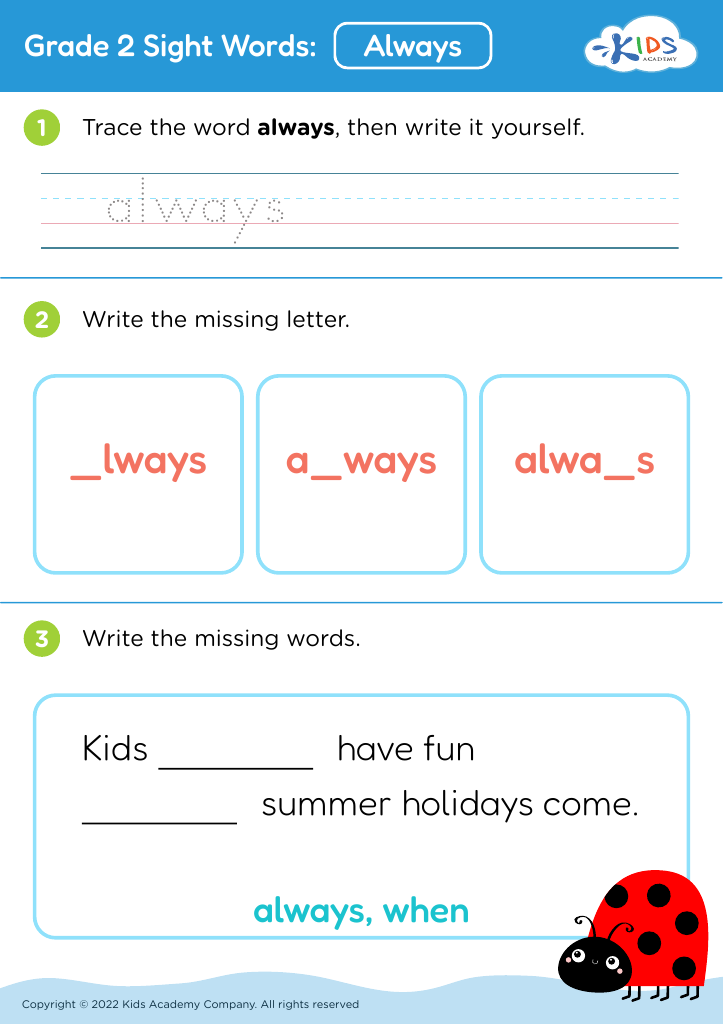
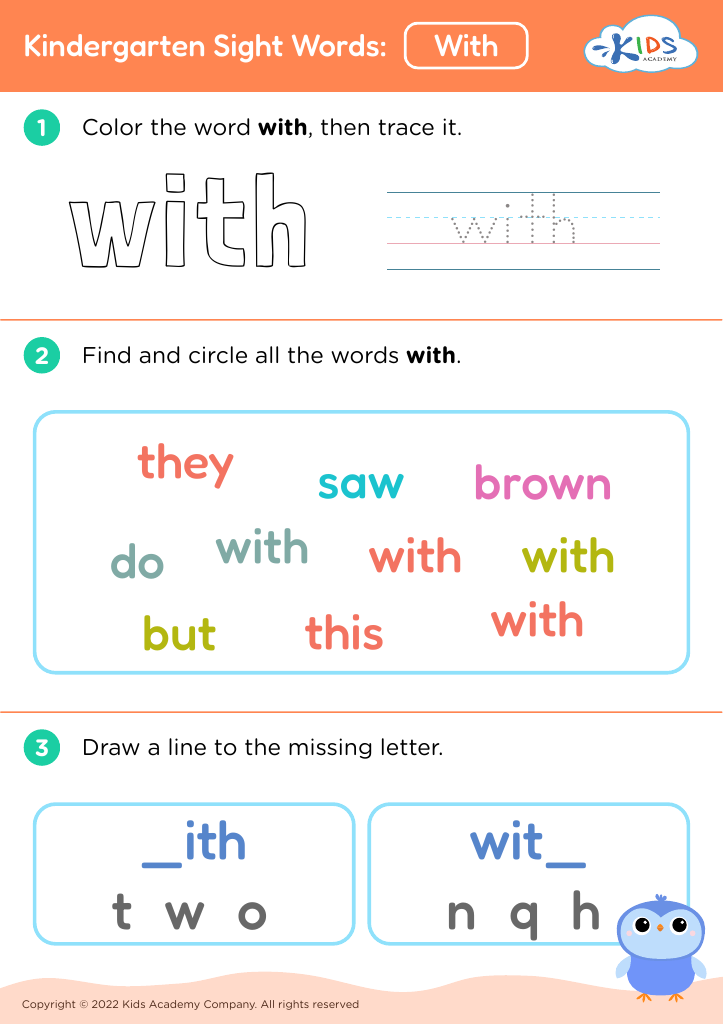
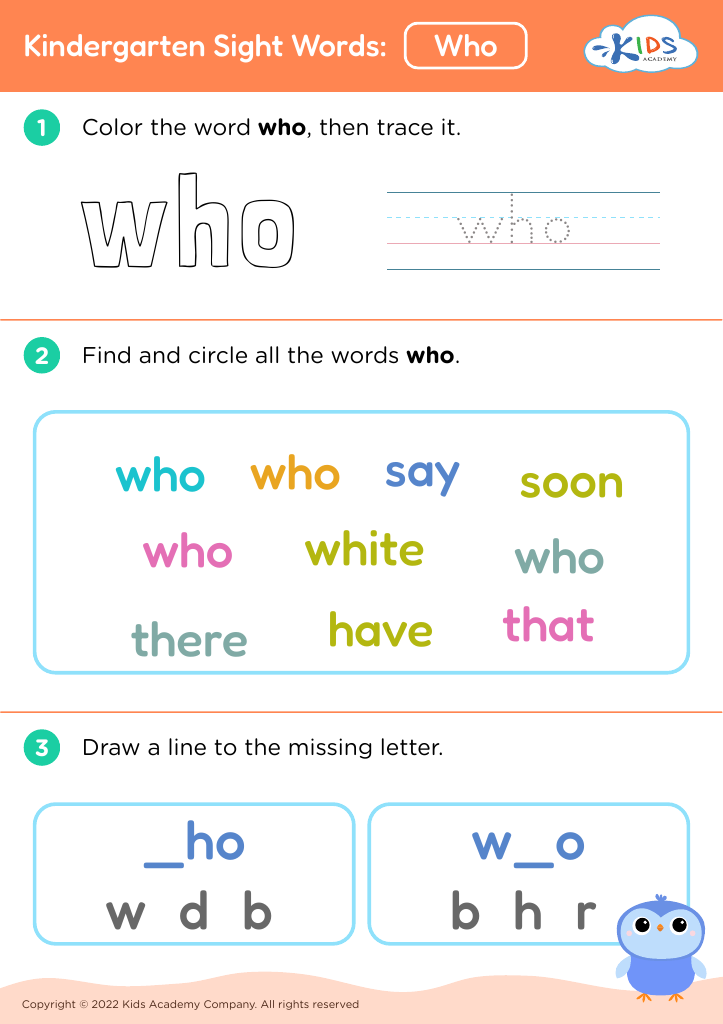
Enhance your child's reading abilities with our expertly designed Building Vocabulary Worksheets for ages 6-7. These engaging activities are tailored to boost reading comprehension, encourage critical thinking, and expand vocabulary in young learners. Featuring diverse themes and fun exercises, these worksheets make learning an enjoyable experience. Perfect for both home and classroom use, they pave the way for stronger reading foundations. By regularly practicing with these worksheets, your child will not only improve their vocabulary but also develop a love for reading. Empower your child’s educational journey with our top-quality resources. Start building a brighter future today!
Favorites
With answer key
Interactive
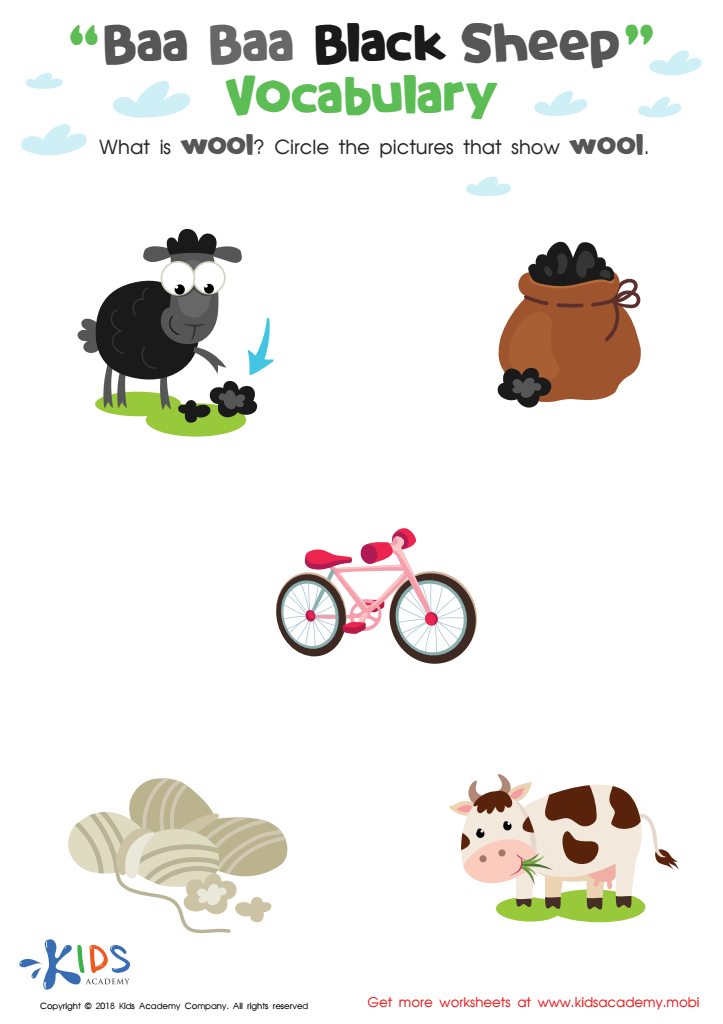
Baa Baa Black Sheep: Vocabulary Worksheet
Exposing readers to various vocab helps their reading abilities grow. This cheery worksheet uses pictures to show what wool is and isn't, helping readers with visual discrimination. Having concrete images for new words is essential for emerging readers, and this is an enjoyable way to strengthen the skill.
 Assign to My Students
Baa Baa Black Sheep: Vocabulary Worksheet
Worksheet











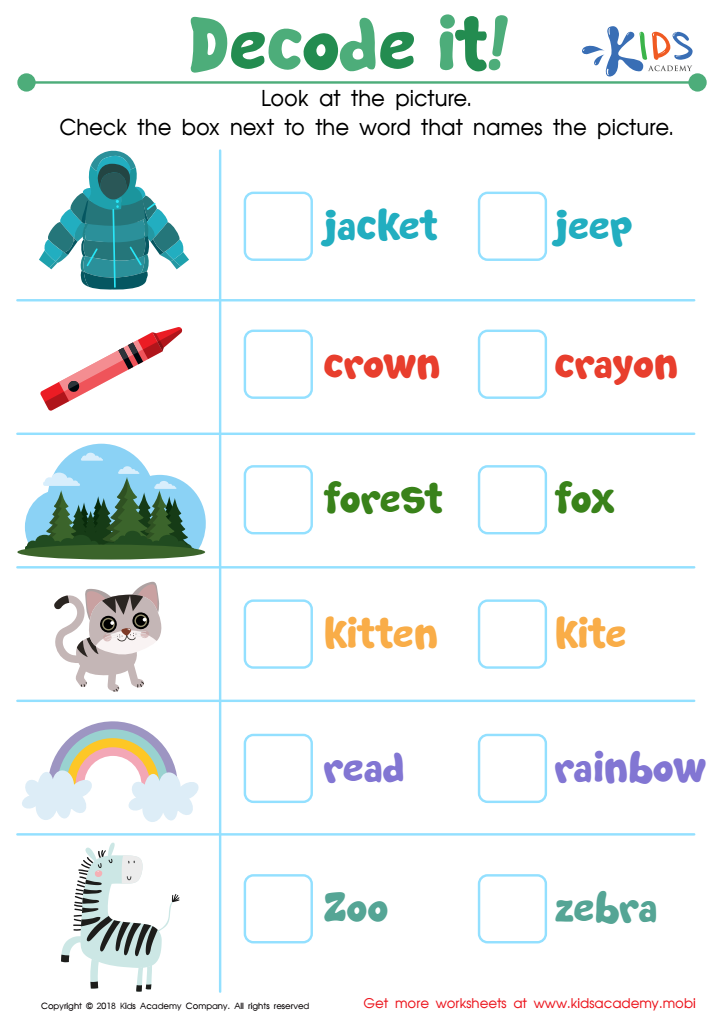
Reading: Decode It Worksheet
Look at the picture and circle the word that names it. This exercise helps kids practice picture cues and decoding words, with the same beginning sound. It builds their fluency and comprehension, giving them the skills to read unfamiliar words.
Reading: Decode It Worksheet
Worksheet
Join Kids Academy for Free
Who is primarily going to use this learning content?








Improving reading skills and building vocabulary for children ages 6-7 is crucial for both parents and teachers. At this age, children are in the early stages of their academic journey and are rapidly developing cognitive and language abilities. Strong reading skills form the foundation for future learning across all subjects. When children can read accurately and fluently, they are more likely to succeed in school because they can understand instructions, complete assignments, and enjoy books independently.
Building vocabulary is equally important as it enhances their comprehension skills. A robust vocabulary allows children to make sense of the text, infer meanings, and express themselves more effectively. It also boosts their confidence and curiosity about the world, encouraging a lifelong love of reading and learning.
For parents, cultivating these skills at home can create a supportive and stimulating environment that extends beyond the classroom. Simple activities such as reading together, playing word games, and talking about new words can make a significant difference.
Teachers, on the other hand, can tailor classroom activities to meet individual student needs, using a variety of resources and techniques to stimulate interest and engagement. By prioritizing reading and vocabulary development, adults can provide young learners with essential tools for academic success and lifelong intellectual growth.








