
Shape identification Building Vocabulary Worksheets for Ages 6-7
3 filtered results
Difficulty Level
Grade
Age
-
From - To
Subject
Activity
Standards
Enhance your child's vocabulary and shape identification skills with our engaging Building Vocabulary Worksheets for ages 6-7! These thoughtfully designed worksheets help young learners recognize and name various shapes while reinforcing their language development. Through fun activities and exercises, children will not only improve their shape recognition but also expand their vocabulary. Perfect for homeschooling or in-class learning, our worksheets cater to diverse learning styles and promote critical thinking skills. Encourage your child’s curiosity and confidence in mathematics and language! Explore our collection and watch your little one thrive in their early learning journey today!
Favorites
With answer key
Interactive
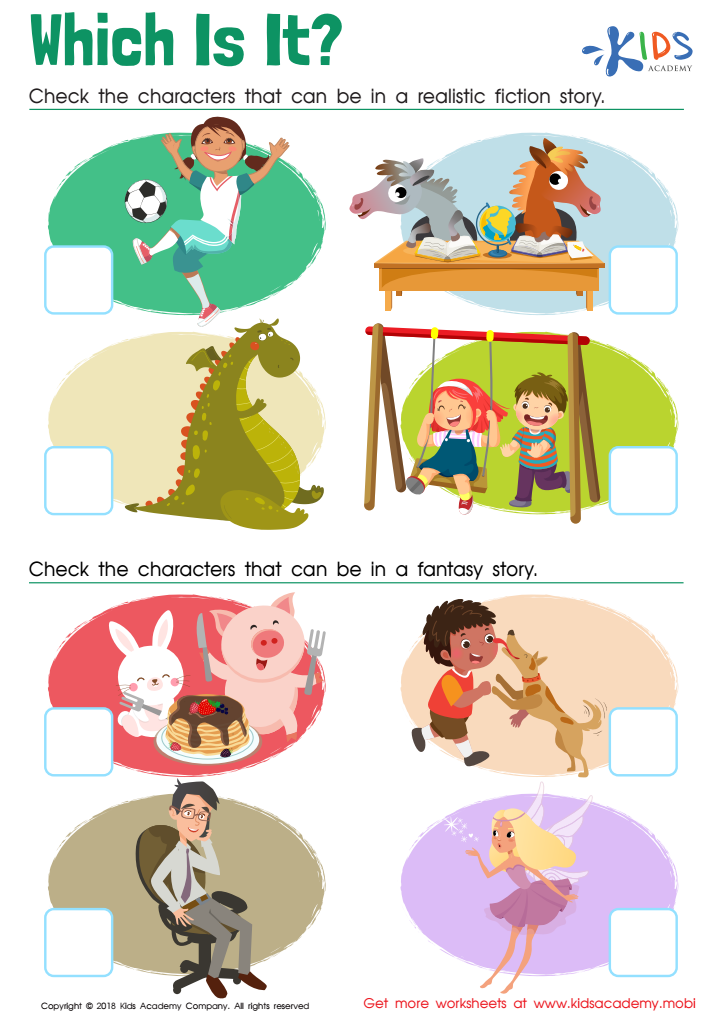
Which Is It? Worksheet
This colorful worksheet helps young readers identify elements of fact and fiction using fun picture clues. They can check off characters who exist in realistic fiction stories, which makes learning the difference between the two genres fun and engaging.
 Assign to My Students
Which Is It? Worksheet
Worksheet











Join Kids Academy for Free
Who is primarily going to use this learning content?






.jpg)

Shape identification and vocabulary building are crucial for children aged 6-7 because they form the foundation for various skills that are essential for academic success and everyday life. First, understanding shapes develops critical thinking and spatial awareness, enabling children to visualize and manipulate objects around them. As they identify shapes, they also learn to classify and categorize items, which promotes logical reasoning and problem-solving skills.
Moreover, building vocabulary around shapes enhances language development. When children learn terms like "rectangle," "triangle," and "hexagon," they expand their linguistic repertoire and improve their ability to communicate effectively. This vocabulary acquisition is significant as it directly impacts reading and writing abilities, which are fundamental to academic performance.
Furthermore, shape identification activities often involve hands-on learning and play, fostering engagement and motivation among young learners. These experiences not only reinforce cognitive skills but also promote social interaction when children work together in group settings.
In summary, focusing on shape identification and vocabulary building is essential for educators and parents alike, as it equips children with vital skills for their cognitive, linguistic, and social development, laying the groundwork for lifelong learning.








