Understanding suffixes Building Vocabulary Worksheets for Ages 6-7
5 filtered results
-
From - To
Enhance your child's reading skills with our "Understanding Suffixes Building Vocabulary Worksheets" tailored for ages 6-7. These engaging worksheets are designed to help young learners explore the world of suffixes, providing them with the tools to build and expand their vocabulary effectively. By understanding how suffixes modify the meanings of base words, children develop critical literacy skills that boost their reading comprehension and language usage. Our fun and interactive activities make learning enjoyable while reinforcing essential knowledge. Perfect for at-home practice or classroom enrichment, these worksheets will empower your child to become a confident and capable reader. Let's start building vocabulary today!
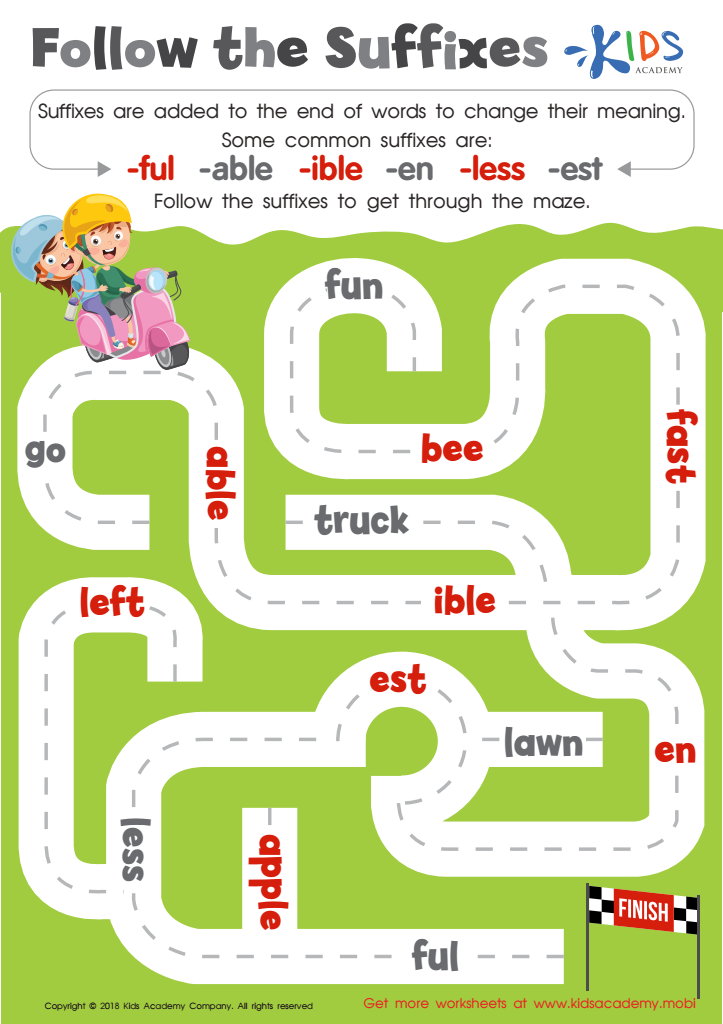
Reading: Follow the Suffixes Worksheet
 Assign to My Students











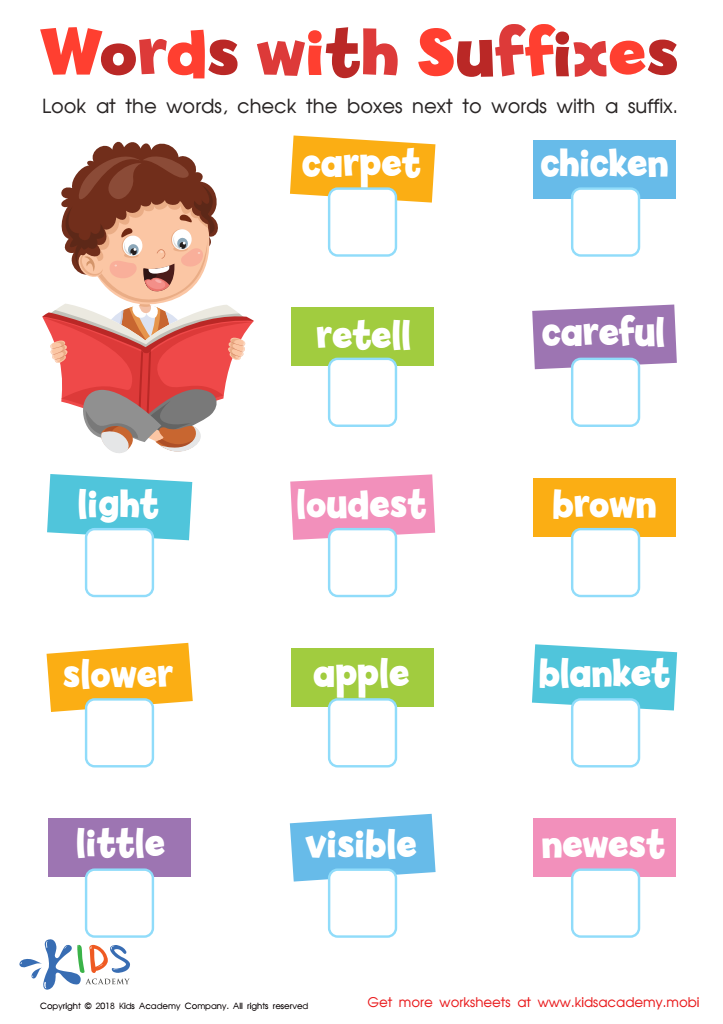
Reading: Words With Suffixes Worksheet
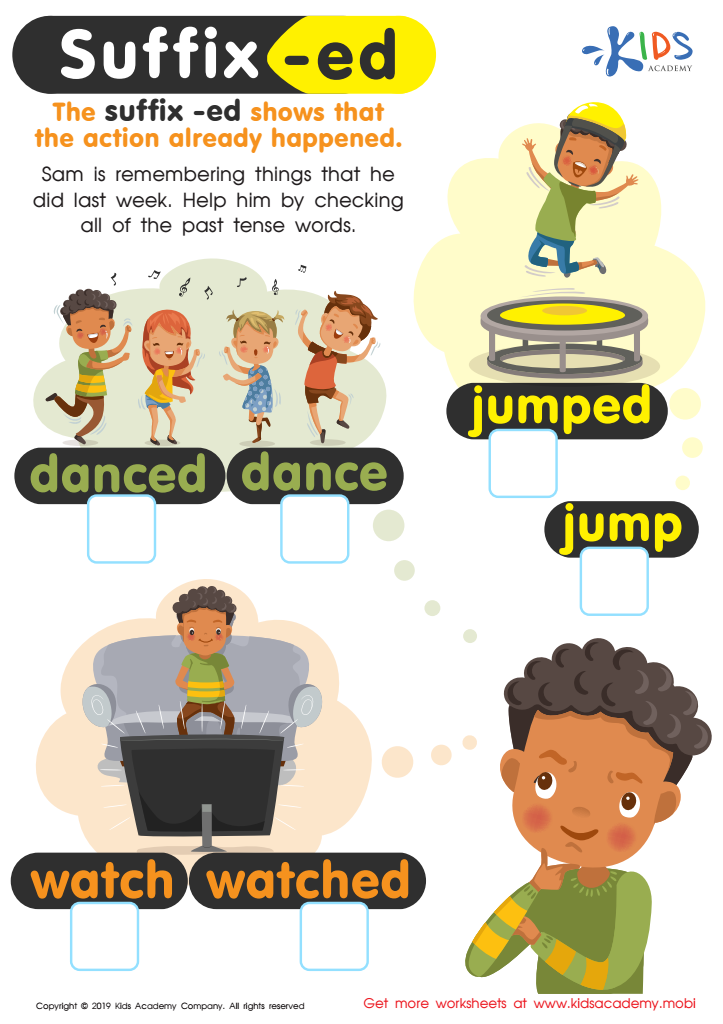
Suffix-ed Worksheet
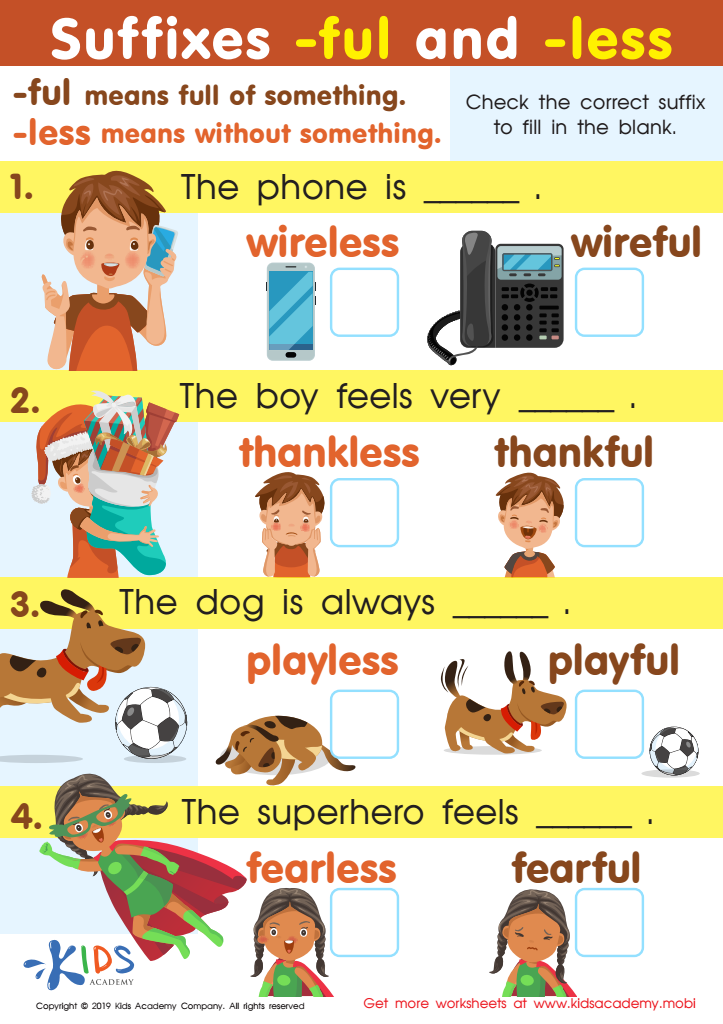
Suffixes –ful and –less Worksheet
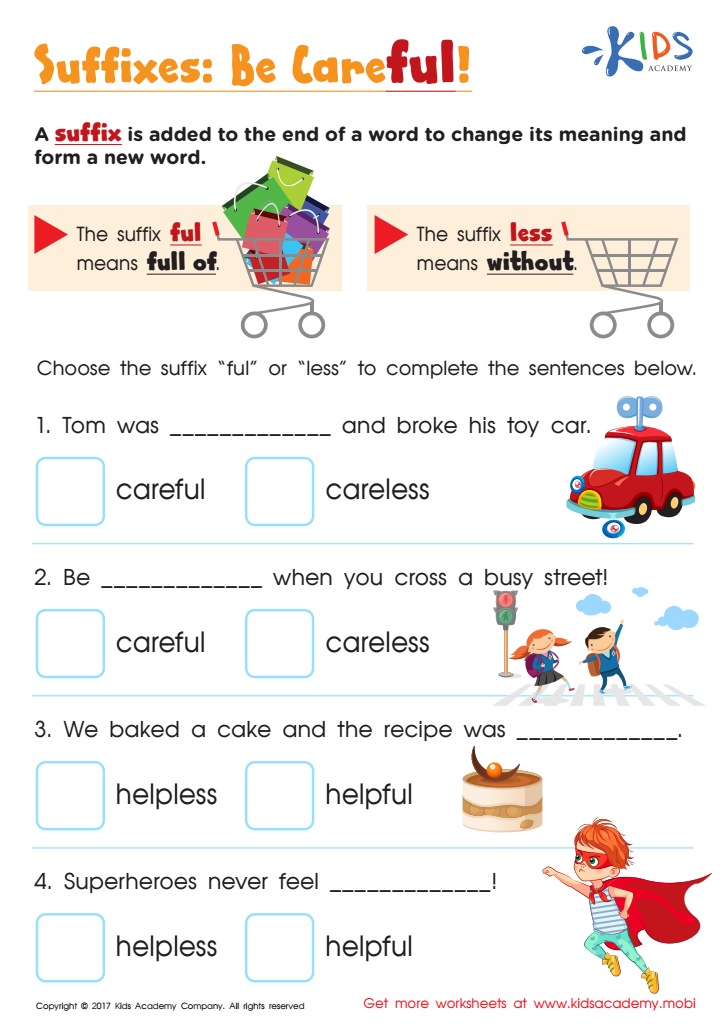
Suffixes Ful and Less Worksheet







Understanding suffixes is crucial for building vocabulary in children aged 6-7, and both parents and teachers should prioritize this learning. Suffixes, which are letters added to the end of words, help modify meanings and form new words. For instance, adding ‘-ing’ to a verb indicates an ongoing action (e.g., "run" becomes "running"), while ‘-ed’ indicates a completed action (e.g., "play" becomes "played").
By learning about suffixes, children enhance their decoding and spelling skills, enabling them to become more proficient readers and writers. This understanding allows them to infer the meanings of unfamiliar words, promoting a richer vocabulary. As children navigate stories and written content, they will encounter various words with suffixes; the ability to decipher these components fosters comprehension and encourages curiosity.
Furthermore, a strong vocabulary base is linked to academic success. It supports effective communication, boosts self-confidence, and enriches learning experiences across all subjects. Parents can reinforce this by incorporating playful activities, such as games and stories that focus on suffixes. Ultimately, helping young learners grasp the importance of suffixes opens up a world of language, laying a foundation for lifelong literacy skills.








