
Story analysis Reading Fiction Worksheets for Ages 6-7
3 filtered results
Difficulty Level
Grade
Age
-
From - To
Subject
Activity
Standards
Unlock your child's potential with our Story Analysis Reading Fiction Worksheets, tailored for ages 6-7! Foster critical thinking and comprehension as young readers delve into captivating tales. Each worksheet encourages children to identify key story elements such as characters, setting, events, and themes. By analyzing plots and answering detailed questions, students enhance their understanding and retention of fictional texts. Perfect for both classroom and home use, these creative resources make learning engaging and enjoyable. Start developing essential reading skills today with our expertly designed worksheets, bringing stories to life for your young learners!
Favorites
With answer key
Interactive
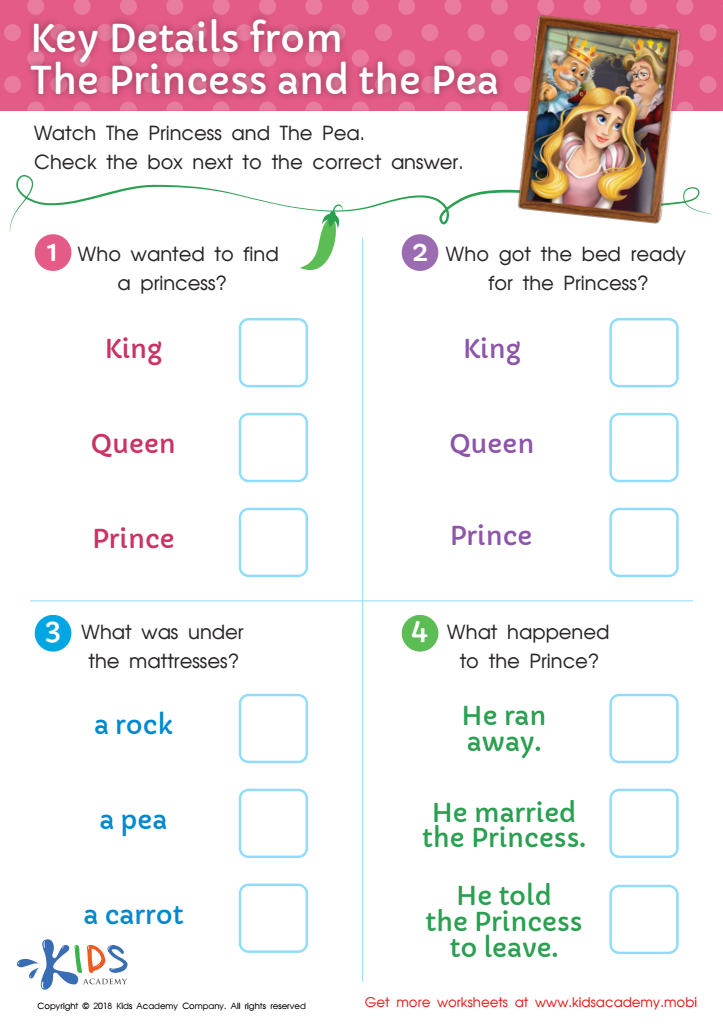
Key Details from the Princess and the Pea Worksheet
After reading The Princess and the Pea, ask your students questions to assess their comprehension of the story. Check their knowledge of key details. This printable can be used to help evaluate their understanding. Encouraging the recall of story events helps build important reading skills.
 Assign to My Students
Key Details from the Princess and the Pea Worksheet
Worksheet
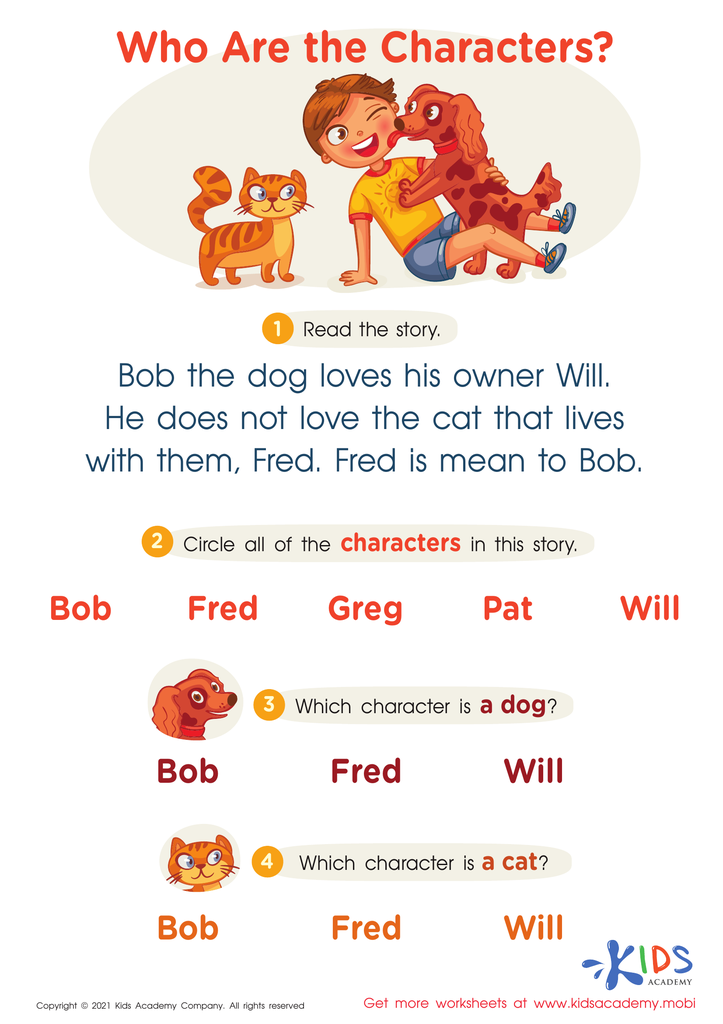
Who Are the Characters? Worksheet
Original:
The annual summer festival takes place on the last day of June and is celebrated with a parade and a carnival that features rides, games, and yummy food.
Rewrite:
Every June end marks the annual summer festival with a parade and carnival. Enjoy rides, games, and delicious food!
Who Are the Characters? Worksheet
Worksheet
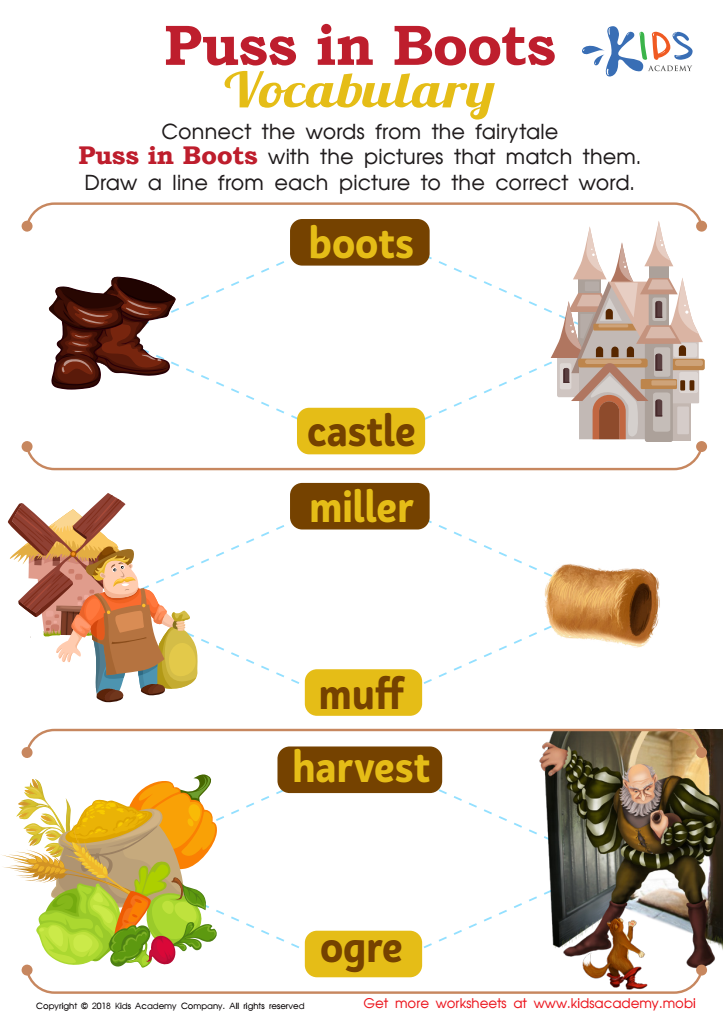
Puss in Boots Vocabulary Worksheet
Let your kids enjoy story-telling while learning at the same time. Help them learn from the fairytale, Puss in Boots, by connecting words from the worksheet with the matching pictures. Ask them to draw a line between each picture and corresponding word to build their vocabulary.
Puss in Boots Vocabulary Worksheet
Worksheet
Join Kids Academy for Free
Who is primarily going to use this learning content?








Parents and teachers should prioritize story analysis and reading fiction for children aged 6-7 because these activities play a crucial role in their cognitive and emotional development. At this formative age, children are beginning to refine their language skills, and engaging with fictional stories helps expand their vocabulary and comprehension abilities. Analyzing stories encourages critical thinking and boosts their understanding of narrative structures, which is an essential foundation for later academic success.
Moreover, fiction exposes children to a variety of perspectives and scenarios, fostering empathy and social understanding. Characters in stories often face challenges and exhibit diverse qualities, allowing young readers to connect emotionally and develop their own problem-solving skills. Stories provide opportunities for discussions about morals, values, and decision-making, which are important for shaping a child's ethical and emotional intelligence.
Story analysis also nurtures imagination and creativity. As children visualize settings and characters, they learn to think creatively and develop their creative-expression abilities. This imagination-building is crucial for innovation and thinking outside the box in their educational journey and beyond.
Therefore, story analysis and reading fiction should be integral components of a child's learning process. They not only create stronger readers but also empathetic, imaginative, and critical thinkers prepared to engage thoughtfully with the world around them.








