Vocabulary development Reading Fiction Worksheets for Ages 6-7
3 filtered results
-
From - To
Enhance your child's language skills with our Vocabulary Development Reading Fiction Worksheets, specially designed for ages 6-7. These engaging activities help young readers expand their vocabulary through captivating fictional stories. Each worksheet encourages children to explore new words in context, boosting their comprehension, spelling, and grammar. By working on these exercises, kids will develop a deeper understanding of language nuances and enjoy a richer reading experience. Tailored to be both educational and fun, our worksheets are perfect companions for early graders on their journey to becoming confident and articulate readers. Unlock a world of words today!
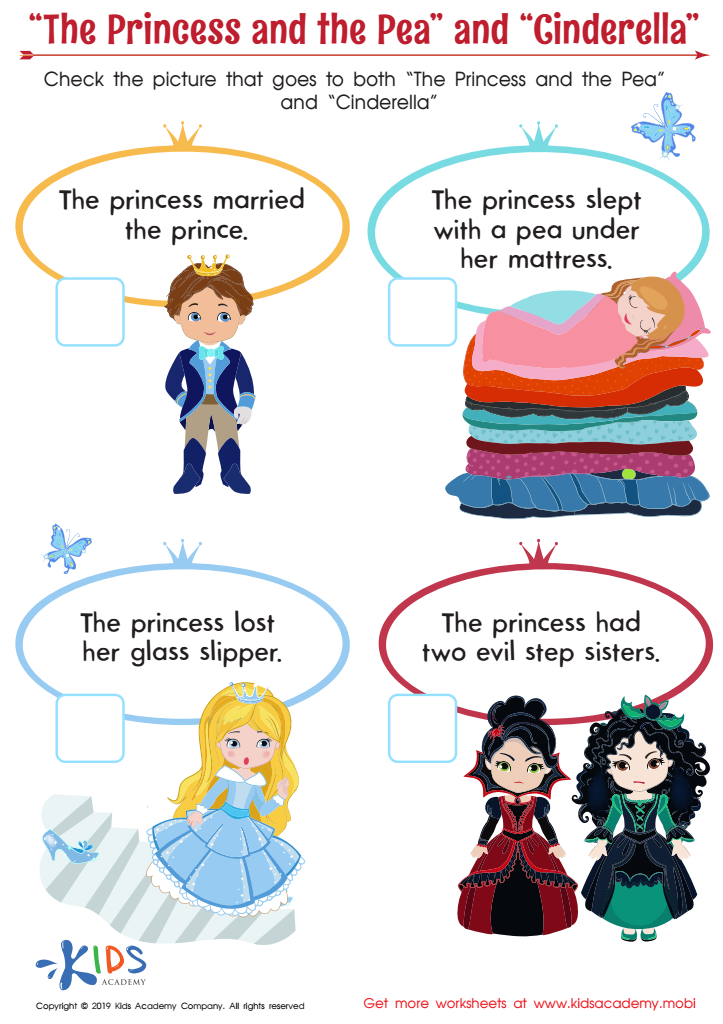
“The Princess and the Pea” and “Cinderella” Worksheet
 Assign to My Students
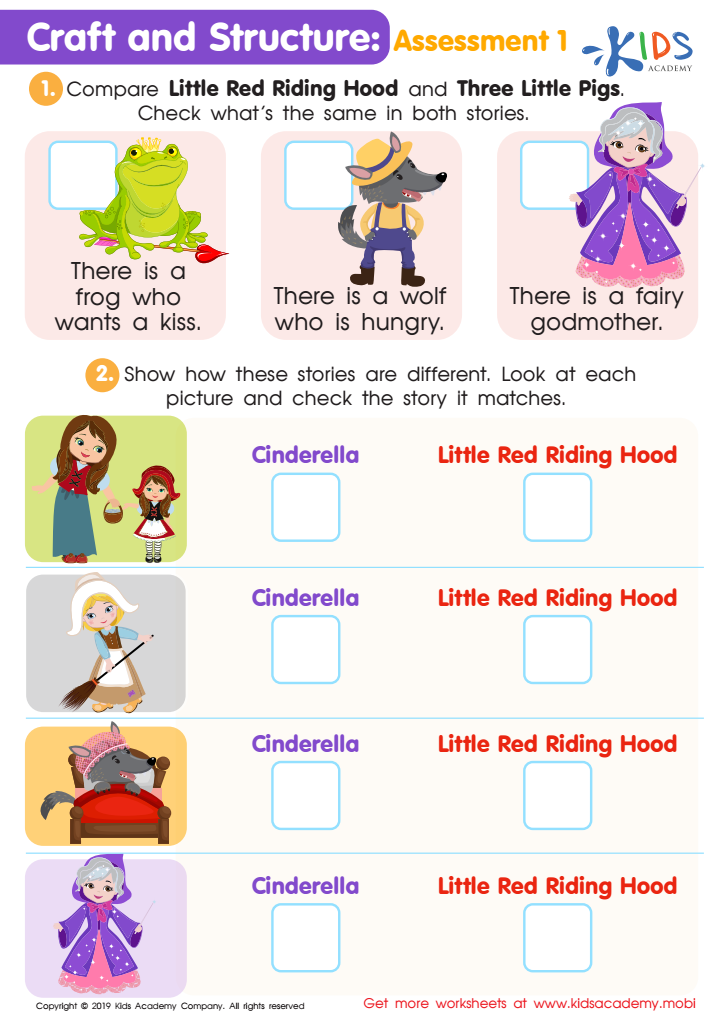
Craft and Structure: Assessment 1 Worksheet
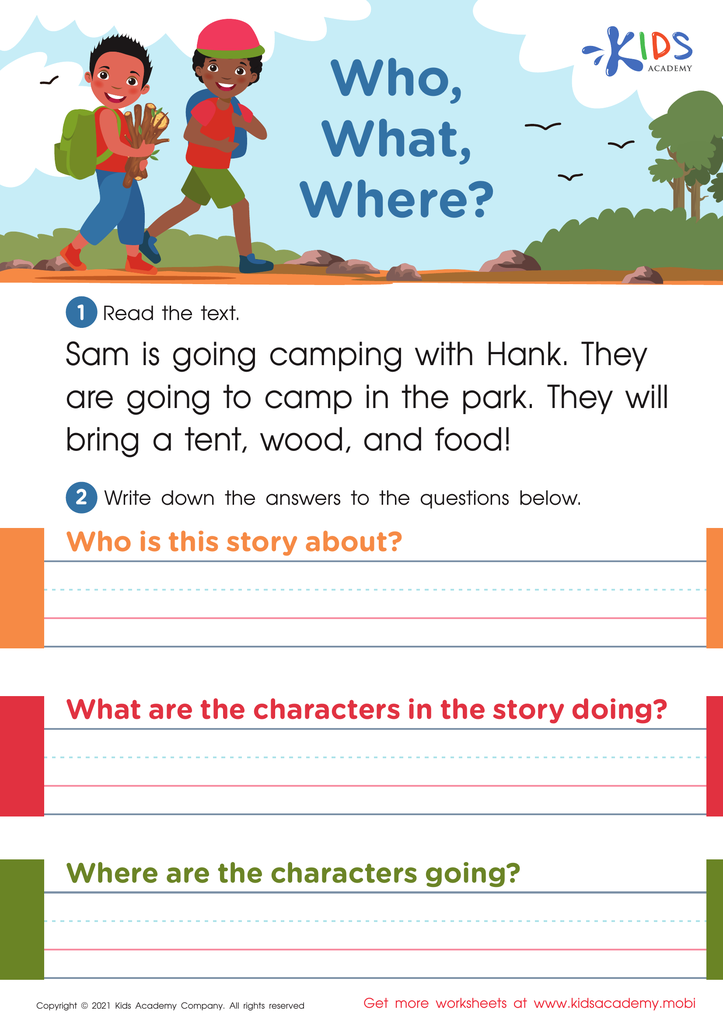
Who, What, Where? Worksheet








Vocabulary development during the ages of 6-7 is crucial as it lays the foundation for future academic success and effective communication. At this stage, children's brains are highly receptive to learning new words, and reading fiction provides an ideal context to enrich their vocabulary in an engaging and meaningful way.
When children read stories, they are introduced to a variety of words that they might not encounter in everyday conversations. Fiction exposes them to descriptive language, different sentence structures, and diverse scenarios that help expand their understanding and use of words. By encountering new vocabulary within the context of a story, children are more likely to comprehend and remember these words.
Additionally, a rich vocabulary aids in reading comprehension. The more words children understand, the better they can make sense of the text, infer meaning, and enjoy reading. This positive reading experience fosters a love for books, encourages regular reading habits, and ignites imagination.
Parents and teachers play a pivotal role in this process by selecting age-appropriate fiction, reading aloud to children, discussing new words, and encouraging curiosity about language. Empowering children with a strong vocabulary not only supports their academic journey but also builds their confidence in expressing themselves, both orally and in writing, throughout their lives.








