
Fine Motor Skills Reading Non-Fiction Worksheets for Ages 6-7
3 filtered results
Difficulty Level
Grade
Age
-
From - To
Subject
Activity
Standards
Enhance your child's education with our "Fine Motor Skills Reading Non-Fiction Worksheets" designed for ages 6-7! These engaging worksheets integrate fun non-fiction texts with interactive activities that promote fine motor development. As children cut, paste, and color while reading, they improve their hand-eye coordination and dexterity alongside their comprehension skills. Our meticulously crafted resources make learning exciting, blending essential literacy with hands-on practice. Explore a variety of topics to spark your child's curiosity and cultivate a love for reading. Perfect for home or classroom use, these worksheets are an excellent way to support your child's growth in a playful, enriching way!
Favorites
With answer key
Interactive
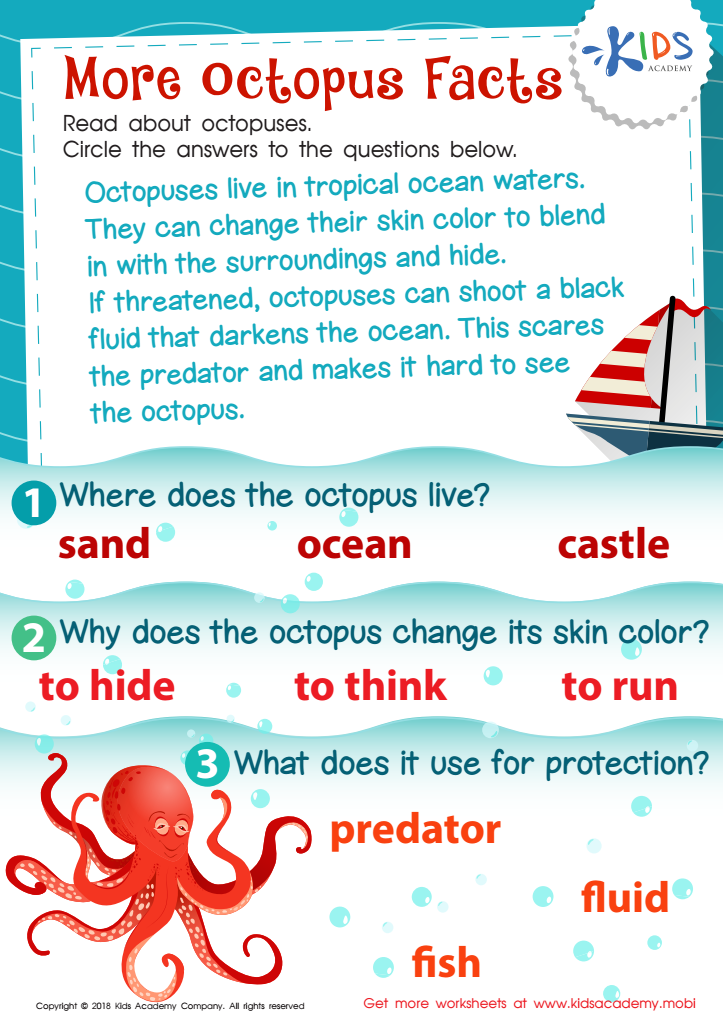
More Octopus Facts Worksheet
This worksheet will help your kids learn about the Octopus. Read the text carefully and have kids read with you. Now, ask them questions based on it and help them answer them by circling the right choices. Teaching your kids facts about animals will help them in the long run.
 Assign to My Students
More Octopus Facts Worksheet
Worksheet
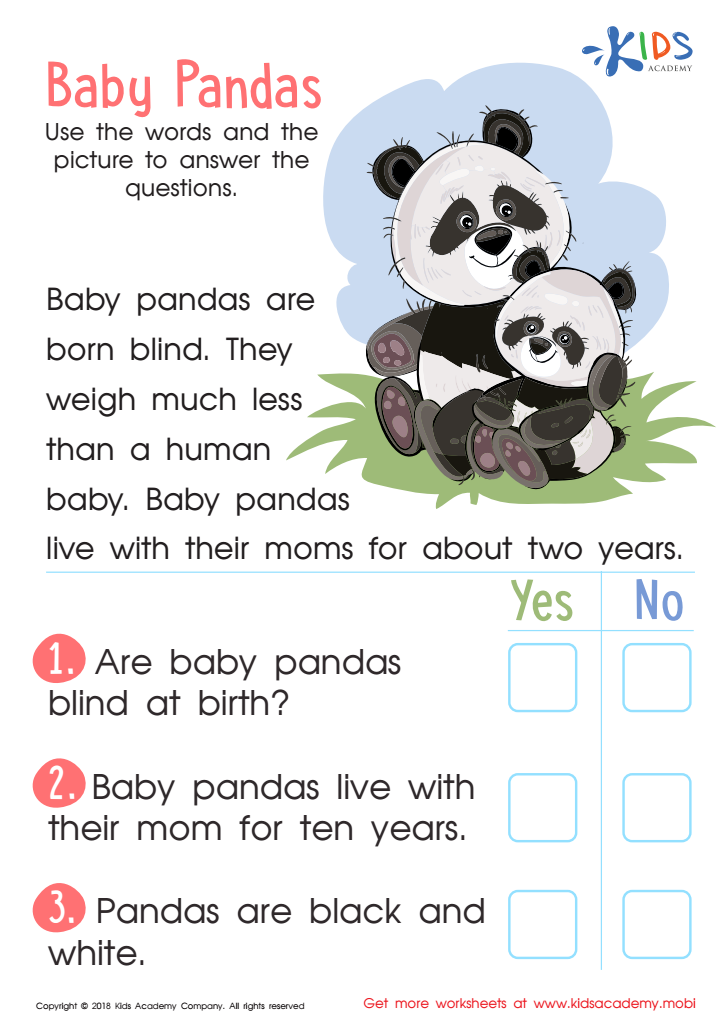
Baby Pandas Worksheet
Kids can't usually see pandas in person, but they can learn more about them with this fun worksheet! It includes a passage and picture, plus questions at the end to check kids' reading comprehension. Just ask them to read the text, check the "yes" and "no" boxes, and enjoy the fascinating facts about baby pandas!
Baby Pandas Worksheet
Worksheet
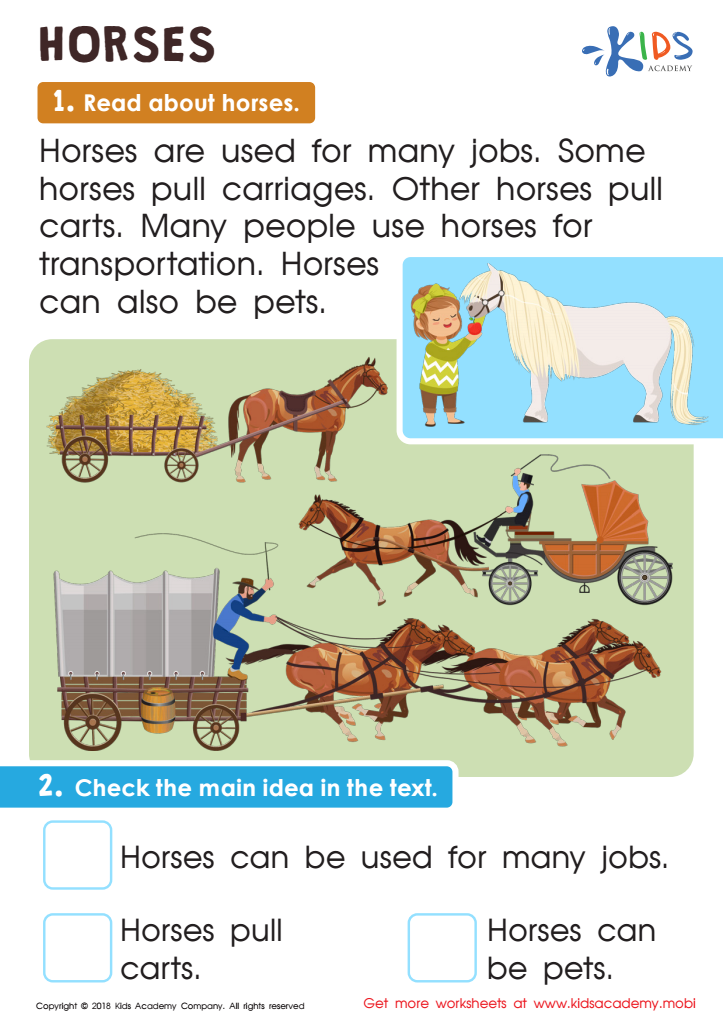
Horses Worksheet
Help your little reader differentiate between details and the main idea with this fun worksheet about horses. Kids will be excited to learn about the different roles horses play. To ensure they understand the overall concept, discuss it before having them choose the right statement at the end.
Horses Worksheet
Worksheet
Join Kids Academy for Free
Who is primarily going to use this learning content?








Fine motor skills are essential for children's overall development, particularly when it comes to reading and writing tasks. For children aged 6-7, as they tackle non-fiction texts, strong fine motor skills enable them to hold books, turn pages, and manage writing tools effectively. This proficiency enhances their ability to engage with and comprehend reading material.
Non-fiction texts often require children to analyze information from different sources, take notes, and perform tasks such as drawing diagrams or writing summaries. When children possess well-developed fine motor skills, they can express their understanding more effectively through writing and drawing, reinforcing their learning.
Moreover, fine motor skills are linked to cognitive development. As children practice these skills, they improve hand-eye coordination and dexterity, which contribute to their ability to concentrate and be more attentive while learning.
For parents and teachers, fostering these skills is crucial. Engaging children in activities such as arts and crafts, puzzles, or the use of manipulative toys can be both enjoyable and beneficial. By supporting fine motor development, adults can help ignite a child's passion for reading non-fiction and improve their confidence and capability in both academic and everyday tasks.








