Problem Solving Sight Words Worksheets for Ages 6-7
3 filtered results
Difficulty Level
Grade
Age
-
From - To
Subject
Activity
Standards
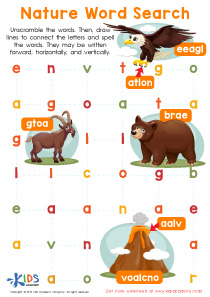
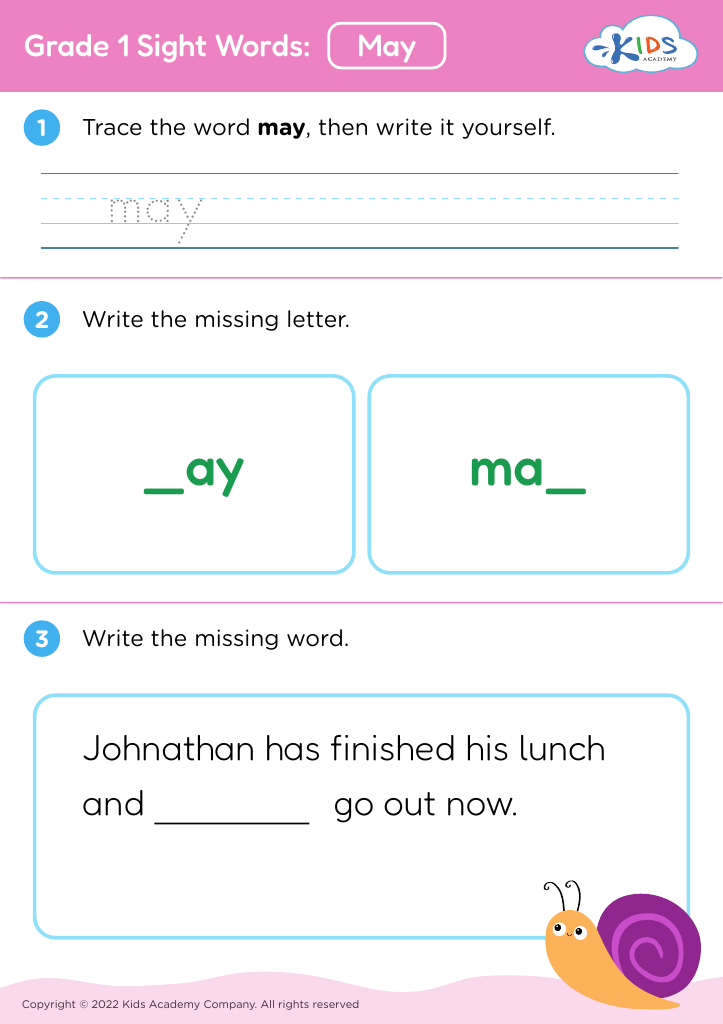
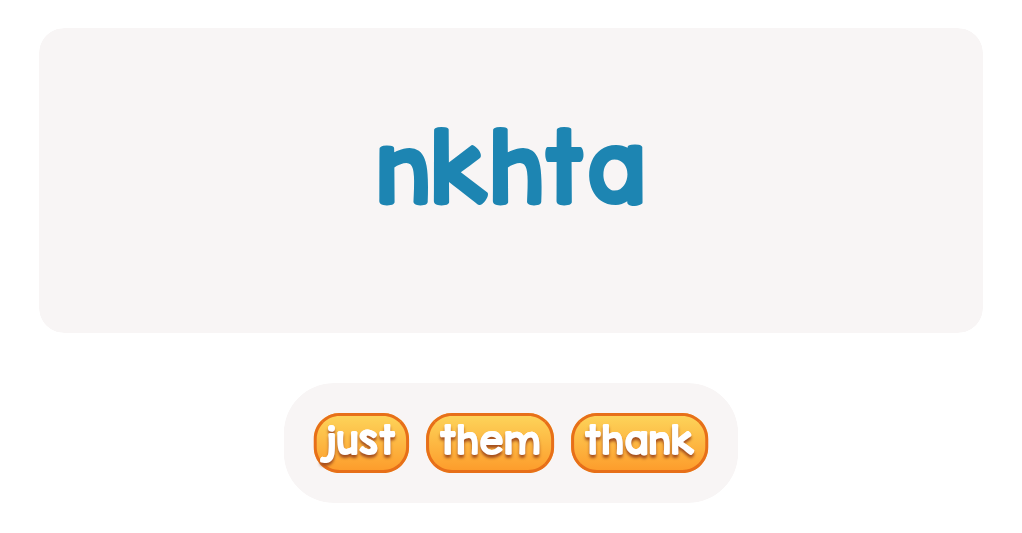
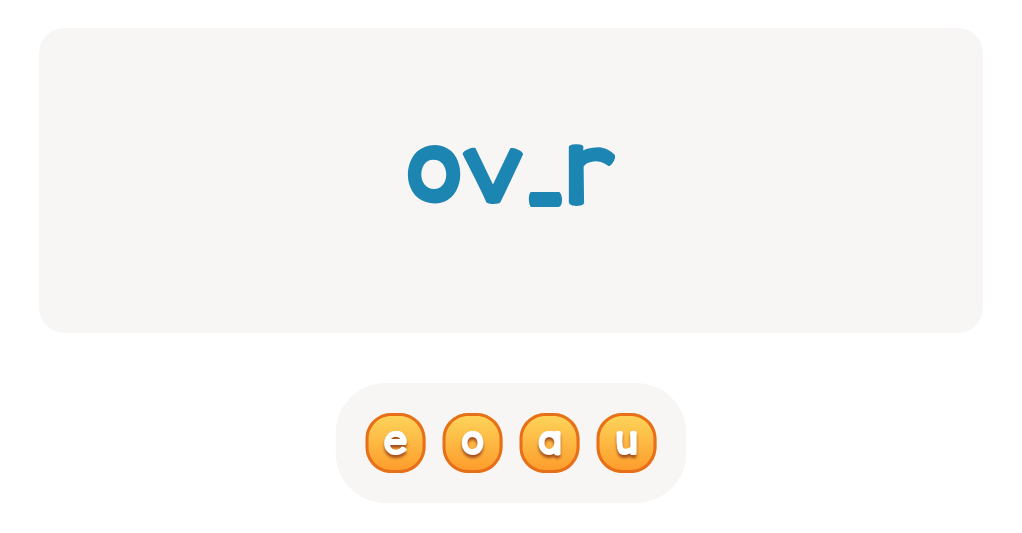
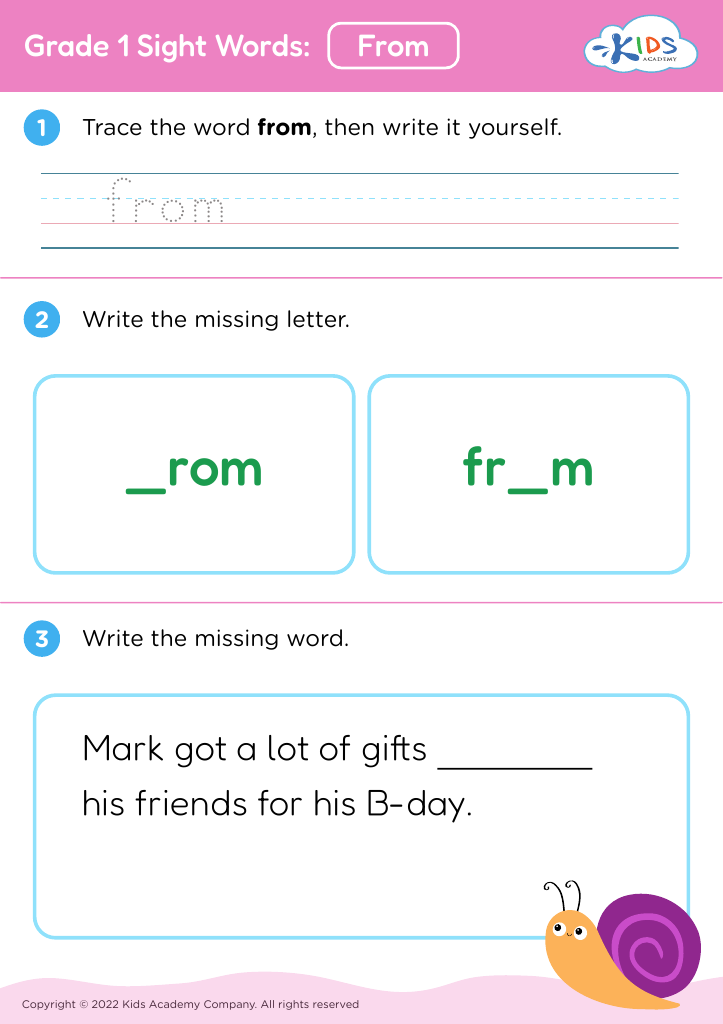
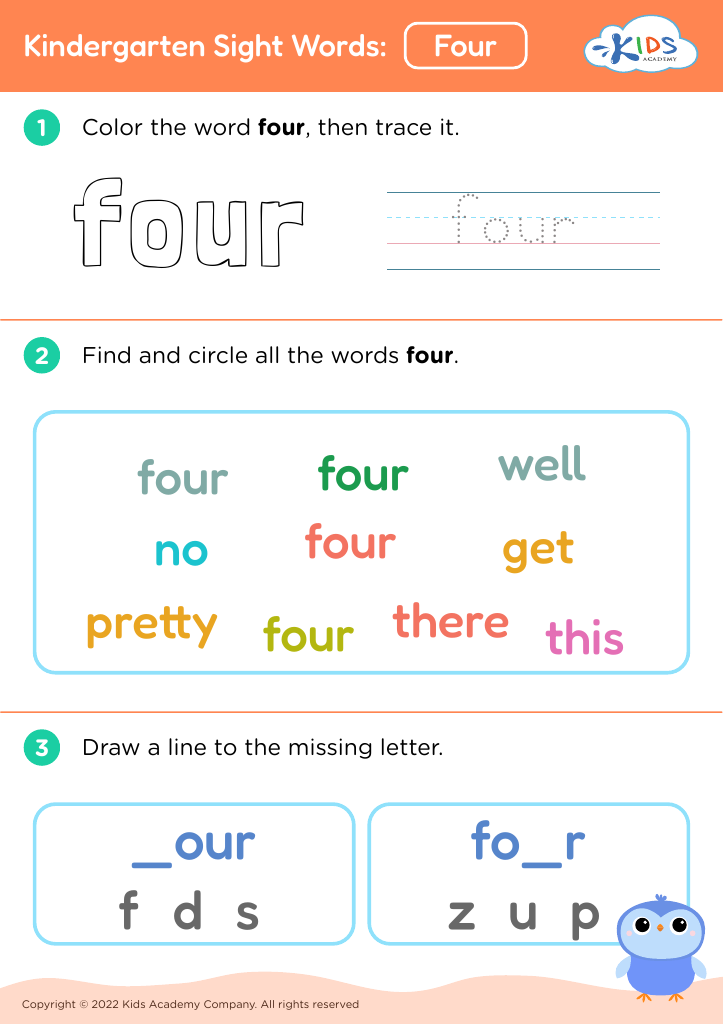
Enhance your child's reading skills with our Problem Solving Sight Words Worksheets, specifically designed for ages 6-7. These engaging worksheets combine sight word recognition with critical thinking exercises to nurture problem-solving abilities. Children will practice essential sight words while solving puzzles, completing sentences, and answering questions that stimulate their minds. Our resources promote literacy and cognitive development in a fun, interactive format, ensuring kids remain motivated learners. Perfect for home or classroom use, these worksheets empower young readers to develop vital language skills and become confident thinkers. Start fostering your child's reading journey today with our enriching problem-solving activities!
Favorites
With answer key
Interactive







Join Kids Academy for Free
Who is primarily going to use this learning content?








Problem Solving Sight Words are crucial for children ages 6-7 as they represent both foundational literacy skills and critical thinking development. At this stage, children begin to read more independently and develop comprehension skills essential for their overall learning progress. Sight words—common words that do not always follow phonetic rules—allow young readers to recognize them quickly, promoting fluency and confidence in reading.
Parents and teachers should care about these sight words as they serve as building blocks for more complex reading and writing tasks. Proficiency in identifying these words enables children to decode texts more fluidly, allowing them to focus on understanding content rather than getting stuck on difficult vocabulary.
Moreover, problem-solving is integrated with language skills, as children learn to navigate unfamiliar situations, decode meaning, and creatively express their thoughts. Developing sight words within problem-solving contexts also encourages critical thinking and enhances vocabulary acquisition, laying a robust foundation for future learning. Overall, nurturing these skills early fosters a love for reading and exploration, which is essential for academic success and lifelong enthusiasm for learning.