Recognizing shapes Sight Words Worksheets for Ages 6-7
6 filtered results
-
From - To
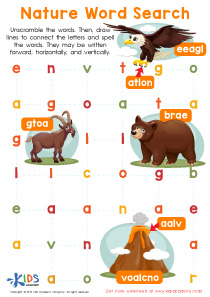
Introducing our "Recognizing Shapes Sight Words Worksheets for Ages 6-7"! Perfect for first graders, these engaging worksheets blend sight word practice with shape recognition, promoting literacy and cognitive development. Designed by education experts, each worksheet features playful activities, such as matching, tracing, and coloring, to help young learners identify common sight words while familiarizing themselves with shapes. These printables are ideal for classroom use or homeschooling, offering a fun, interactive way to enhance reading skills and geometric understanding. Boost your child's confidence and foundational learning with our specially crafted worksheets today!
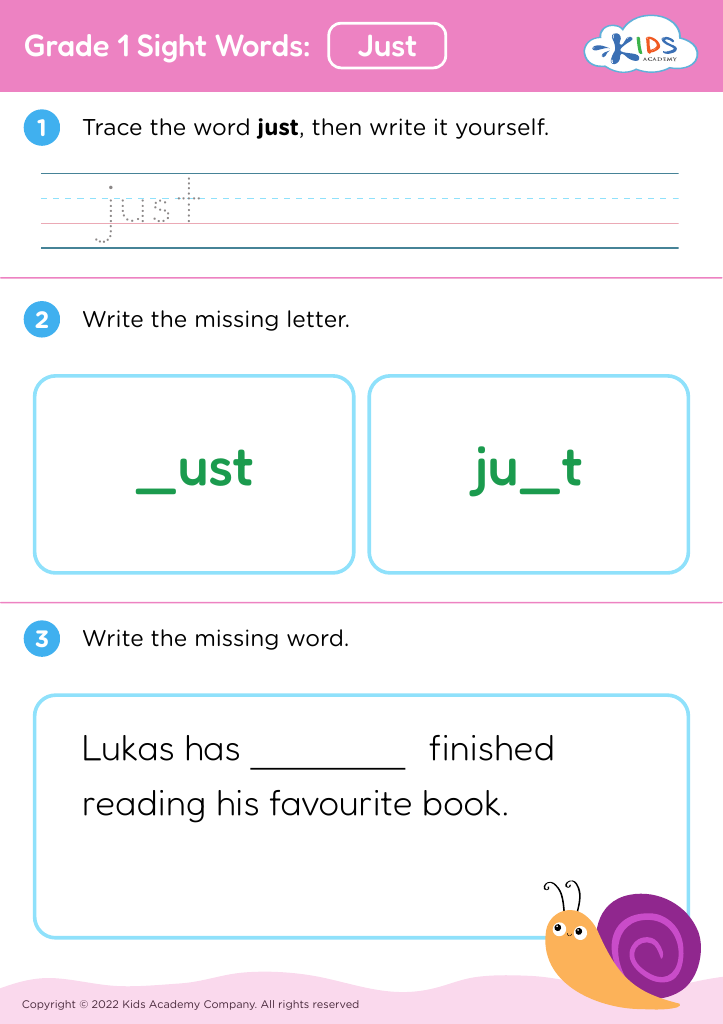






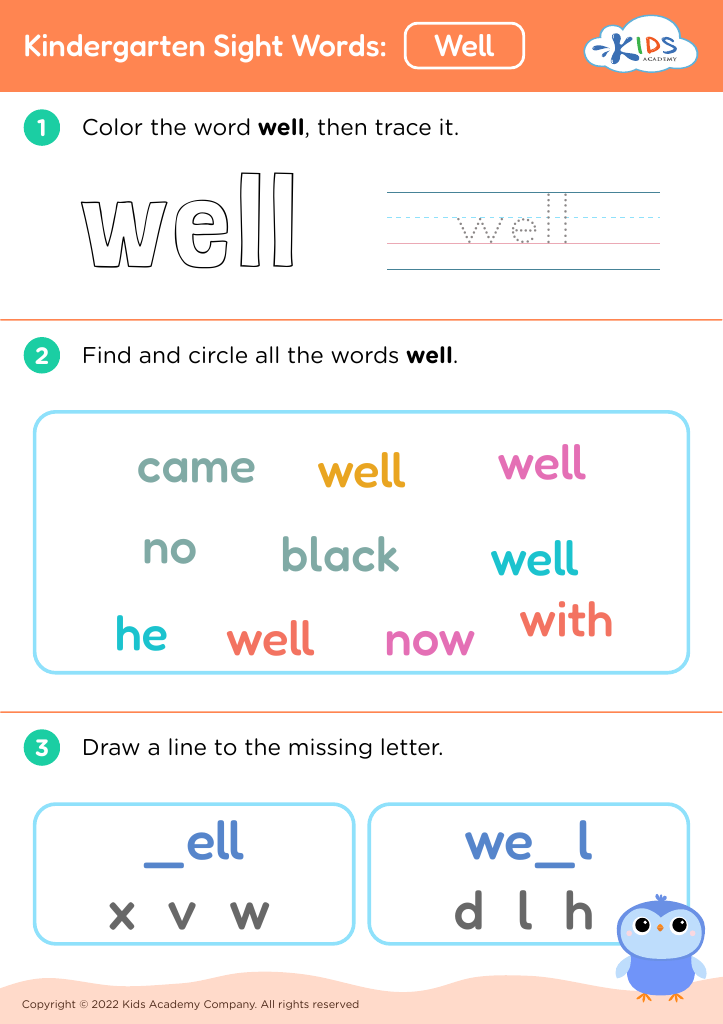
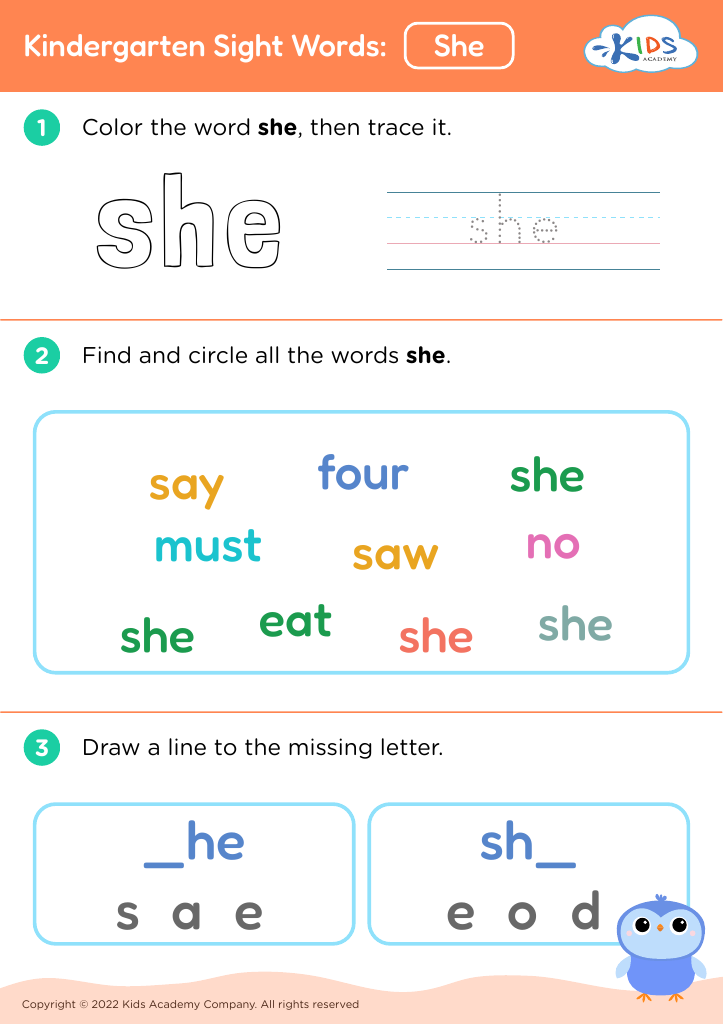








Recognizing shapes and sight words is crucial for children aged 6-7 as it forms the foundation of essential learning and developmental skills. Shapes are not just about geometry; they are integral to understanding the world. When children recognize shapes, they develop spatial awareness and the ability to categorize and compare objects, which are pivotal cognitive skills. Shapes also support higher-level math skills and problem-solving abilities. For instance, recognizing patterns and understanding symmetry can directly impact arithmetic and geometry skills as children progress through school.
Similarly, sight words are the common, frequently used words that young readers must recognize instantly. These words often don’t follow standard phonetic rules, so being able to identify them by sight is crucial for reading fluency and comprehension. When children quickly recognize sight words, they can read more smoothly and focus on understanding the text rather than decoding individual words, which enhances their reading confidence and fosters a love for reading.
For parents and teachers, emphasizing the recognition of shapes and sight words ensures children build a robust educational foundation. This nurtures lifelong learning skills, promoting academic success across multiple subjects and developing critical thinking abilities that are beneficial well beyond early childhood education.