Understanding patterns Sight Words Worksheets for Ages 6-7
5 filtered results
-
From - To
Discover our "Understanding Patterns Sight Words Worksheets" designed specifically for children aged 6-7. These engaging worksheets aim to enhance young learners’ reading and comprehension skills by focusing on the recognition of patterns within sight words. Through interactive activities, kids will not only learn to identify common sight words but also understand their place within sentence patterns, fostering early literacy. Ideal for classroom and home use, these worksheets encourage critical thinking and provide a fun way to reinforce language skills. Support your child’s reading journey today with our effective and carefully crafted resources! Suitable for both educators and parents.
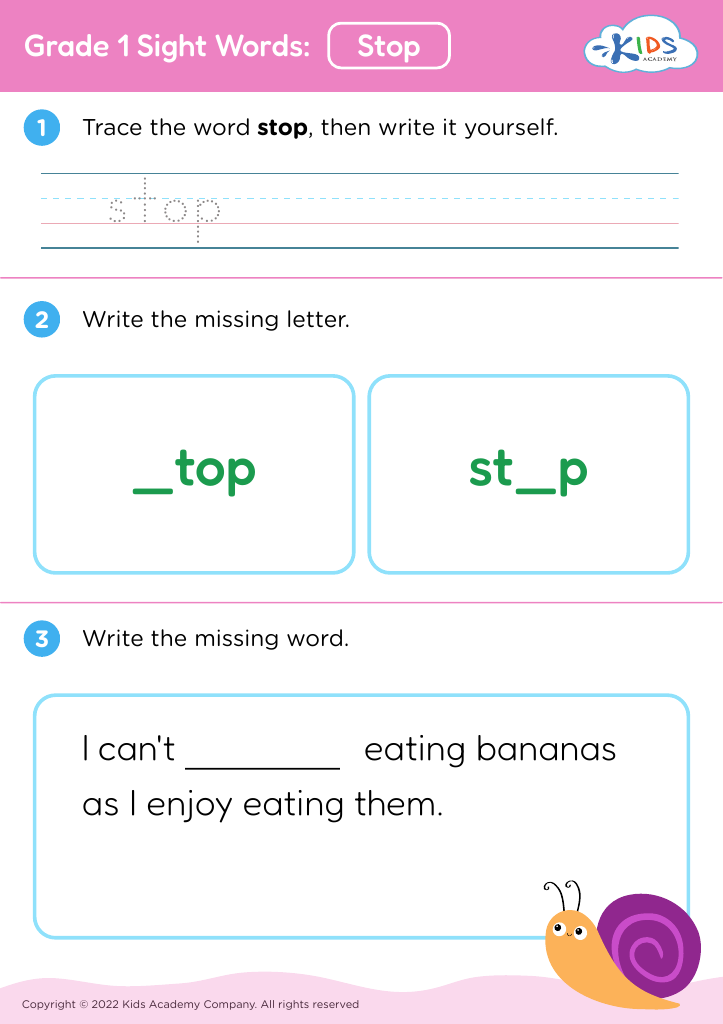
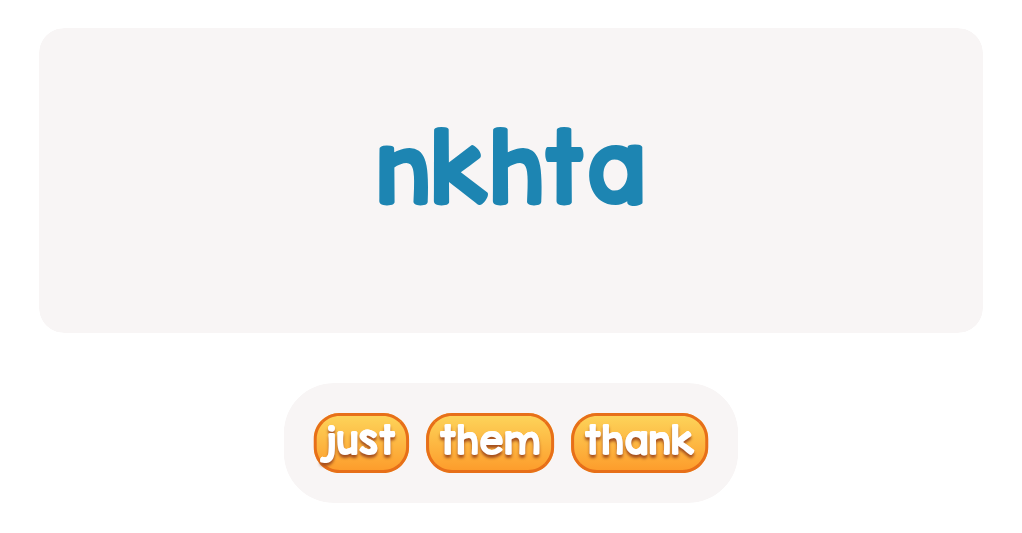







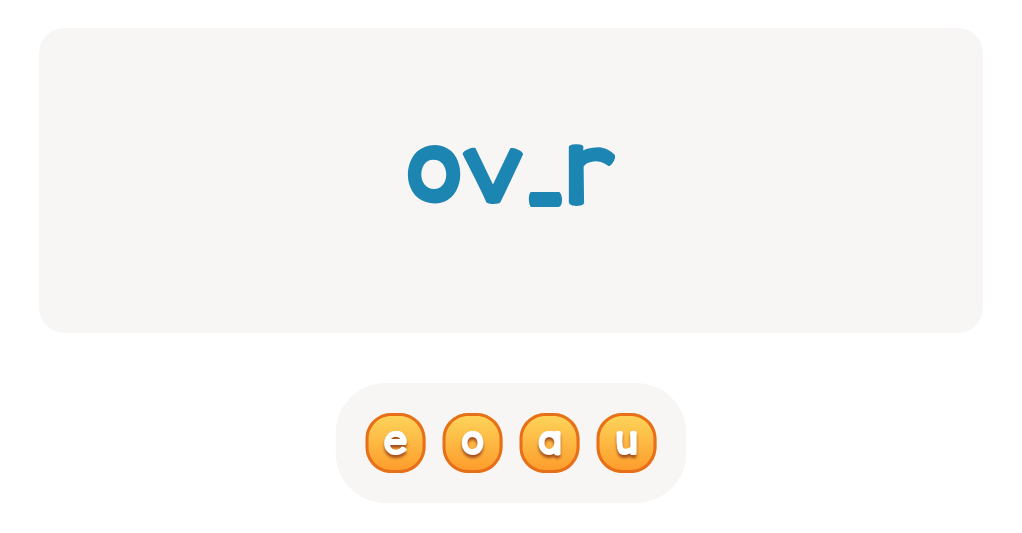
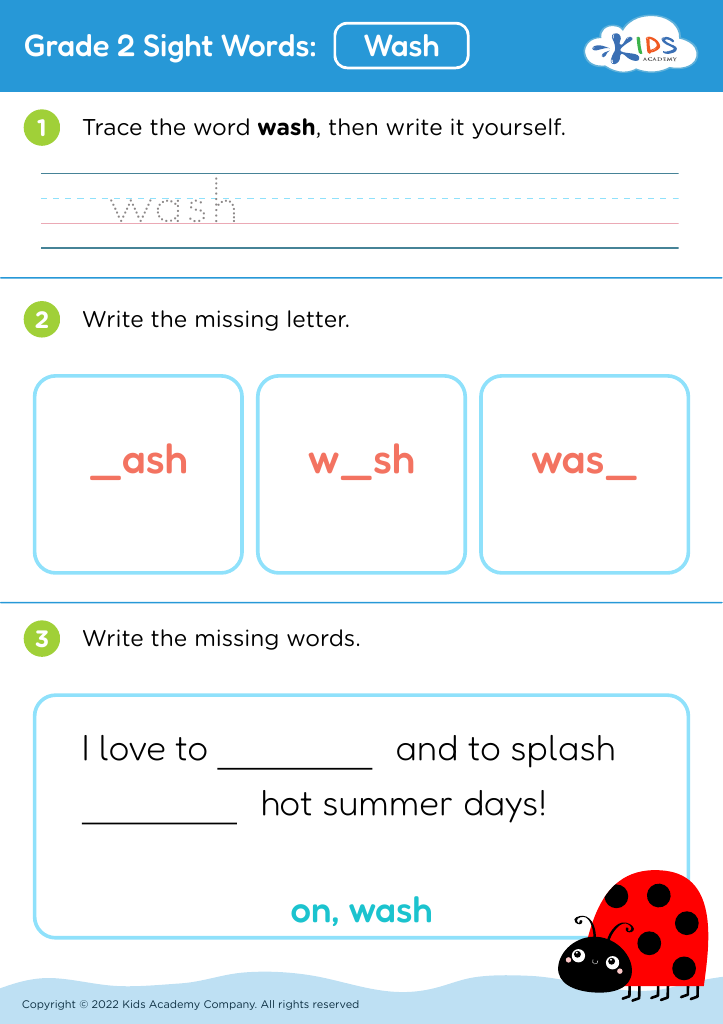
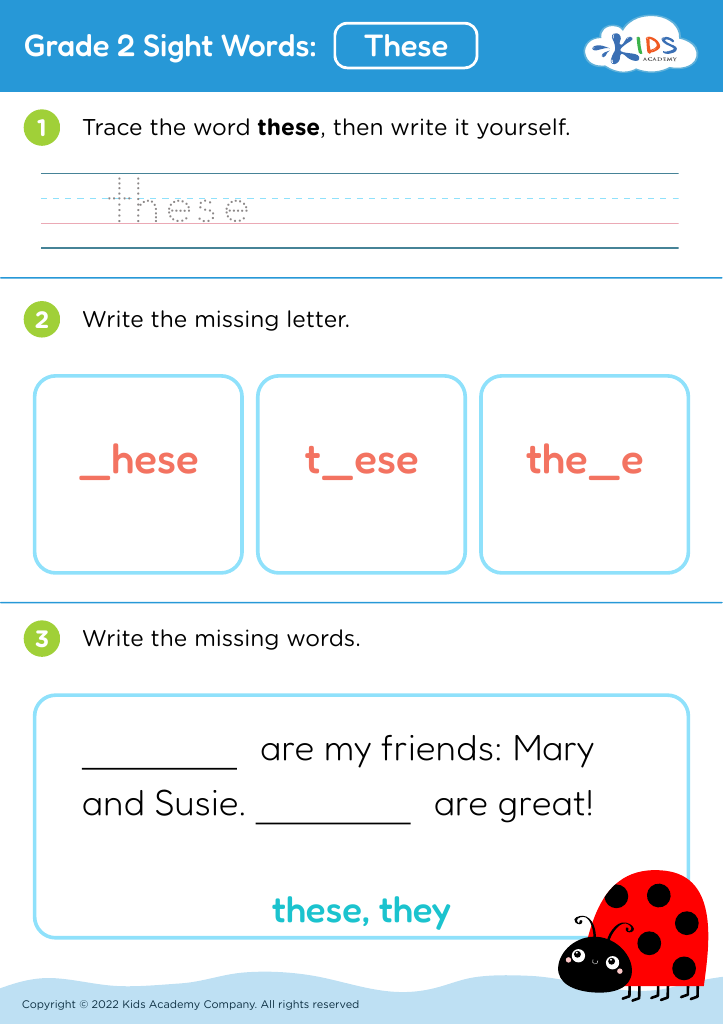
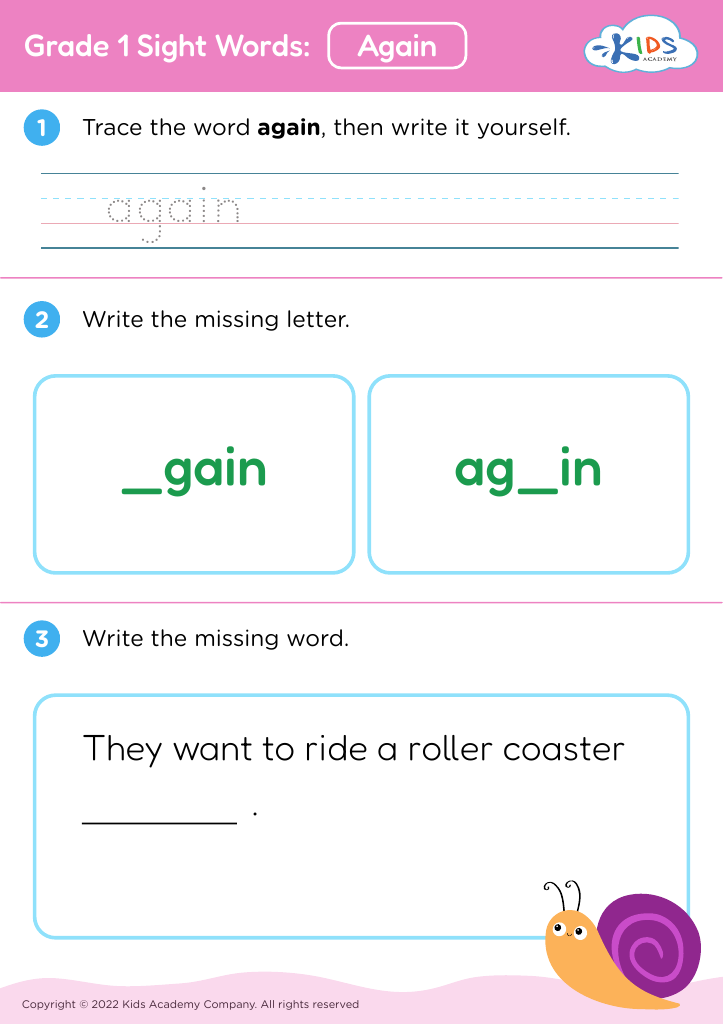
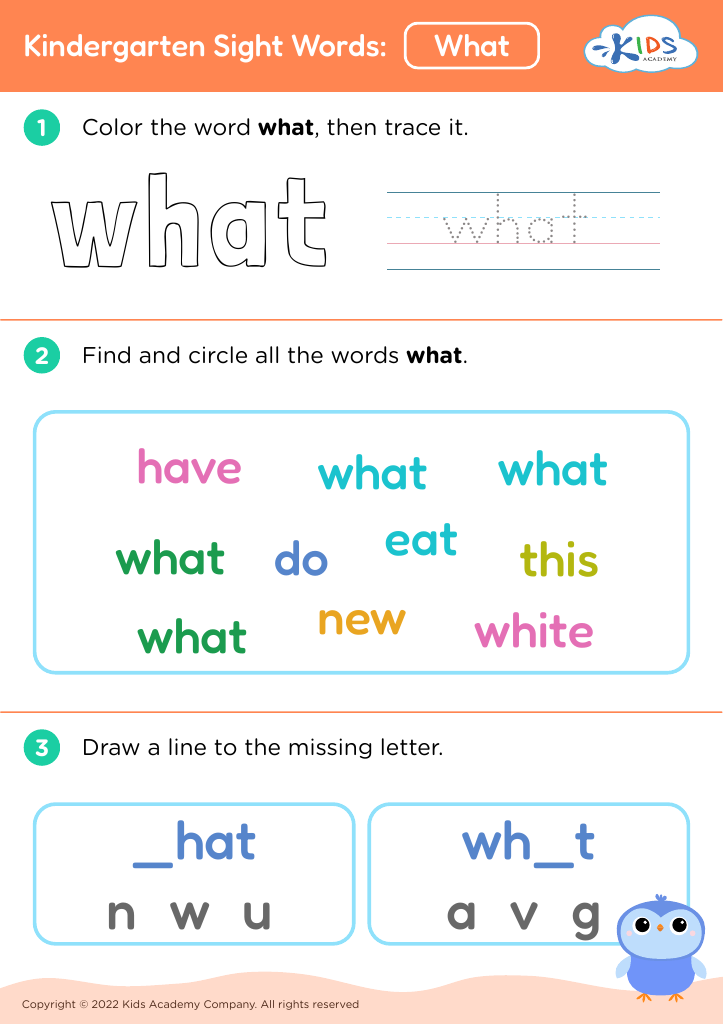






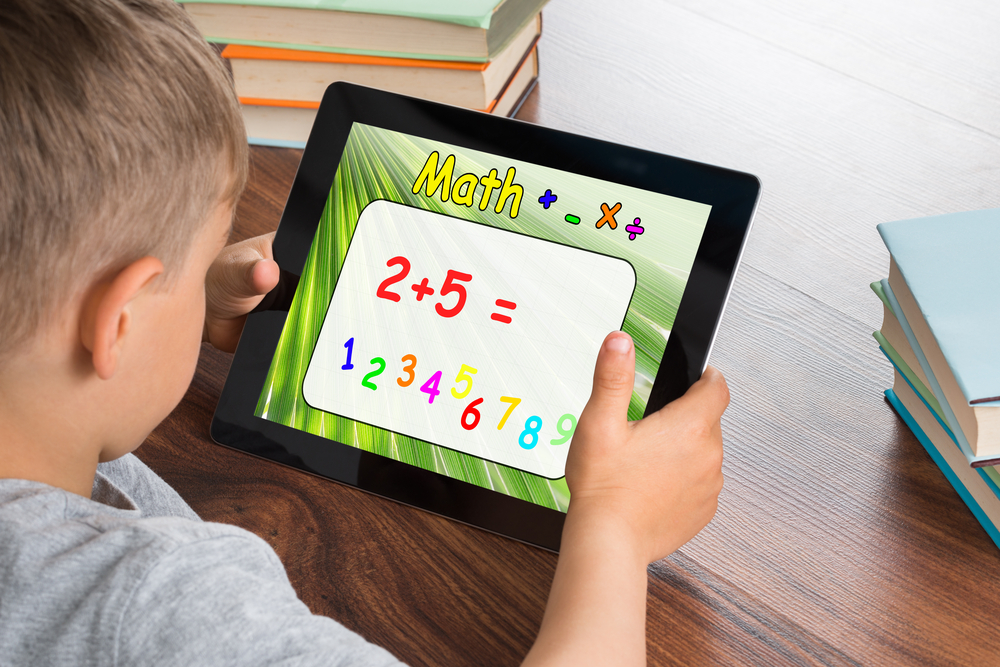

Understanding patterns and sight words for children aged 6-7 is crucial for fostering early literacy skills and enhancing reading fluency. During this developmental stage, children are rapidly acquiring the foundational skills needed for successful reading. Sight words—common words that often don't adhere to phonetic spelling rules—play a vital role in this process. Recognizing these words by sight allows young readers to achieve greater fluency, enabling them to focus on comprehension rather than decoding each word.
Parents and teachers should care about this aspect of literacy because mastery of sight words builds confidence in reading, fostering a love for books and storytelling. It enhances children’s ability to recognize recurring patterns in language, such as suffixes, prefixes, and word families, which contributes to vocabulary expansion and literacy development.
Moreover, children who grasp patterns in language often perform better in overall reading comprehension, setting a solid foundation for more advanced skills in later grades. Engaging with sight words through interactive activities and games can make learning enjoyable, thereby incorporating fun into their educational journey. By prioritizing pattern recognition and sight word mastery, parents and educators can significantly impact a child's long-term academic success.