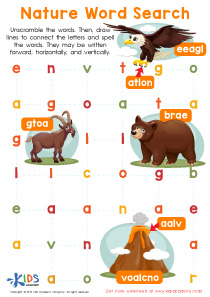
Understanding symmetry Sight Words Worksheets for Ages 6-7
4 filtered results
Difficulty Level
Grade
Age
-
From - To
Subject
Activity
Standards
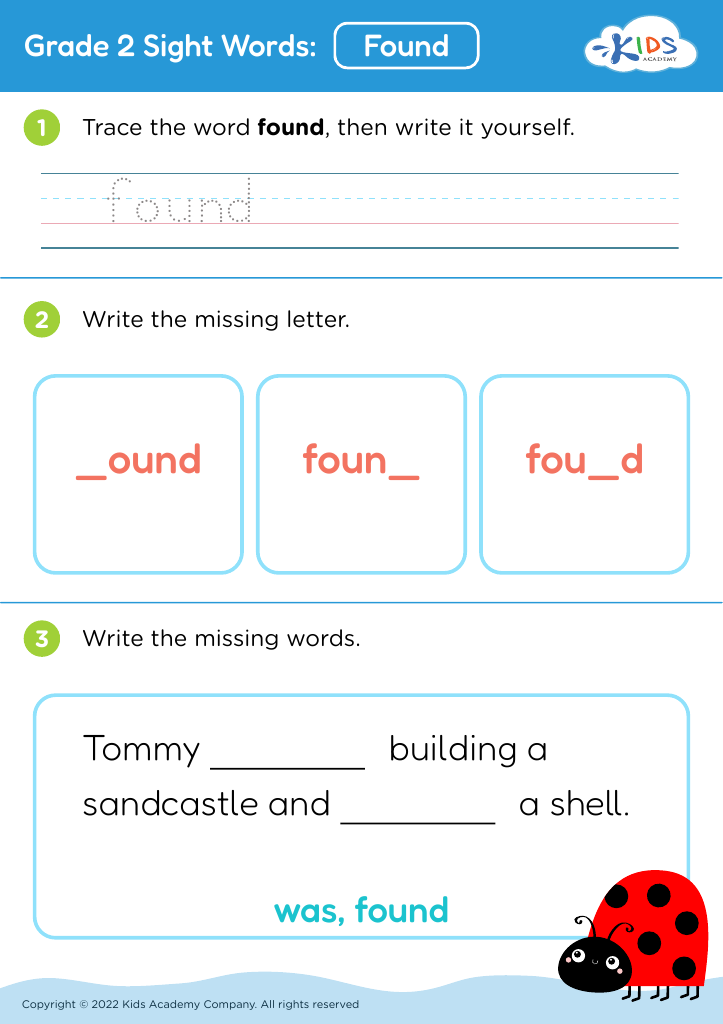
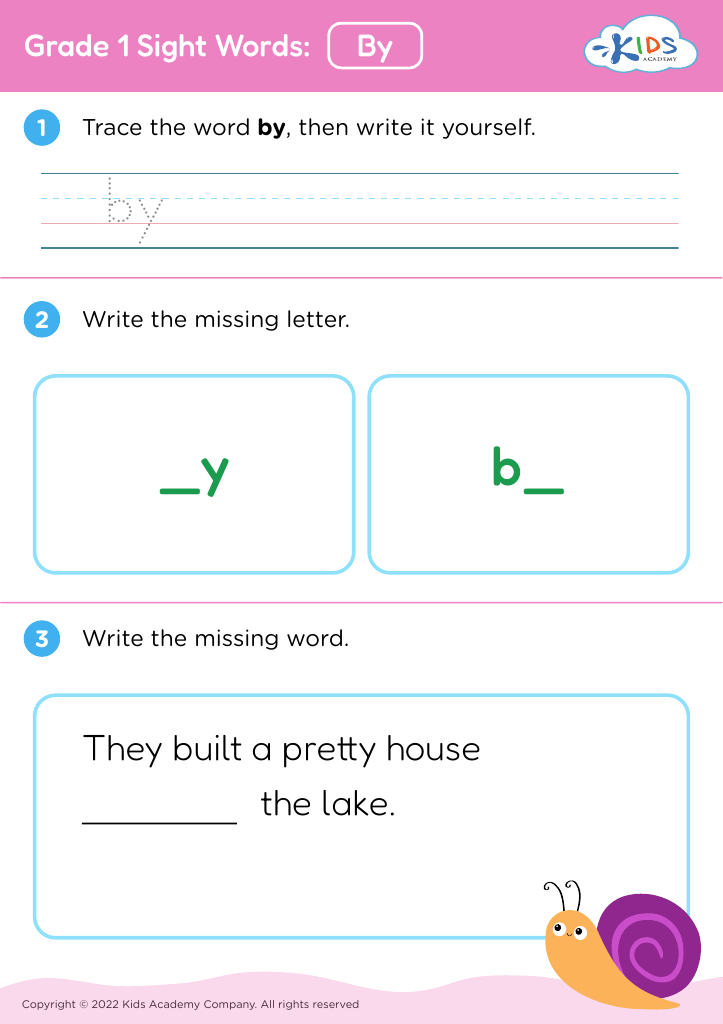
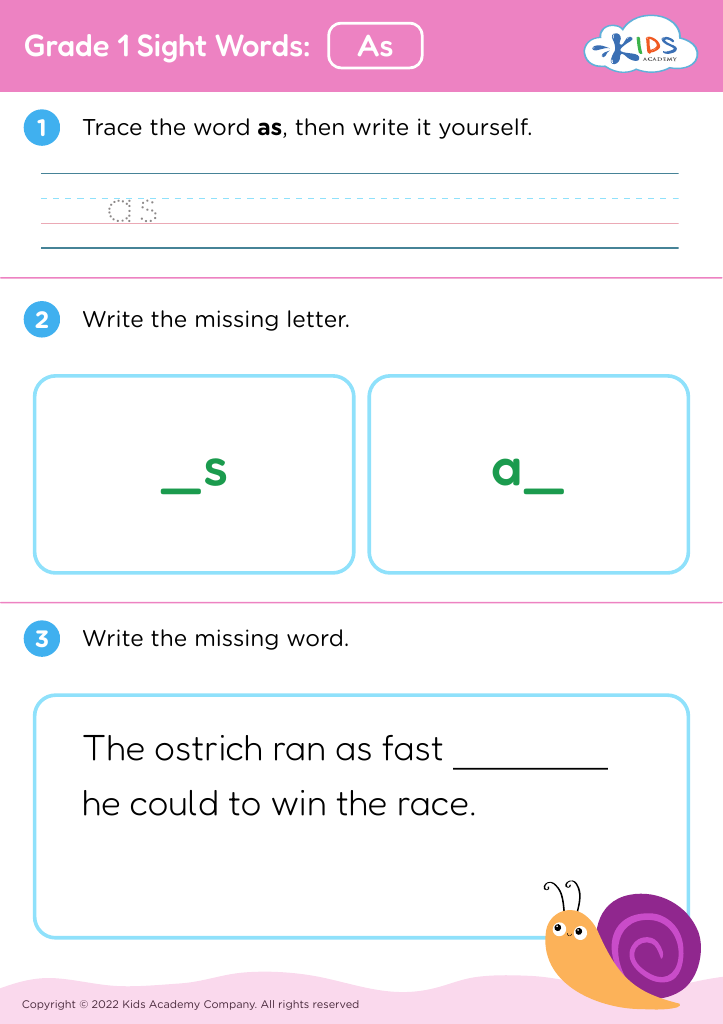
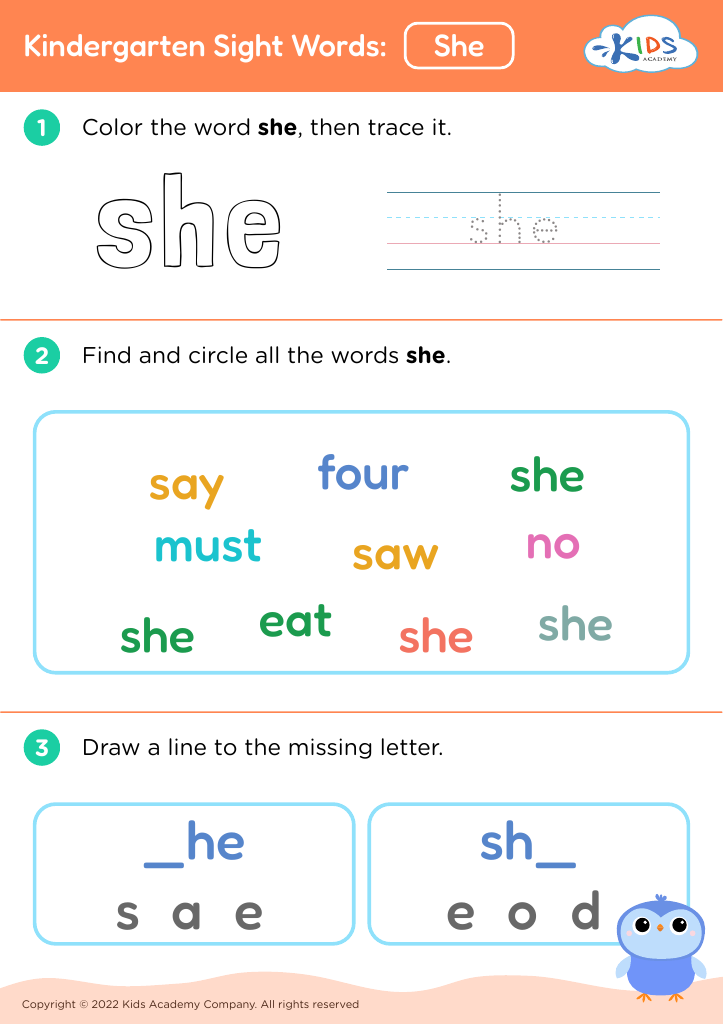
Discover engaging "Understanding Symmetry Sight Words Worksheets" designed for children aged 6-7. These expertly crafted worksheets foster fundamental reading and math skills by seamlessly integrating sight words practice with symmetry activities. Young learners will sharpen their understanding of symmetry while mastering essential sight words, promoting both language development and geometric reasoning. Each worksheet is full of fun and interactive exercises to keep kids motivated and eager to learn. Perfect for home or classroom use, these resources are an excellent way to boost your child’s confidence and academic growth. Explore our collection today and watch them thrive!
Favorites
With answer key
Interactive

Join Kids Academy for Free
Who is primarily going to use this learning content?








Understanding symmetry and sight words is essential for children aged 6-7 as it forms the foundation for their cognitive and linguistic development. Symmetry helps kids develop spatial awareness and recognize patterns, which are critical skills in subjects like mathematics and art. For example, identifying lines of symmetry in shapes translates to more complex problem-solving abilities and enhances their understanding of geometry. It also encourages attention to detail, which can improve their ability to notice patterns in nature and their environment.
Sight words, on the other hand, are high-frequency words that children need to recognize instantly to become fluent readers. Mastery of these words enables smoother reading since these words often do not follow standard phonetic rules. When children can quickly recognize sight words, they read more fluidly and comprehend texts better. This foundation is crucial for progressing from learning to read to reading to learn, enabling them to absorb more knowledge from books across various subjects.
In summary, focusing on symmetry and sight words ensures a balanced development of both math and literacy skills. Teachers and parents who prioritize these areas set their children on a path of academic success, creativity, and effective communication.