Understanding adjectives Grammar Worksheets for Ages 6-7
3 filtered results
-
From - To
Help your 6-7-year-olds master the art of describing words with our "Understanding Adjectives Grammar Worksheets." Crafted to align with educational standards, these engaging resources make learning adjectives fun and interactive. From matching games to fill-in-the-blanks, children will broaden their vocabulary and improve their writing skills. Our worksheets not only teach the identification and usage of adjectives but also encourage kids to use adjectives creatively in sentences. With colorful illustrations and age-appropriate exercises, your child will gain confidence and enjoy the learning journey. Unlock their potential and enhance their academic growth with our expertly designed worksheets.
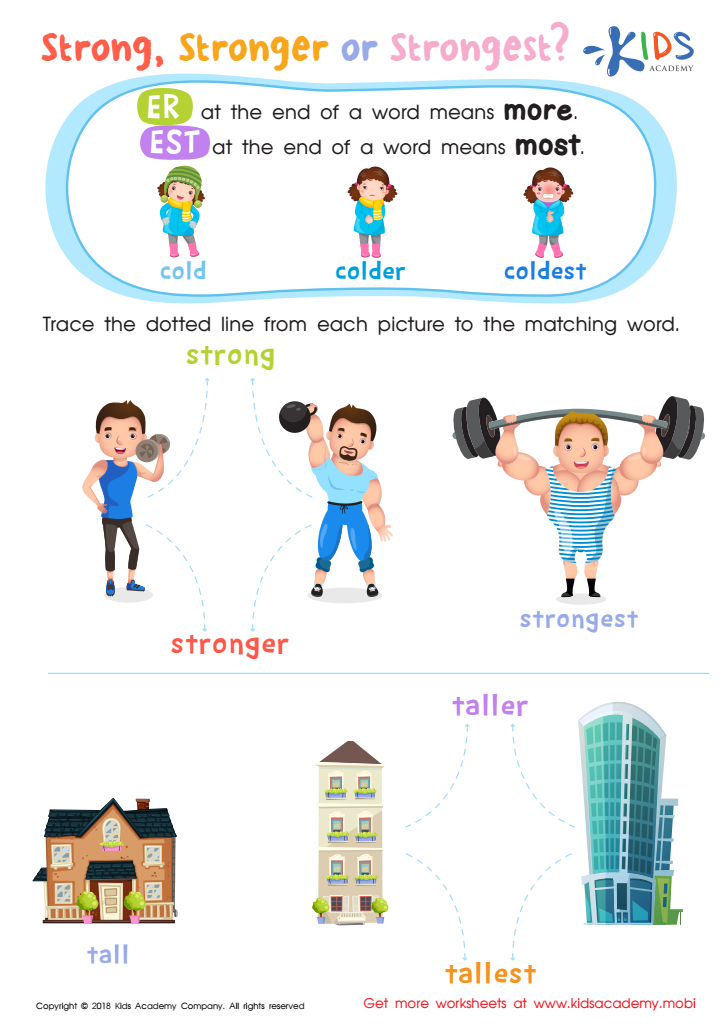
Strong or Stronger? Worksheet
 Assign to My Students
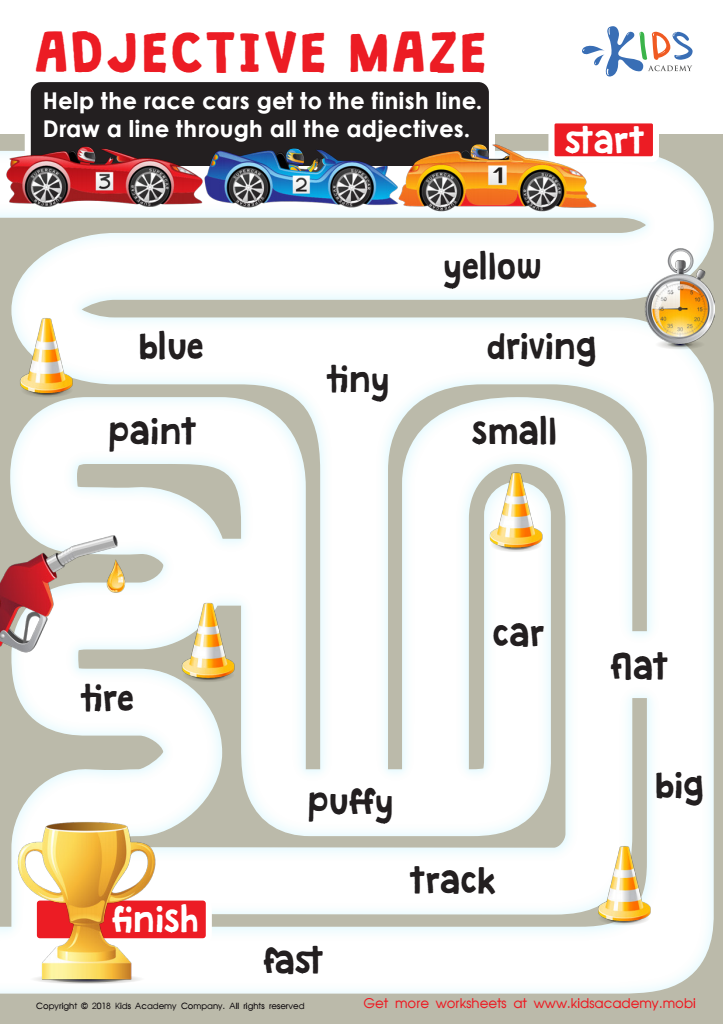
Adjective Maze Worksheet
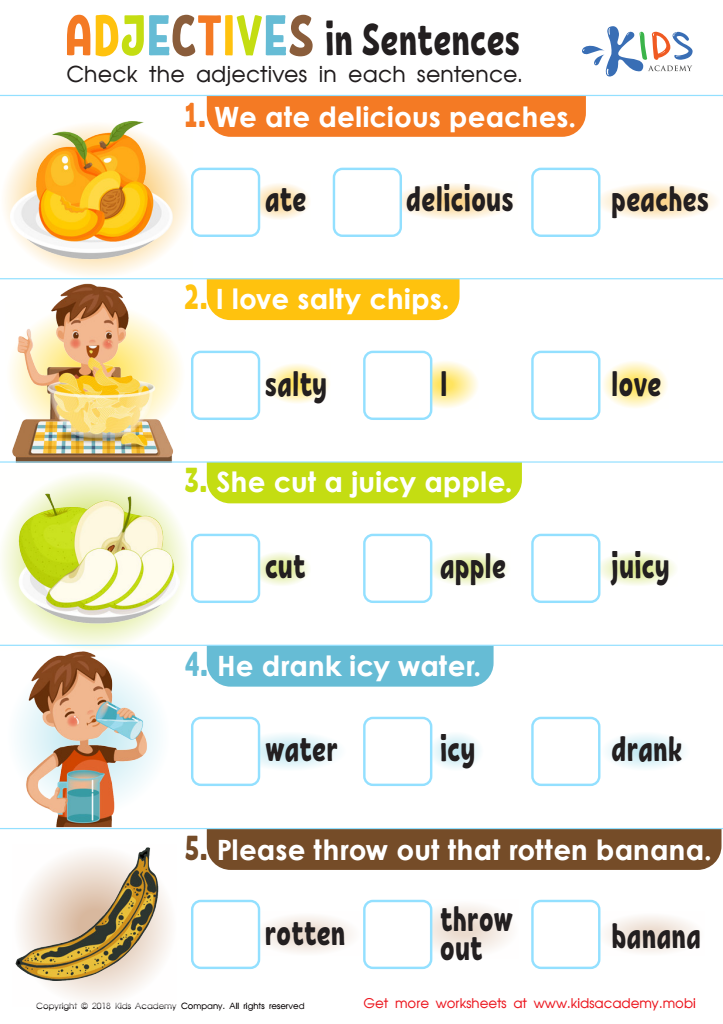
Adjectives in Sentences Worksheet








Understanding adjectives is essential for young children, typically aged 6-7, for several reasons. Adjectives enrich vocabulary and enable kids to express themselves more precisely. At this developmental stage, children are rapidly expanding their linguistic capabilities. When they learn adjectives, they start to describe the world more vividly and can communicate their thoughts and feelings better.
For parents and teachers, focusing on adjectives enhances a child's reading and writing skills. Books and stories become more engaging when the language is descriptive and colorful, allowing children to develop a love for reading. In writing, the use of adjectives encourages creativity and improves clarity, which are important academic skills.
Moreover, understanding adjectives boosts cognitive development. Children learn to categorize and compare objects, improving their analytical skills. Describing objects and experiences more accurately serves as a foundational building block for later, more complex linguistic structures, contributing to overall language proficiency.
Lastly, adjectives play a significant role in social interactions. They help children convey their personality and experiences effectively, thus promoting better peer relationships and socialization. Ultimately, emphasizing adjectives in grammar lessons nurtures well-rounded communicative abilities that benefit children both academically and socially.








