Alphabet understanding ABC Order Worksheets for Ages 6-8
3 filtered results
Difficulty Level
Grade
Age
-
From - To
Subject
Activity
Standards
Enhance your child’s alphabet mastery with our engaging ABC Order Worksheets, designed for ages 6-8! These carefully crafted activities help young learners improve their alphabet skills by practicing letter sequencing and order recognition. Each worksheet incorporates fun exercises that make learning enjoyable, including creative illustrations and interactive tasks. As children explore the alphabet, they will build essential reading and writing foundations. Perfect for classroom or home use, our worksheets provide a valuable resource for teachers and parents alike! Foster a love for learning in your child while they develop confidence in organizing letters with our Alphabet Understanding resources today!
Favorites
With answer key
Interactive
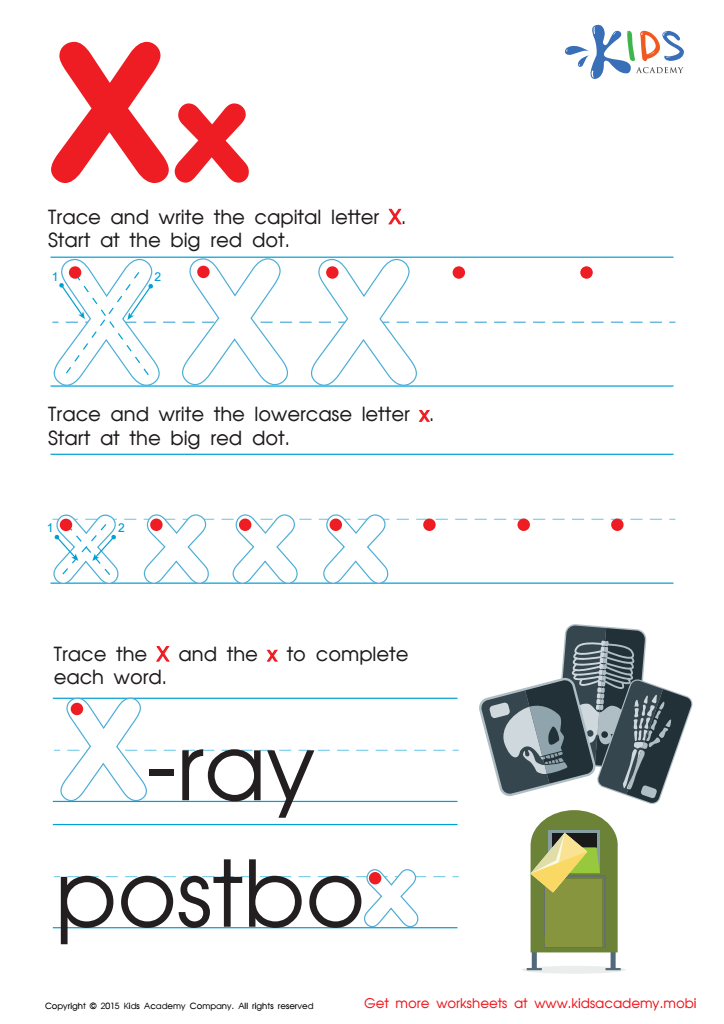
Letter X Tracing Page
Trace the uppercase letter "X" to learn, then write it yourself and practice. Then do the same with the lowercase "x" before completing the words "X-ray" and "postbox". Enjoy our alphabet printables!
 Assign to My Students
Letter X Tracing Page
Worksheet


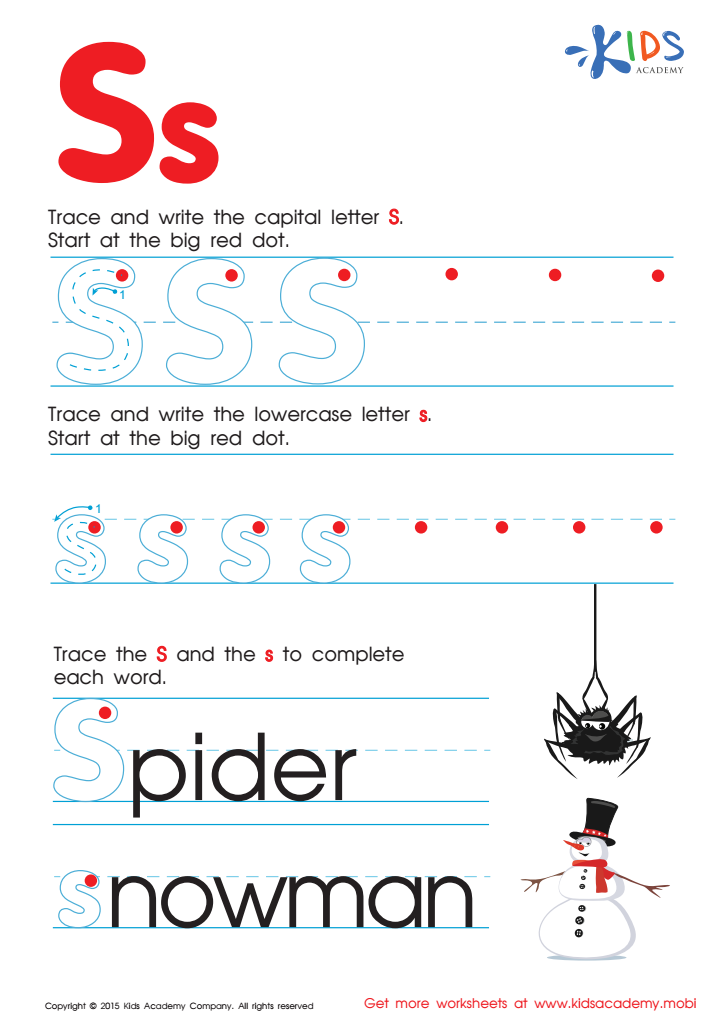
Letter S Tracing Page
Trace and write the capital and lowercase "S" on this ABC worksheet for kindergarten. Start with the big red dot and be careful. When you finish, help the spider and snowman in the pictures restore their words with the capital and lowercase letters. Continue learning the alphabet with Kids Academy.
Letter S Tracing Page
Worksheet
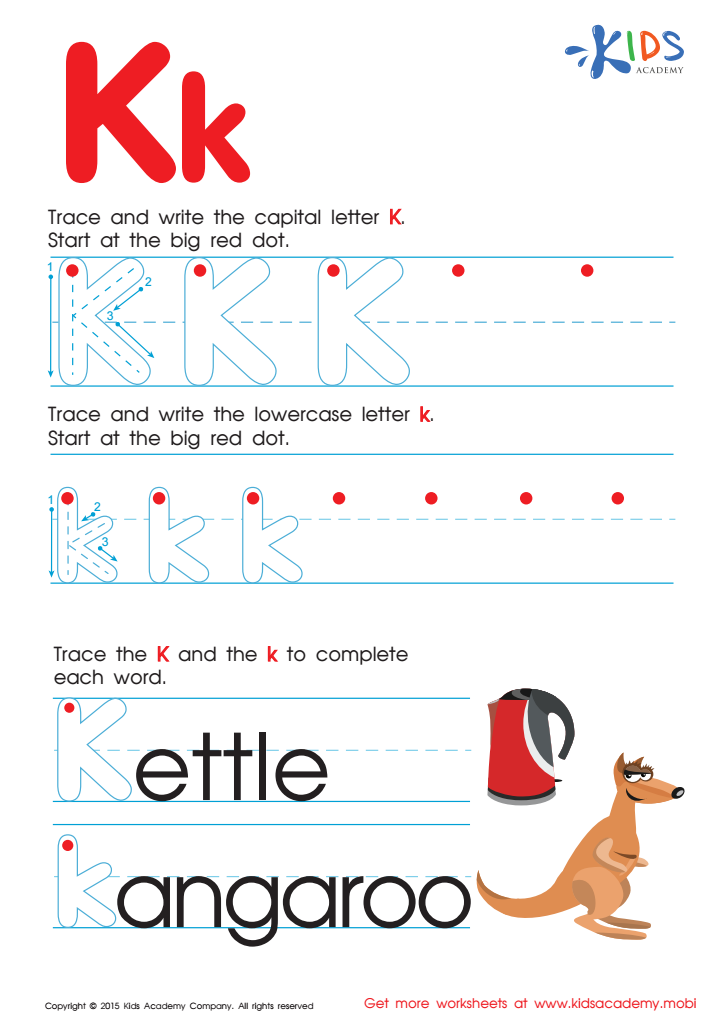
Letter K Tracing Page
Trace and write the letter K; start at the big red dot. Use it to complete words like "Kettle" and "Kangaroo". Visit Kids Academy for more free alphabet worksheets for kindergarten.
Letter K Tracing Page
Worksheet
Join Kids Academy for Free
Who is primarily going to use this learning content?







Alphabet understanding and mastery of ABC order are crucial skills for children aged 6-8, directly influencing their literacy development and overall academic success. First, recognizing the order of letters helps children in various aspects of reading and writing. For instance, when they Alphabetize, they sort words and ideas, enhancing their comprehension and organization skills. This begins to prepare them for more complex reading tasks, including library usage and searching for books, fostering independence and critical thinking.
Moreover, a firm grasp on ABC order supports proficiency in spelling and vocabulary acquisition. Children learn to identify words more easily, making connections between sounds and their written representations. This foundational knowledge encourages confidence, helping them express themselves more clearly in written communication.
Additionally, an understanding of Alphabet sequences is necessary for engaging with digital tools and educational software often used in classrooms today, integrating technology into their learning experience. The ability to recognize and utilize ABC order not only bolsters academic literacy but also delineates a path for social interaction, as children thrive in collaborative environments where they can share ideas and concepts fluently. Therefore, it is essential that parents and teachers prioritize this aspect of language education to cultivate engaged and competent young learners.