Cursive handwriting practice Cursive Alphabet Worksheets for Ages 6-8
4 filtered results
-
From - To
Enhance your child's cursive handwriting with our Cursive Alphabet Worksheets tailored for ages 6-8. These engaging printables make learning cursive fun and effective, helping young writers master each letter with ease. Each worksheet features traceable letters and practice spaces designed to develop fine motor skills, letter recognition, and writing fluidity. Perfectly structured for young learners, these activities not only boost confidence but also ensure a strong foundation in cursive handwriting. Ideal for both classroom use and at-home practice, our worksheets provide a comprehensive handwriting resource to support your child’s educational journey. Download now and watch their skills flourish!
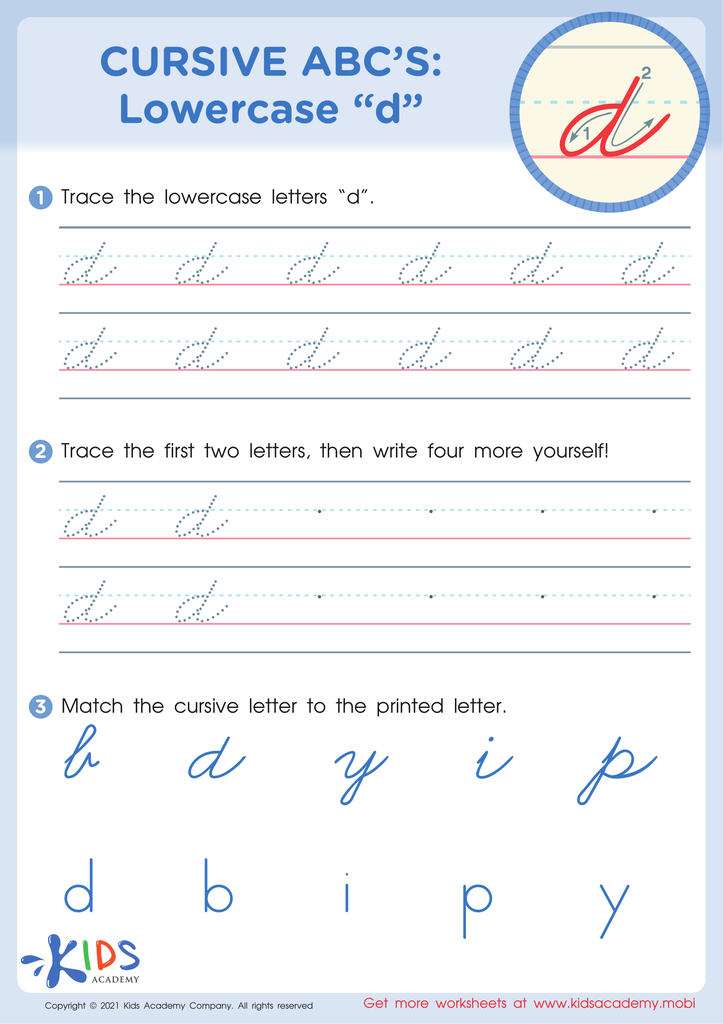
Cursive ABCs: Lowercase d
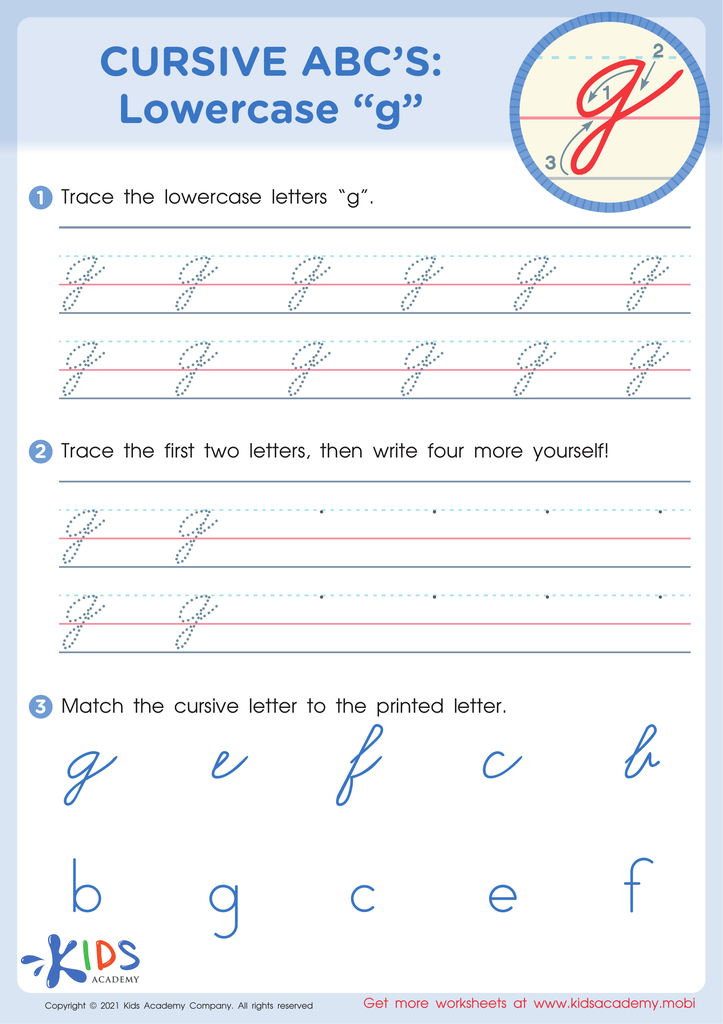
Cursive ABCs: Lowercase g
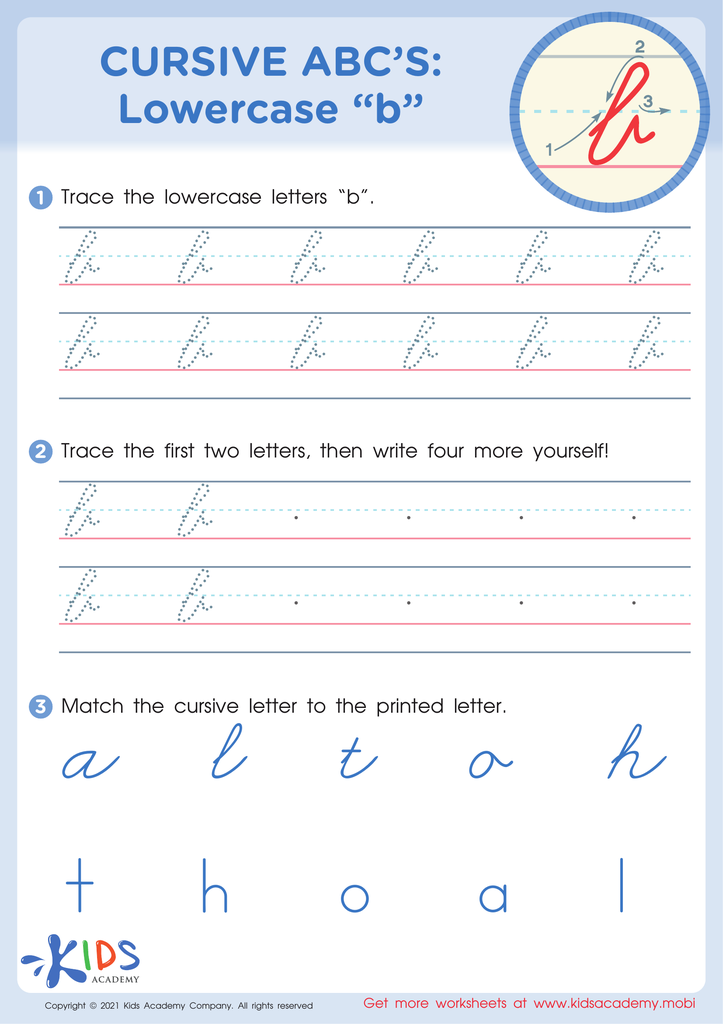
Cursive ABCs: Lowercase b
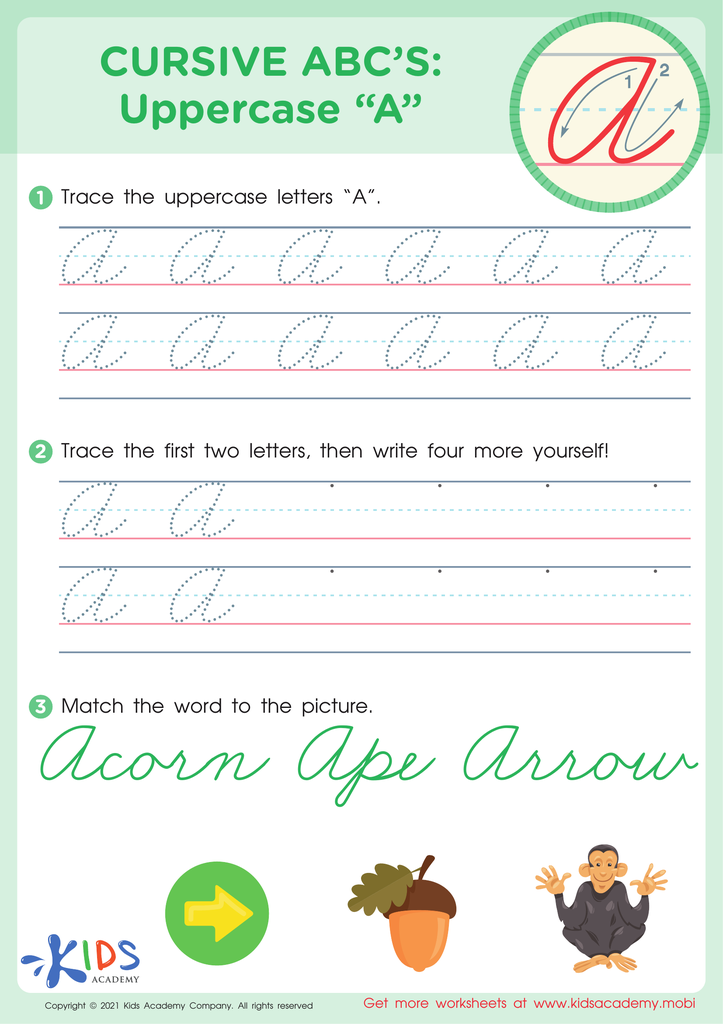
Cursive ABCs: Uppercase A





Cursive handwriting practice is essential for children aged 6-8, playing a pivotal role in their cognitive and motor skills development. By engaging in cursive writing, young students improve fine motor skills, enhancing hand-eye coordination, dexterity, and overall muscle memory. These skills are not only beneficial for neat and legible handwriting but extend to other activities like sports, playing musical instruments, and even daily tasks such as tying shoelaces.
Beyond physical skills, cursive writing fosters cognitive development. The flowing, continuous strokes of cursive require more complex brain engagement compared to print writing. This enhances neural connections, improves memory retention, and stimulates creativity. Writing in cursive is notably beneficial for children with learning disabilities such as dyslexia, as the connected letters and tactile nature of cursive can aid in reading and writing fluency.
Moreover, learning cursive instills a sense of discipline and patience. The gradual progression from mastering individual letters to writing phrases teaches children perseverance and attention to detail. Furthermore, cursive writing is a valuable cultural skill, enabling children to read historical documents and personal family letters, thus linking them to past generations.
Incorporating cursive handwriting in education reinforces a blended learning approach. It complements digital literacy while preserving an essential aspect of comprehensive linguistic and motor development. Therefore, parents and teachers should invest in cursive practice to provide children with a well-rounded and enriching educational experience.







