Lowercase letter writing Letter Recognition Worksheets for Ages 6-8
3 filtered results
-
From - To
Enhance your child's handwriting skills with our engaging Lowercase Letter Writing Letter Recognition Worksheets, designed for ages 6-8. These printable worksheets from Kids Academy help young learners master lowercase letter formation and recognition through fun, interactive activities. Each sheet features guided practice, tracing exercises, and delightful illustrations to keep kids motivated. Perfect for both classroom and home learning, our resources align with educational standards to nurture foundational literacy skills. Rediscover the joy of learning with our expertly crafted, easy-to-use worksheets, and watch your child's confidence and competence in writing flourish.
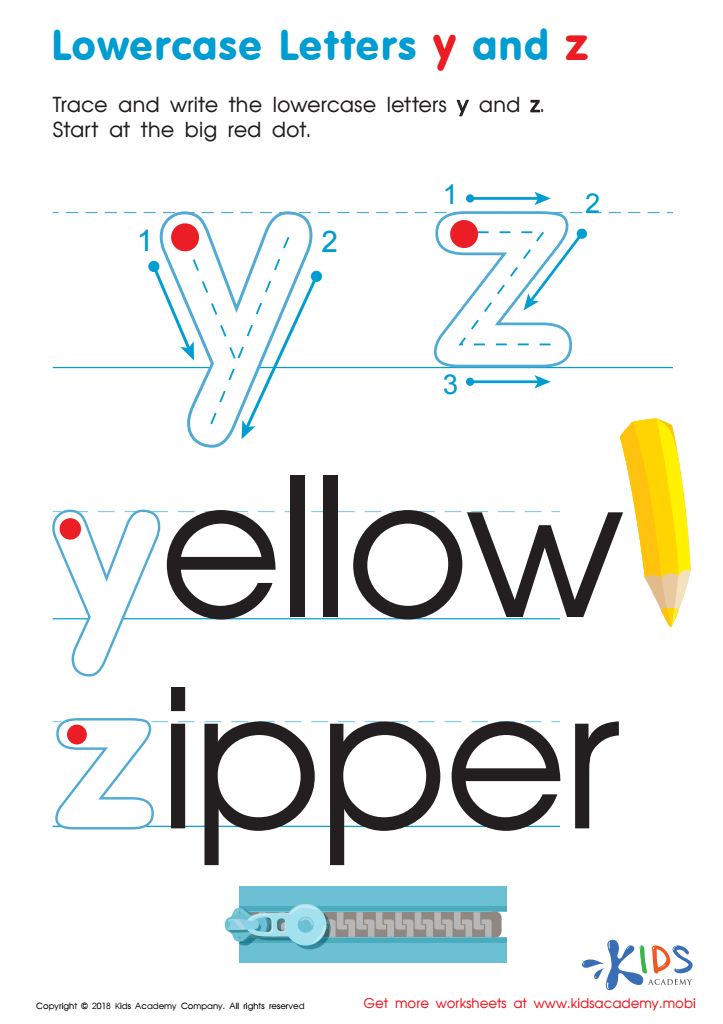
Lowercase Letters y z Worksheet
 Assign to My Students

Lowercase Letters j k l Worksheet
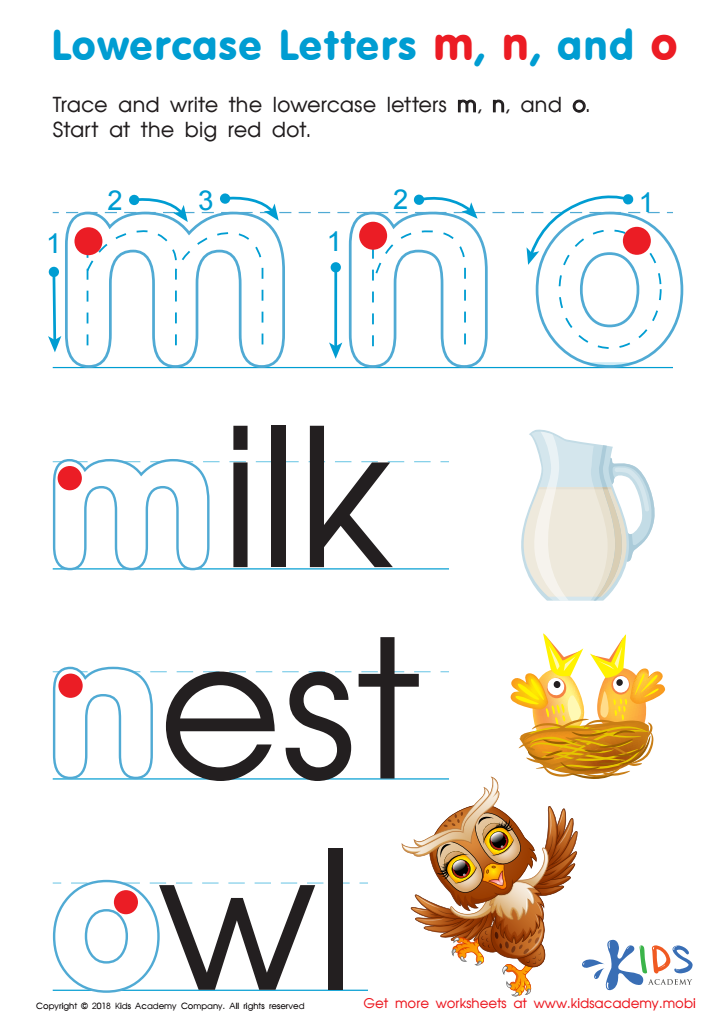
Lowercase Letters m n o Worksheet








Parents and teachers should be actively invested in lowercase letter writing and recognition for children aged 6-8 because these skills are foundational for literacy development. At this crucial stage, children transition from basic reading and writing to more complex tasks, and strong familiarity with lowercase letters boosts their reading fluency and comprehension. Most written text in books, worksheets, and digital content is predominantly in lowercase, so children who can easily recognize and write these letters are better equipped to tackle reading assignments and daily written communication.
Moreover, this age typically marks a significant phase in children’s brain development, where neural connections related to language are rapidly forming. Practicing lowercase letter recognition enhances visual-discrimination skills, hand-eye coordination, and fine motor skills, forming a solid bedrock for effective learning. Writing lowercase letters also encourages better handwriting, which is critical for legibility and speed, impacting their ability to complete school work efficiently.
Additionally, children who are adept in recognizing and writing lowercase letters tend to exhibit greater confidence and enthusiasm towards reading and writing tasks. This, in turn, fosters a more positive attitude toward school and learning in general. Thus, emphasis on these competencies ensures children develop robust academic skills that will serve them throughout their educational journey.







