
Spelling practice Letter Recognition Worksheets for Ages 6-8
4 filtered results
Difficulty Level
Grade
Age
-
From - To
Subject
Activity
Standards
Enhance your child's spelling skills with our engaging Letter Recognition Worksheets designed for ages 6-8. These printable resources introduce fun activities that combine letter recognition and spelling practice, ensuring a solid foundation for early literacy. Through colorful illustrations and interactive exercises, children will joyfully recognize letters and learn to form words. Our worksheets cater to different learning styles, making spelling an enjoyable experience. Ideal for home or classroom use, they provide an effective way for young learners to boost their confidence in reading and writing. Explore our collection and watch your child's literacy skills flourish as they master their letters!
Favorites
With answer key
Interactive
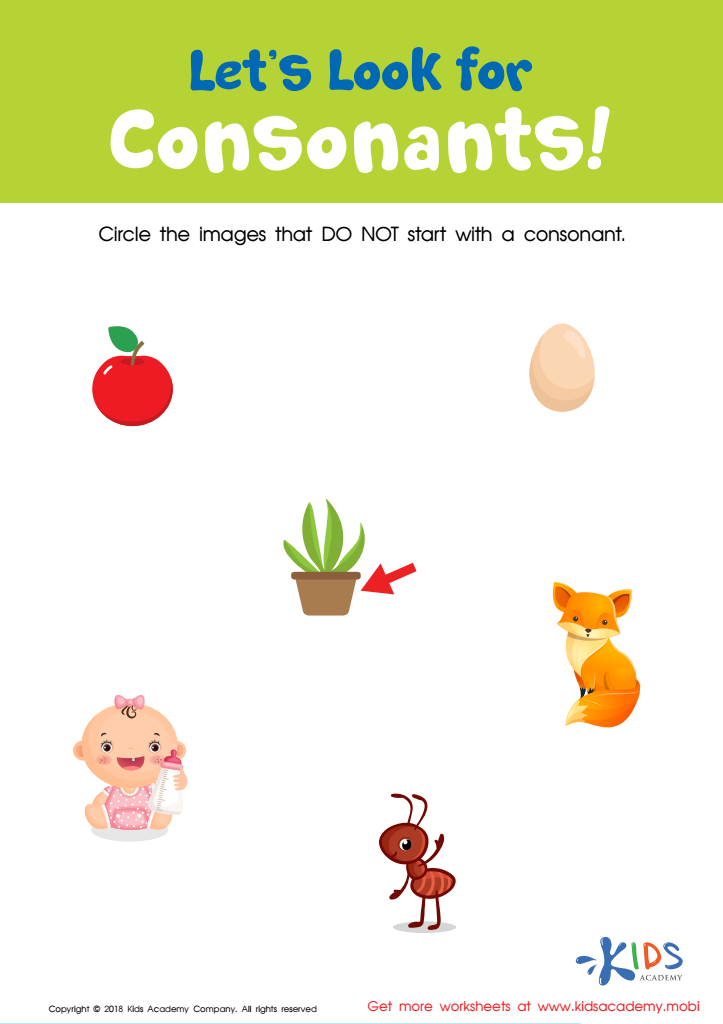
Let's Look for Consonants Worksheet
Help kids learn consonants and words that start with them. Ask them to recite the alphabet, then explain consonants are all letters but the 5 vowels. Use the worksheet to ask them to circle items without a consonant. Emphasize that's 21 consonants.
 Assign to My Students
Let's Look for Consonants Worksheet
Worksheet
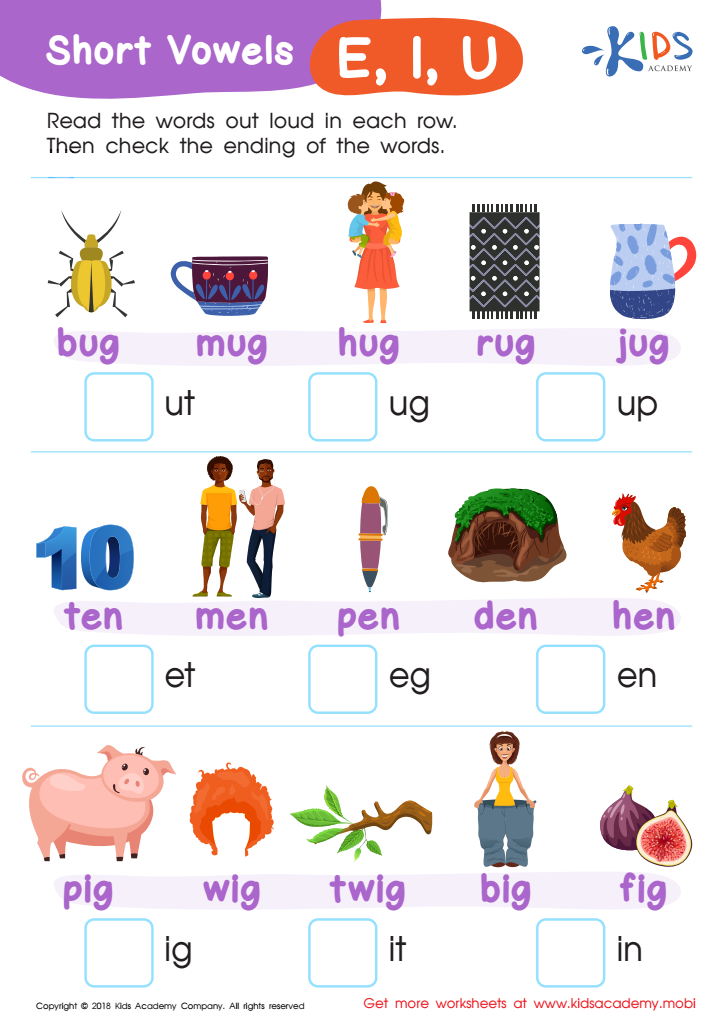
Short Vowels /e/, /i/, and /u/ Worksheet
Your emergent reader can have fun while practicing their short vowel sounds with this free, brightly colored worksheet. They'll identify one-syllable words by their pictures, then match the correct ending for each. They'll gain an understanding of how short vowel sounds vary in closed syllables with different endings, without even realizing it!
Short Vowels /e/, /i/, and /u/ Worksheet
Worksheet
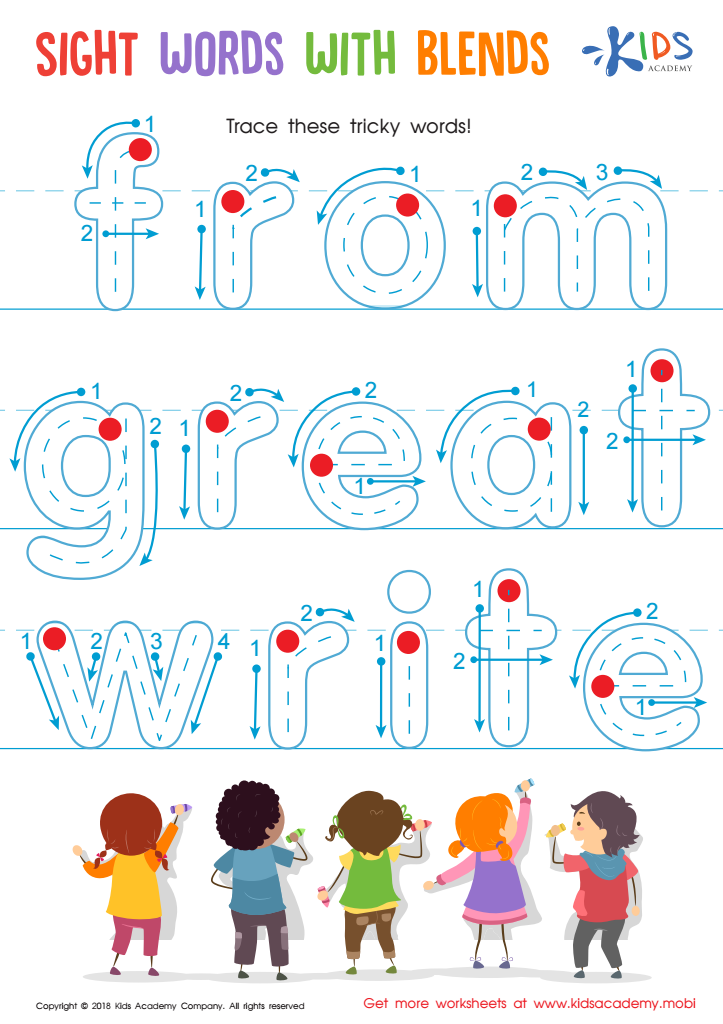
Sight Words with Blends Worksheet
This free PDF lets your children trace and write sight words with tricky blends. The guide numbers help them start from the top, building fine motor skills and enhancing sight word vocab. It's a great way to give your kids a solid foundation for reading!
Sight Words with Blends Worksheet
Worksheet
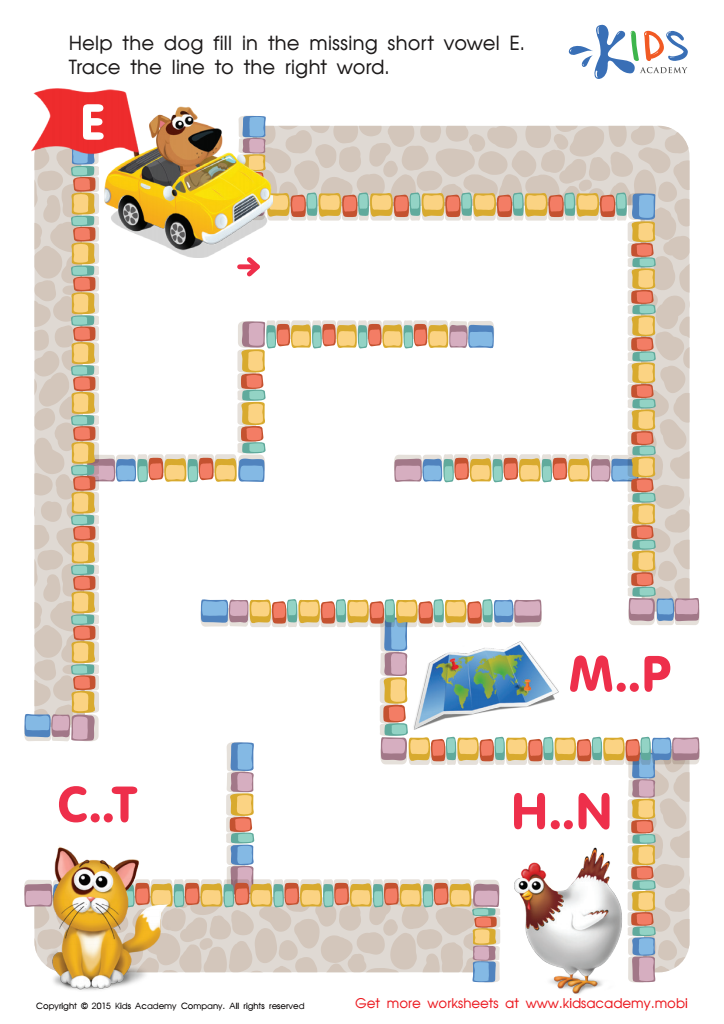
Short Vowel Sound E Worksheet
This free printable phonics worksheet helps kids learn the short vowel sound E. Kids need to help the dog complete the word “hen” by finding their way through a maze. It teaches kids to see the connection between letters and sounds and also strengthens their writing and spelling skills. Fun and educational, this phonics worksheet is great for kids. Want more? Check out here.
Short Vowel Sound E Worksheet
Worksheet
Join Kids Academy for Free
Who is primarily going to use this learning content?








Spelling practice and letter recognition are foundational skills for children aged 6-8, vital for their overall literacy development. At this stage, children are transitioning from early reading to more advanced literacy skills, and a strong understanding of letters and how they form words is crucial for comprehension and communication.
Engaging in spelling practice enhances children's phonemic awareness, helping them recognize sounds associated with each letter. This understanding not only supports reading but also builds confidence in their writing abilities. Effective letter recognition contributes to increased vocabulary and reading fluency, empowering children to express their thoughts more creatively and clearly.
Furthermore, developing these skills early on fosters a positive attitude toward learning. Children often find joy in mastering new words and challenging spelling exercises, reinforcing their self-esteem as learners. For parents and teachers, guiding children in this critical learning phase can have lasting impacts on their academic performance and engagement in school.
Ultimately, prioritizing letter recognition and spelling practice not only supports literacy development but also nurtures lifelong learning habits, equipping children with essential tools for success in school and beyond. Encouraging these practices can set the stage for stronger educational outcomes and increased confidence in their abilities.







