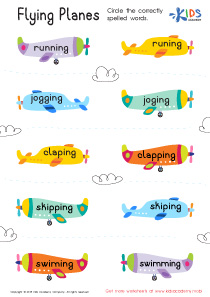
Phonics Skills Letter Sounds Worksheets for Ages 6-8
3 filtered results
-
From - To
Enhance your child's reading journey with our Phonics Skills Letter Sounds Worksheets tailored for ages 6-8. These carefully designed worksheets focus on helping young learners identify and practice letter sounds through engaging activities. By connecting sounds to letters, children build essential foundational skills that promote fluency, comprehension, and a lifelong love of reading. Ideal for both classroom and home use, these printable resources ensure enjoyable and effective learning. Equip your child with the skills necessary to decode words with confidence and success. Start exploring our comprehensive collection today and watch your child's phonics skills flourish!
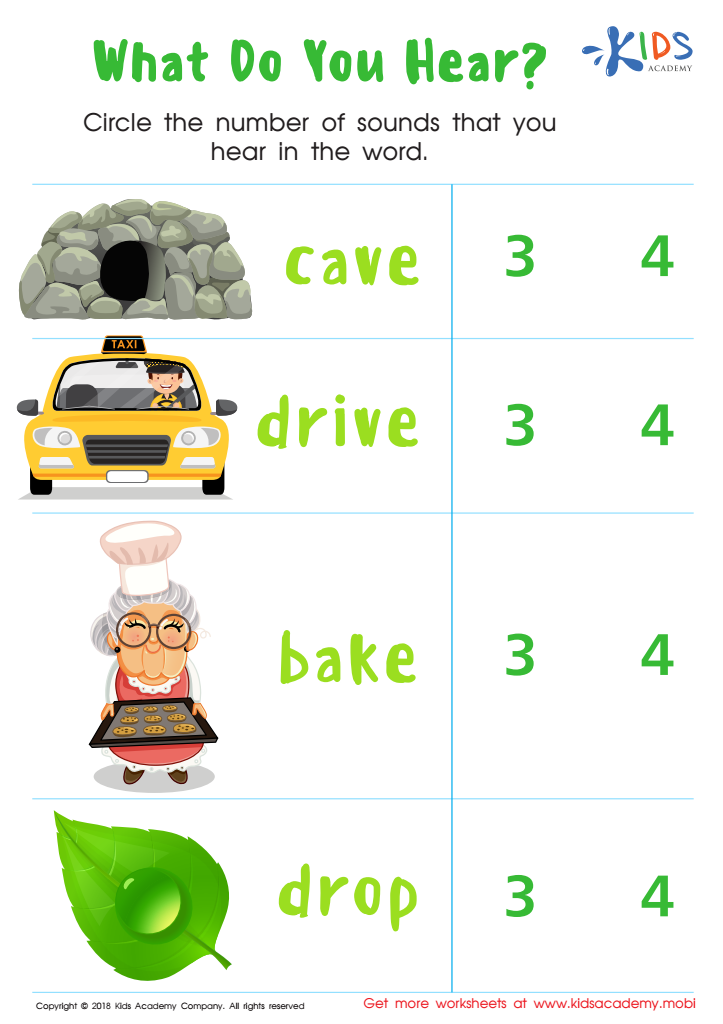
What Do You Hear? Worksheet
 Assign to My Students
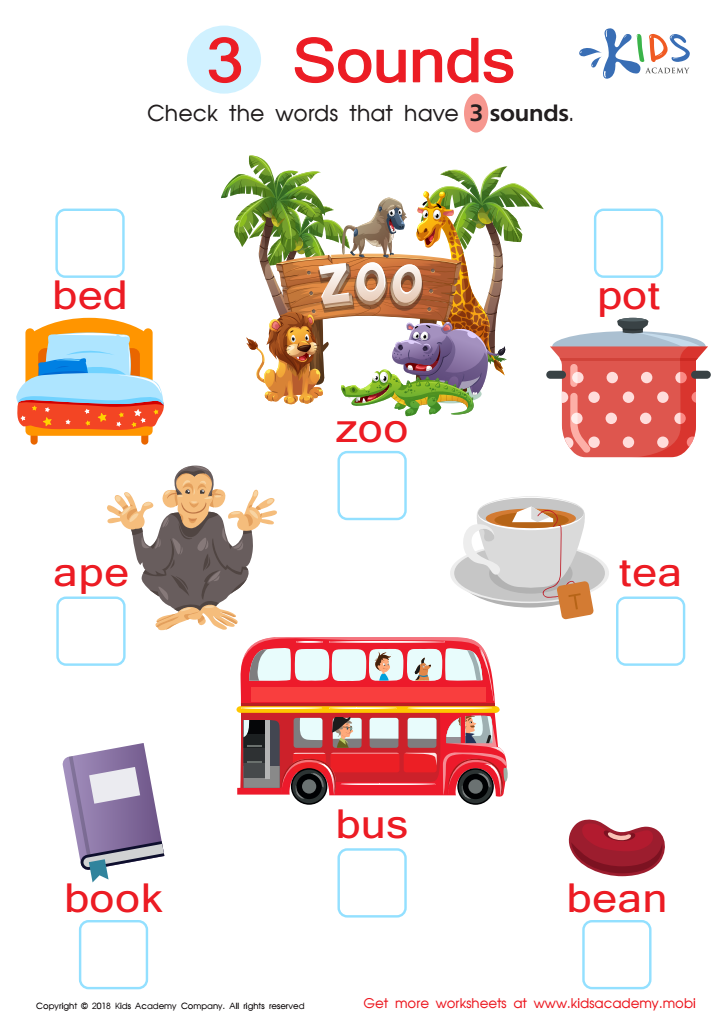
3 Sounds Worksheet
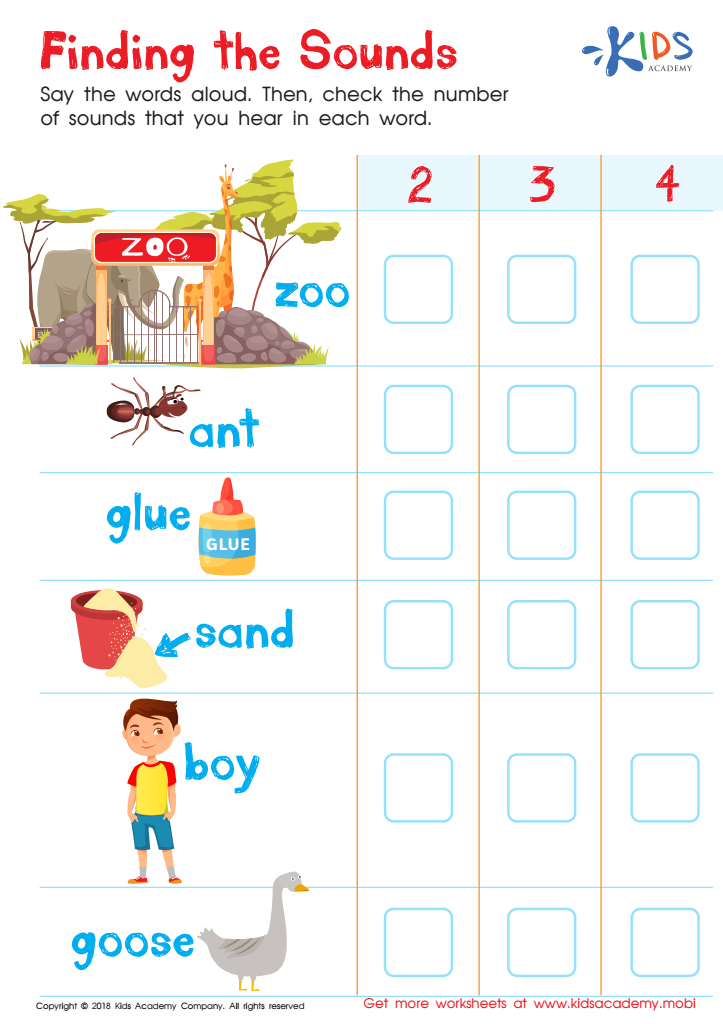
Finding the Sounds Worksheet








Phonics skills and letter sound recognition are foundational components of early literacy development, crucial for children aged 6-8. At this formative stage, children transition from learning to read to reading to learn, and having a strong grasp of phonics sets the groundwork for this shift. Phonics instructions help children understand the relationship between letters and sounds, enabling them to decode words accurately and efficiently. This skill is vital for word recognition and spelling, forming the basis upon which fluent reading is built.
Moreover, phonics skills foster reading comprehension. When children can decode words effortlessly, they can focus more on understanding the text rather than stumbling over individual words. This promotes a love for reading and improves their overall academic performance. Research shows that proficiency in phonics is directly linked to better reading outcomes, validating its importance in early education.
Parents and teachers who prioritize phonics help their children develop essential cognitive skills such as attention, memory, and auditory discrimination. These skills extend beyond reading, benefiting children in other academic areas, such as mathematics and science. Investing in phonics education ensures that children build strong, lifetime literacy skills, equipping them with the tools necessary for future success both in school and in their larger lives.