Alphabet familiarity Lowercase/Small Letters Worksheets for Ages 6-8
3 filtered results
-
From - To
Discover the ultimate resource to boost your child's alphabet skills with our Alphabet Familiarity Lowercase/Small Letters Worksheets for Ages 6-8. Perfectly designed for young learners, these engaging worksheets focus on mastering lowercase letters through fun and interactive activities. With colorful visuals and thoughtfully crafted exercises, children will enjoy practicing letter recognition, writing, and phonics. Tailored to support school curriculums, our worksheets promote confidence in reading and writing. Give your child the tools they need to succeed and make learning the alphabet a delightful adventure with these expert-approved resources. Empower their literacy journey today!
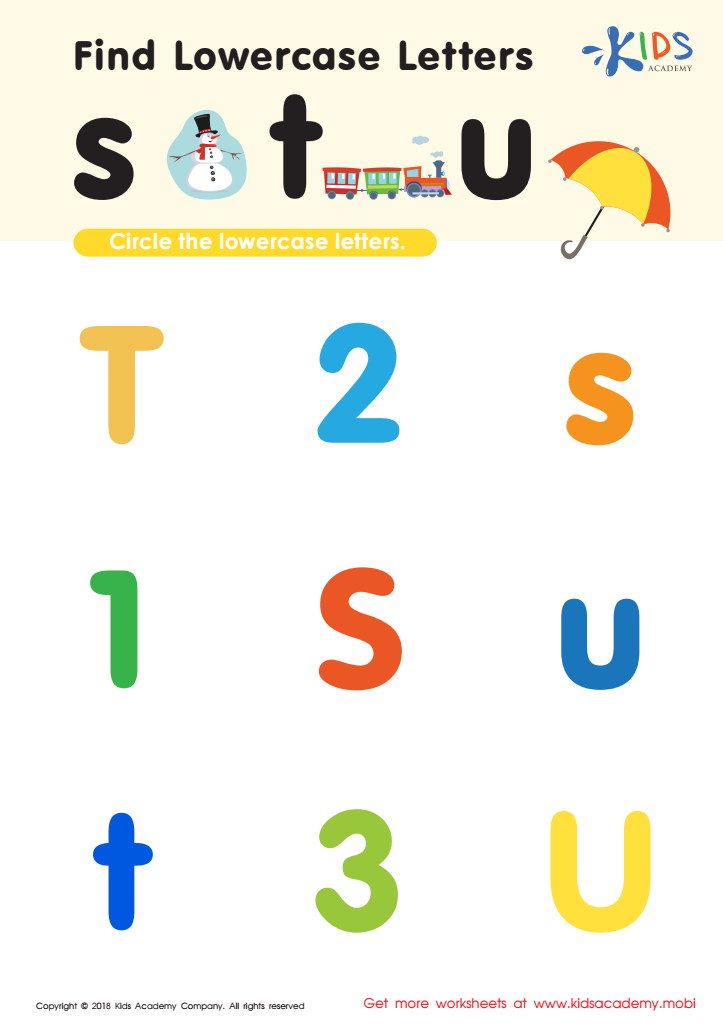
Find lowercase Letters s t u Worksheet
 Assign to My Students
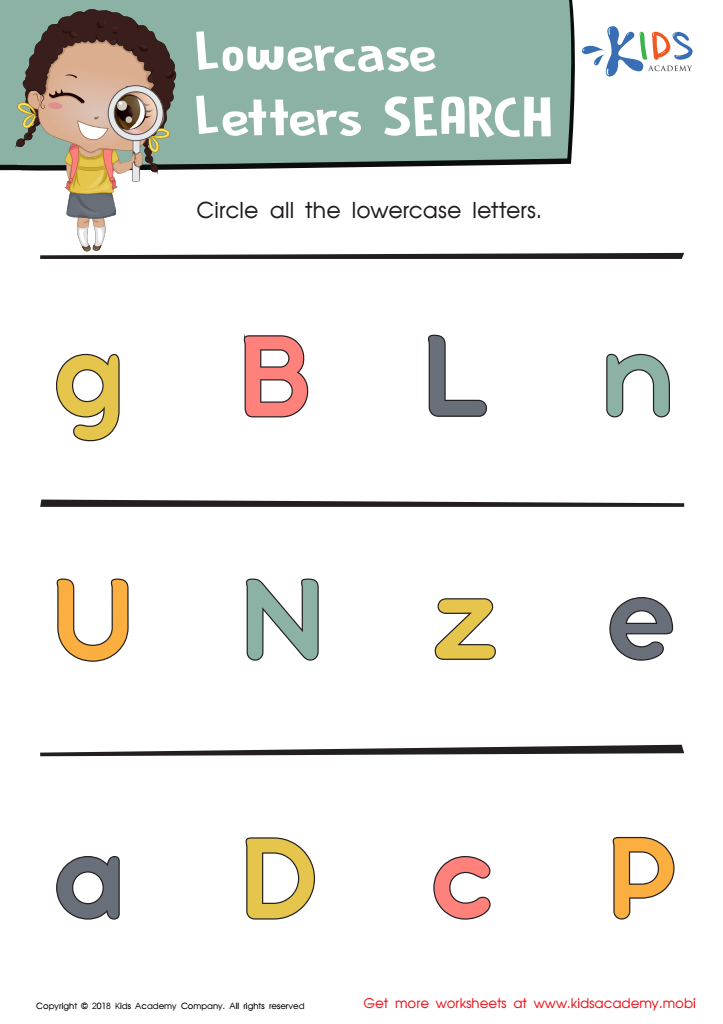
Lowercase Letters Search: Assessment Worksheet
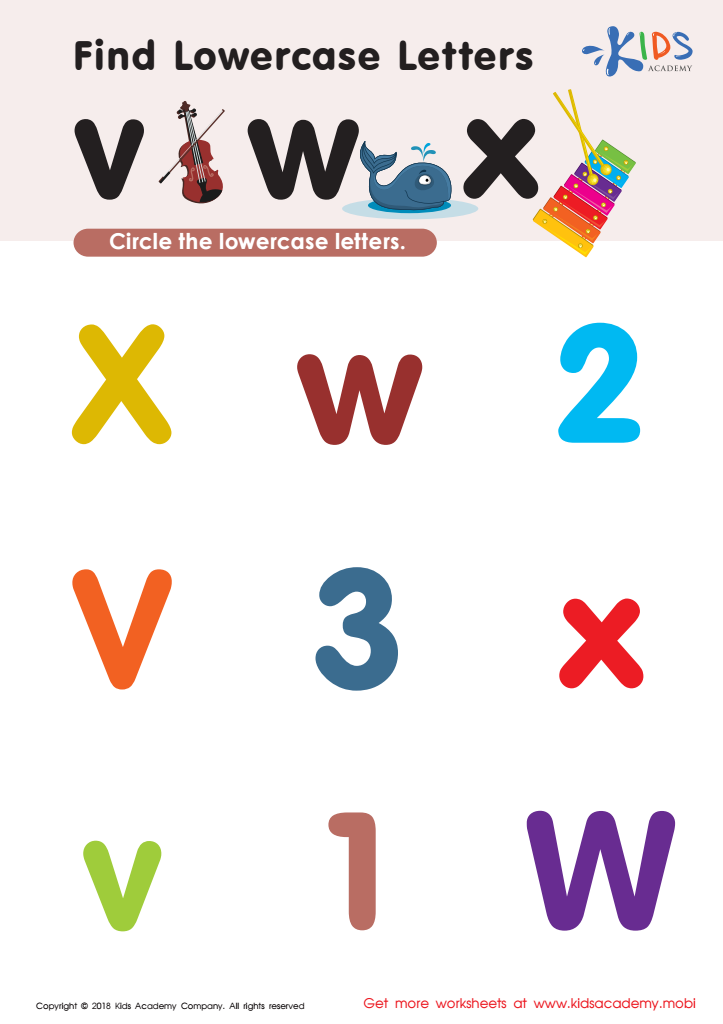
Find Lowercase Letters v w x Worksheet


Alphabet familiarity, particularly with lowercase letters, is foundational for children aged 6-8. At this stage, students are transitioning from learning to read to reading to learn. Lowercase letters are predominantly used in text, and fluency in recognizing these letters is key to reading proficiency. When children can effortlessly identify lowercase letters, they can focus on comprehending the meaning of the text rather than expending cognitive resources on letter recognition.
Moreover, early mastery of lowercase letters supports writing development. Since children are frequently asked to write in both uppercase and lowercase, familiarity is crucial for legible writing. Struggles with lowercase letters can lead to reluctance or frustration, hampering overall writing skills.
Focusing on lowercase letter familiarity also enhances phonics skills. Phonics instruction, crucial in early literacy, often links sounds to letters directly. Recognizing lowercase letters thus allows for quicker association and better phonemic awareness, simplifying the decoding process crucial for reading.
Parents and teachers who emphasize the importance of lowercase letters create a more supportive environment for their children's educational growth, fostering confidence and a love of learning. Early literacy skills are building blocks for future educational and life success; hence, the stakes are high for both educators and parents to prioritize alphabet familiarity.