Fine Motor Skills Lowercase/Small Letters Worksheets for Ages 6-8
14 filtered results
Difficulty Level
Grade
Age
-
From - To
Subject
Activity
Standards
Our "Fine Motor Skills Lowercase/Small Letters Worksheets" for ages 6-8 offer an engaging way to develop essential handwriting and fine motor skills. Designed to make learning fun, these worksheets feature a variety of activities that reinforce letter recognition and proper formation. Perfect for practicing at home or in the classroom, they aid in building the dexterity and precision needed for writing. Engage your child’s creativity while ensuring they gain the foundational skills crucial for academic success. Ideal for young learners to master lowercase letters, our worksheets foster confidence and proficiency in early literacy.
Favorites
With answer key
Interactive
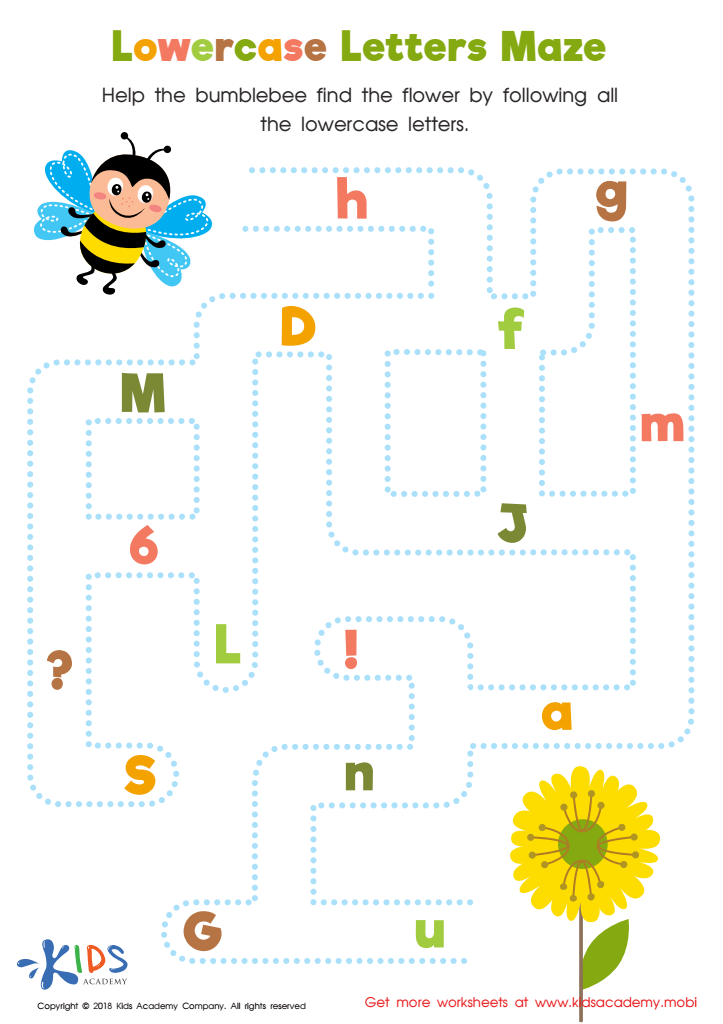
Lowercase Letters Maze Worksheet
Traceable pages can be great learning tools for children. For example, have them trace the path of lowercase letters to help a bumblebee pollinate flowers. Students will quickly learn the difference between uppercase and lowercase letters and numbers, and have fun doing it!
 Assign to My Students
Lowercase Letters Maze Worksheet
Worksheet
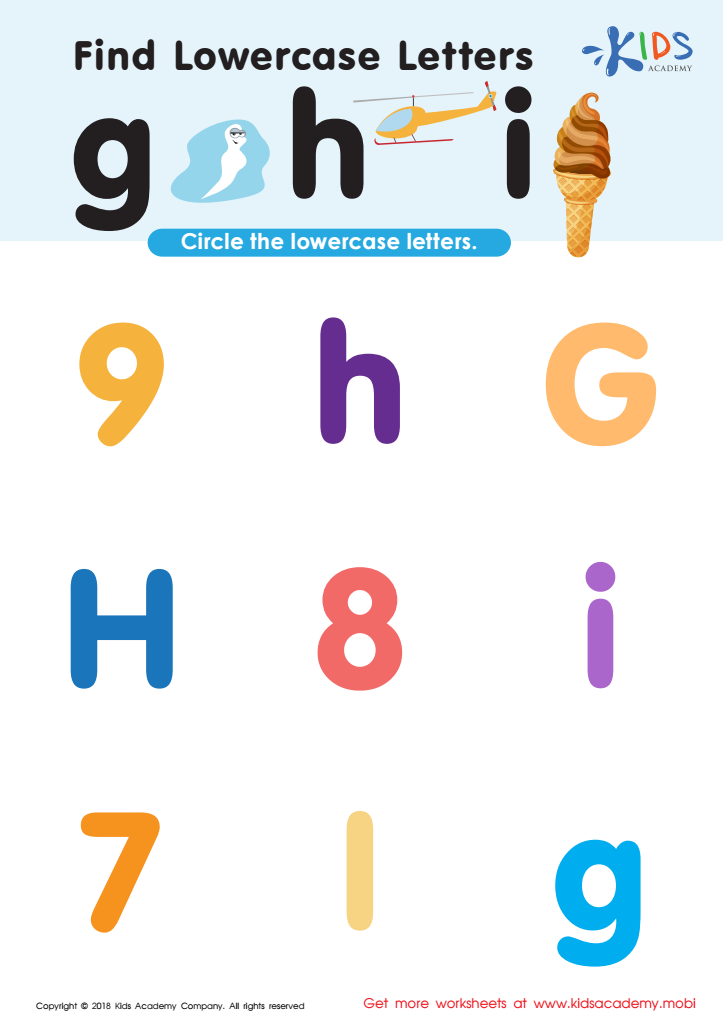
Find Lowercase Letters g h i Worksheet
Turn learning into a fun journey with your child! Use this free worksheet to find and circle the lowercase letters hidden amongst uppercase letters and numbers. Your child will understand what you're teaching them as they enjoy the search.
Find Lowercase Letters g h i Worksheet
Worksheet
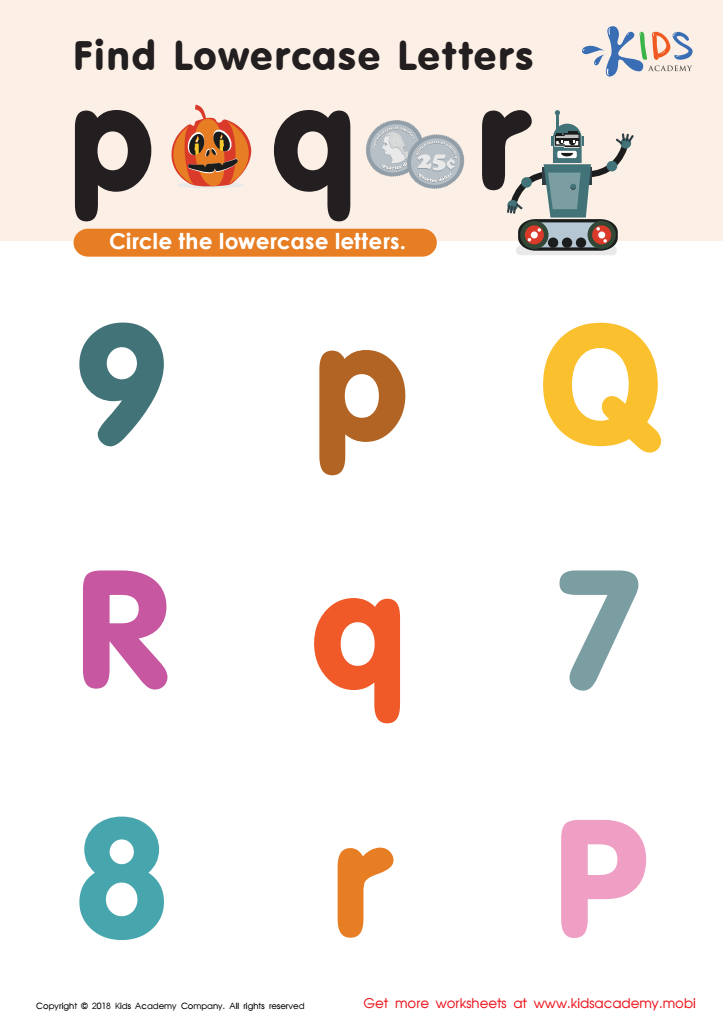
Find lowercase Letters p q r Worksheet
Help your child spot the lowercase letters among the numbers and uppercase letters in this worksheet. It's a great way to teach them to identify and write the lowercase and uppercase letters. Assist them in completing the exercise to give them a better understanding of the alphabets.
Find lowercase Letters p q r Worksheet
Worksheet
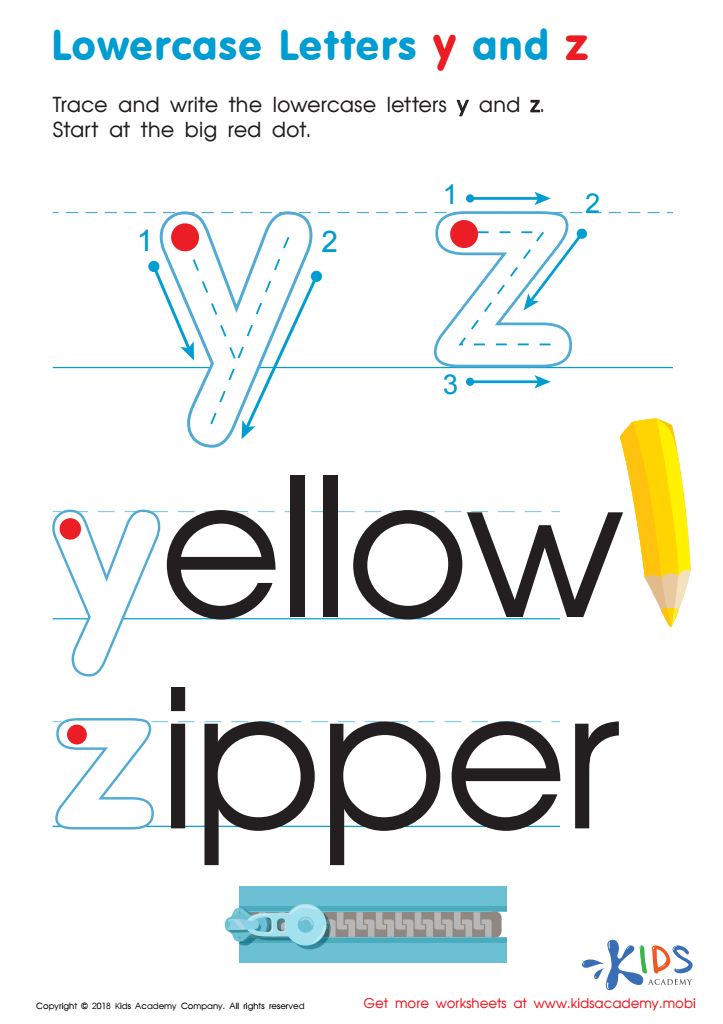
Lowercase Letters y z Worksheet
Help your child get a good start in writing and reading by tracing and writing the lowercase letters y and z. With this activity, they will learn the alphabet, which is essential for literacy success. Guide them through the worksheet and make sure they form the letters correctly. This will help them learn the basics needed to write and read fluently.
Lowercase Letters y z Worksheet
Worksheet
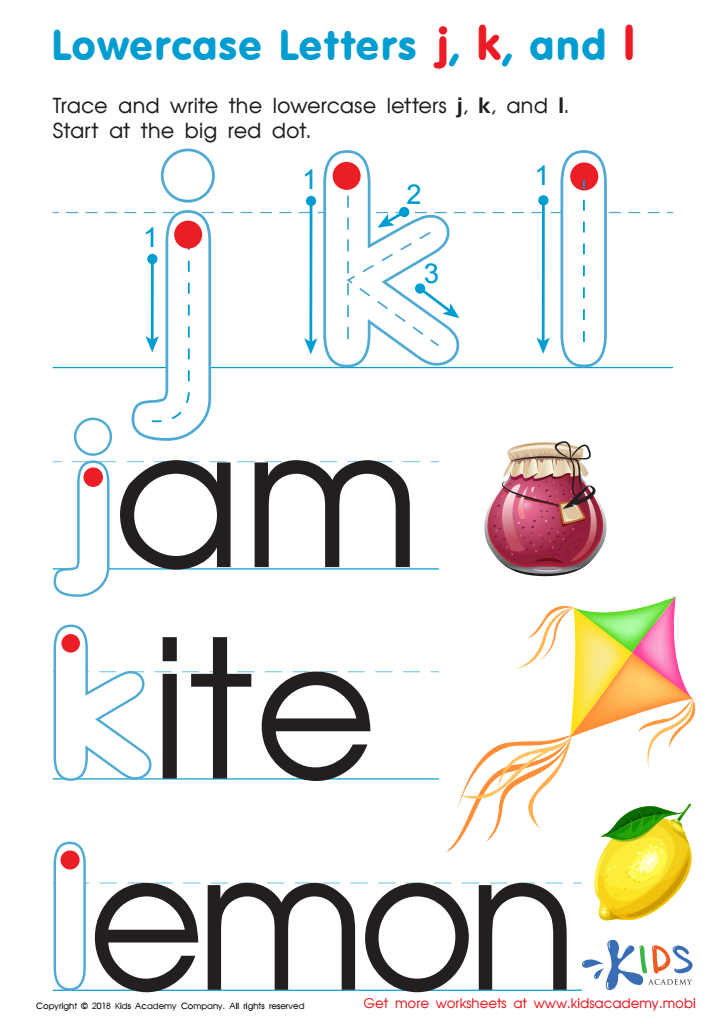
Lowercase Letters j k l Worksheet
Teach your child the difference between uppercase and lowercase letters. Have them trace and write the lowercase letters j, k, and l, starting at the red dot. Guide your child's hand to form the letters correctly.
Lowercase Letters j k l Worksheet
Worksheet
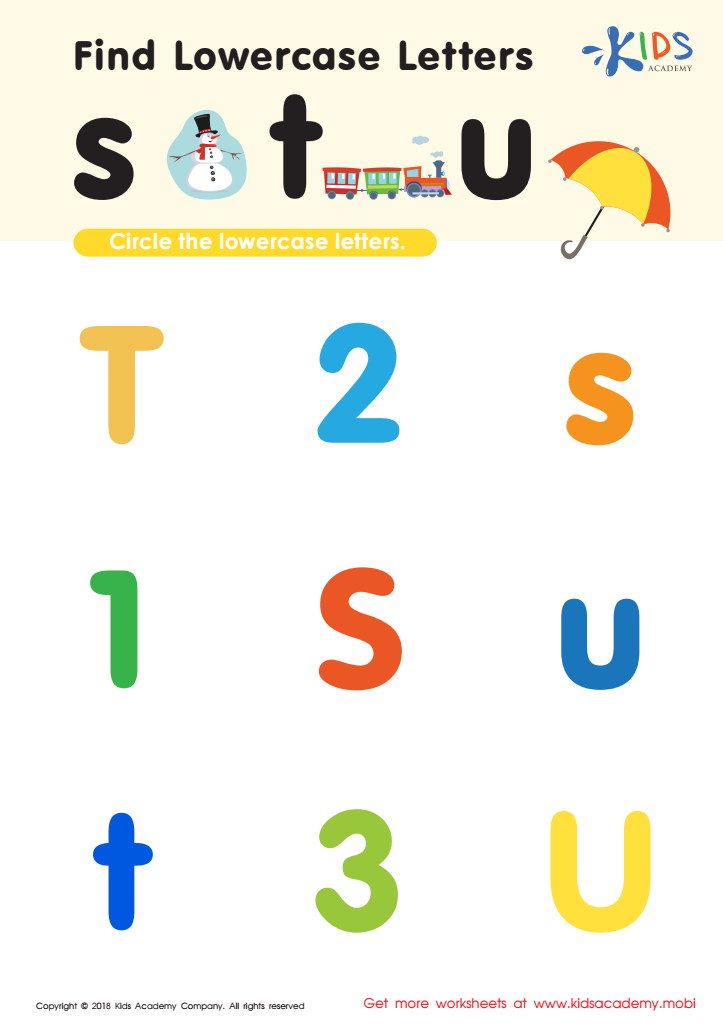
Find lowercase Letters s t u Worksheet
Puzzles are great for boosting your child's thinking skills. Can they identify lowercase letters s, t and u? This free printout contains the letters mixed in with uppercase letters and numbers, all presented in a fun, colorful format - sure to keep them entertained as they learn!
Find lowercase Letters s t u Worksheet
Worksheet
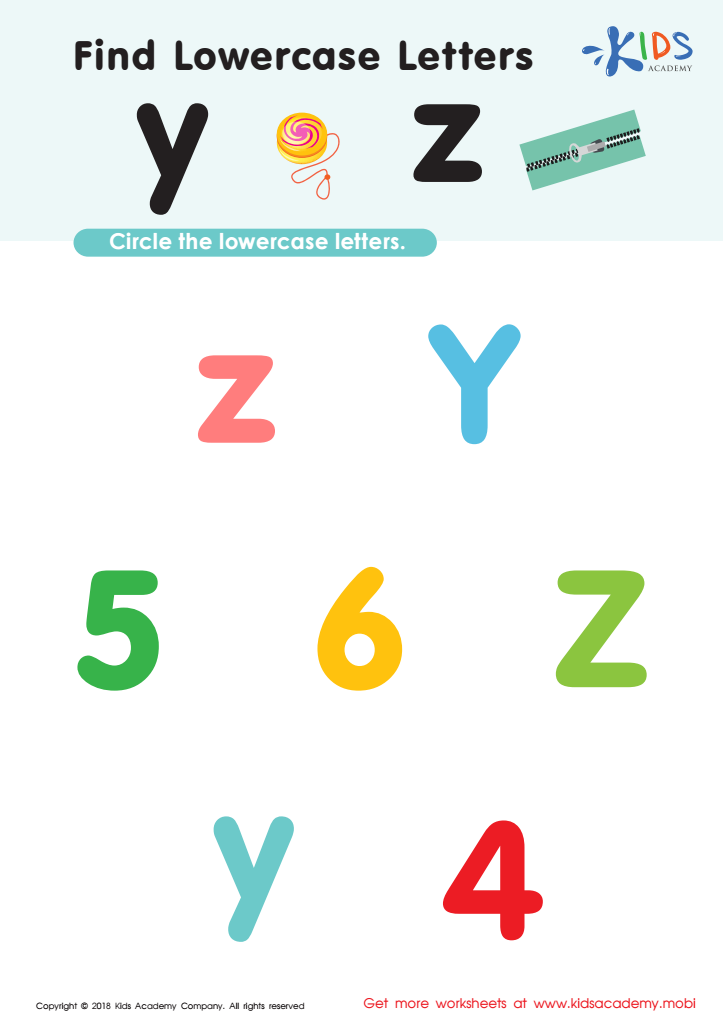
Find Lowercase Letters y z Worksheet
Help your kid learn the alphabet. Before they can move on to words and reading, they must first know the lower and uppercase letters. Show them how to find the letters y and z in this worksheet, which is filled with uppercase letters and numbers. Together, find and circle them.
Find Lowercase Letters y z Worksheet
Worksheet
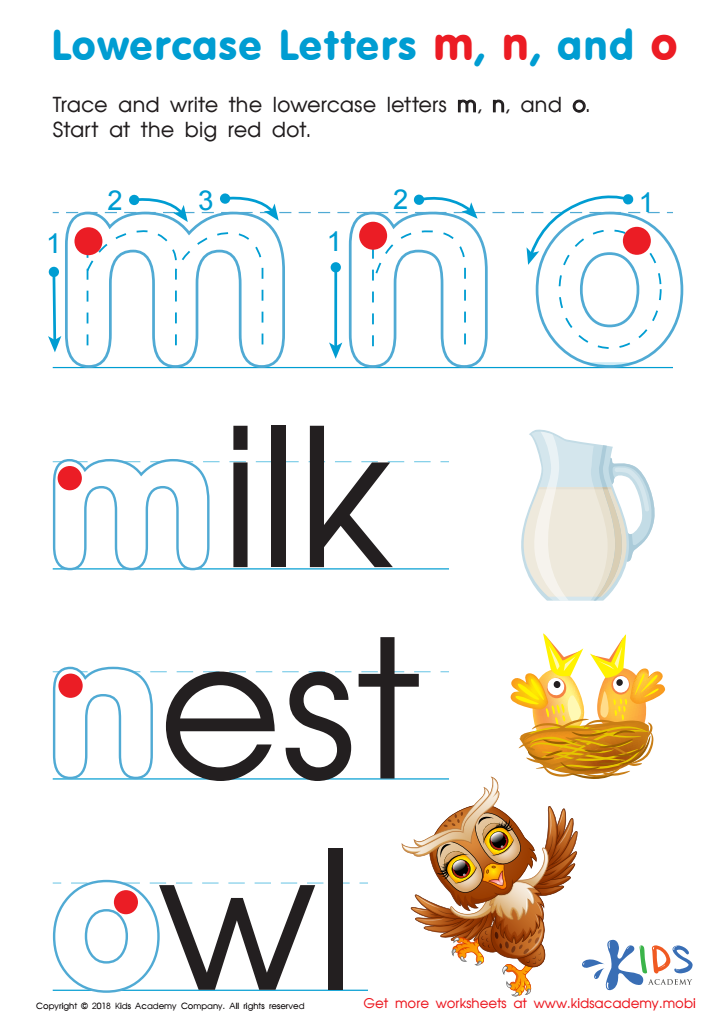
Lowercase Letters m n o Worksheet
Help your child learn the alphabet with letter tracing. Show them the difference between uppercase and lowercase letters by working through this free worksheet, tracing and writing lowercase m, n and o.
Lowercase Letters m n o Worksheet
Worksheet
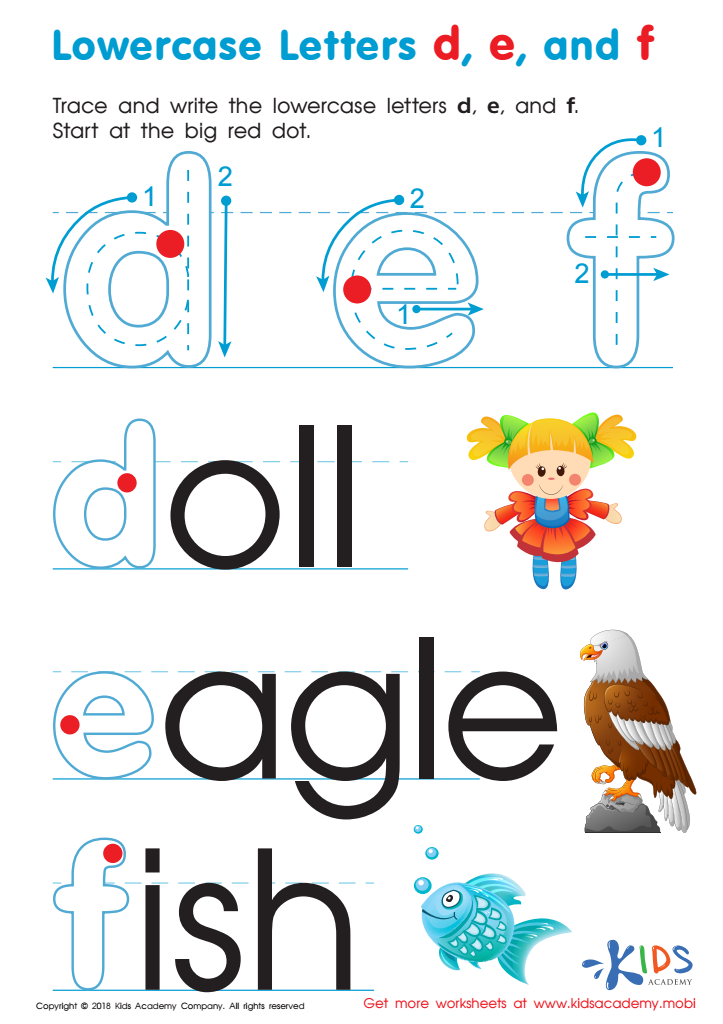
Lowercase Letters d e f Worksheet
Help your child learn the alphabet letters by tracing and writing the lowercase letters d, e, and f. Begin at the big red dot and follow the dots. This worksheet will help your little one gain a better understanding of the letters.
Lowercase Letters d e f Worksheet
Worksheet
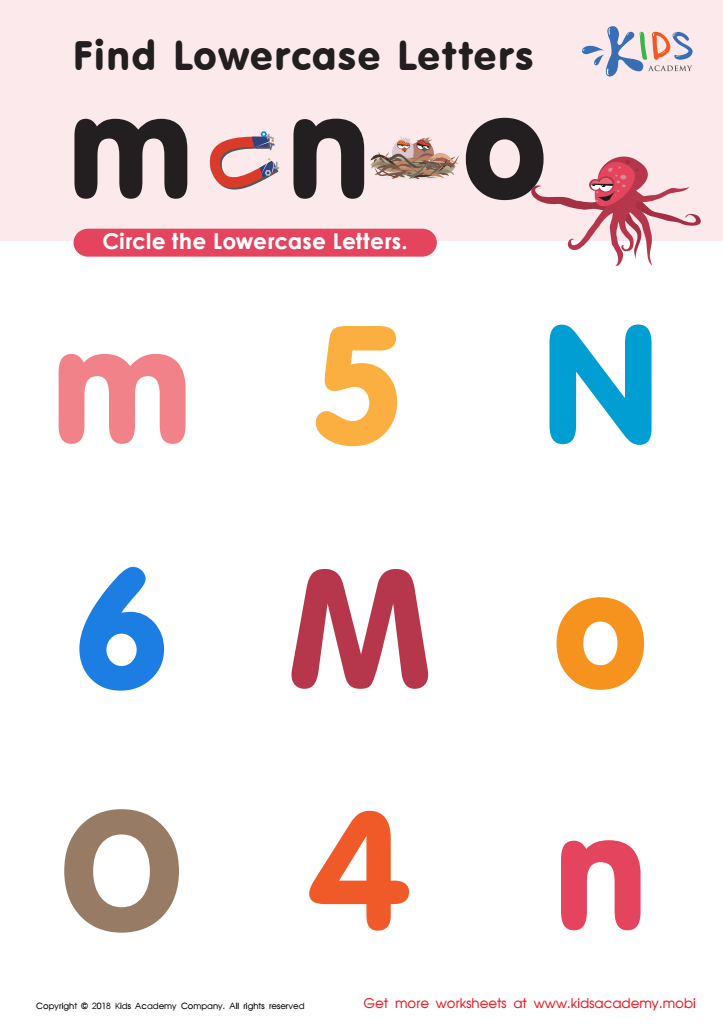
Find Lowercase Letters m n o Worksheet
Help your child find and circle the lowercase letters m, n, and o in this printable worksheet. With colorful texts and fun pictures, this exercise is sure to engage and entertain your child. Guide them in correctly identifying the lowercase letters m, n, and o in the free PDF.
Find Lowercase Letters m n o Worksheet
Worksheet
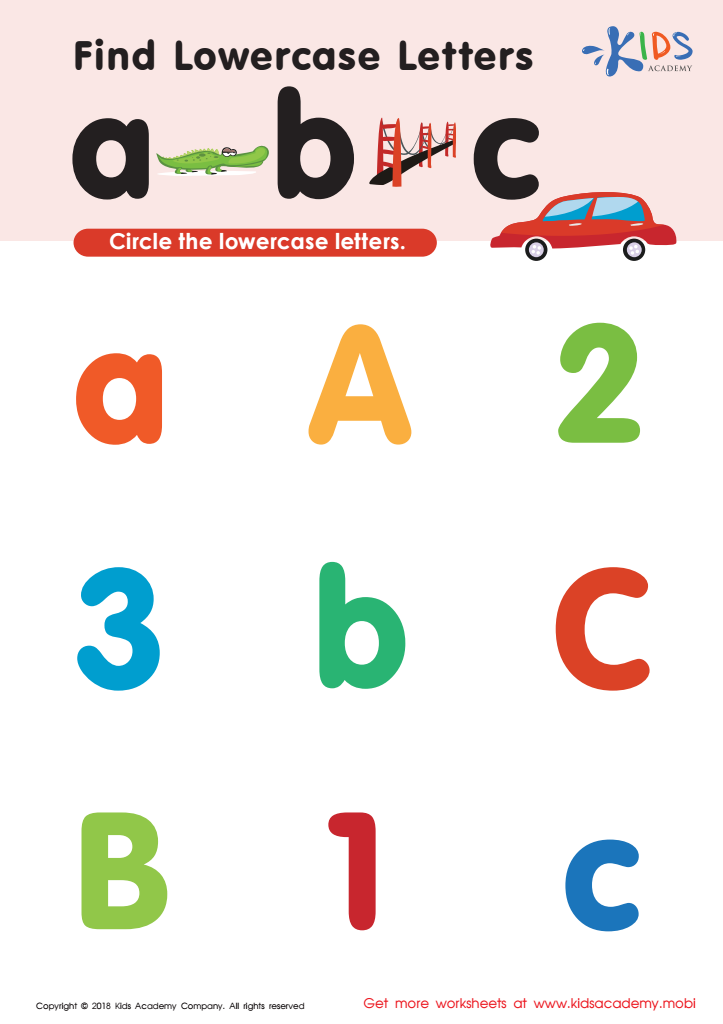
Find lowercase letters a b c Worksheet
Help your child identify lowercase letters with this worksheet. Carefully look at each letter and have your child circle the lowercase ones. This exercise is vital in helping them understand the alphabet and the difference between lower and uppercase letters.
Find lowercase letters a b c Worksheet
Worksheet
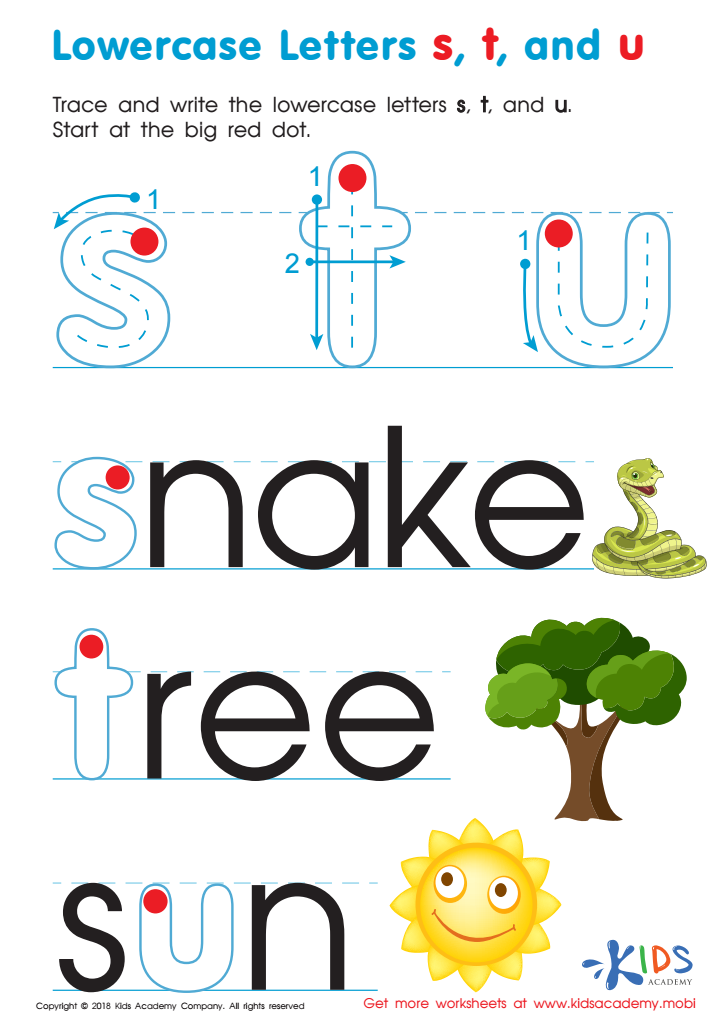
Lowercase Letters s t u Worksheet
Help your child trace lowercase letters s, t and u. Ask questions like: "What word starts with 's'? What about 't' and 'u'? Point out the snake, tree and sun pictures. Start tracing from the big red dot.
Lowercase Letters s t u Worksheet
Worksheet
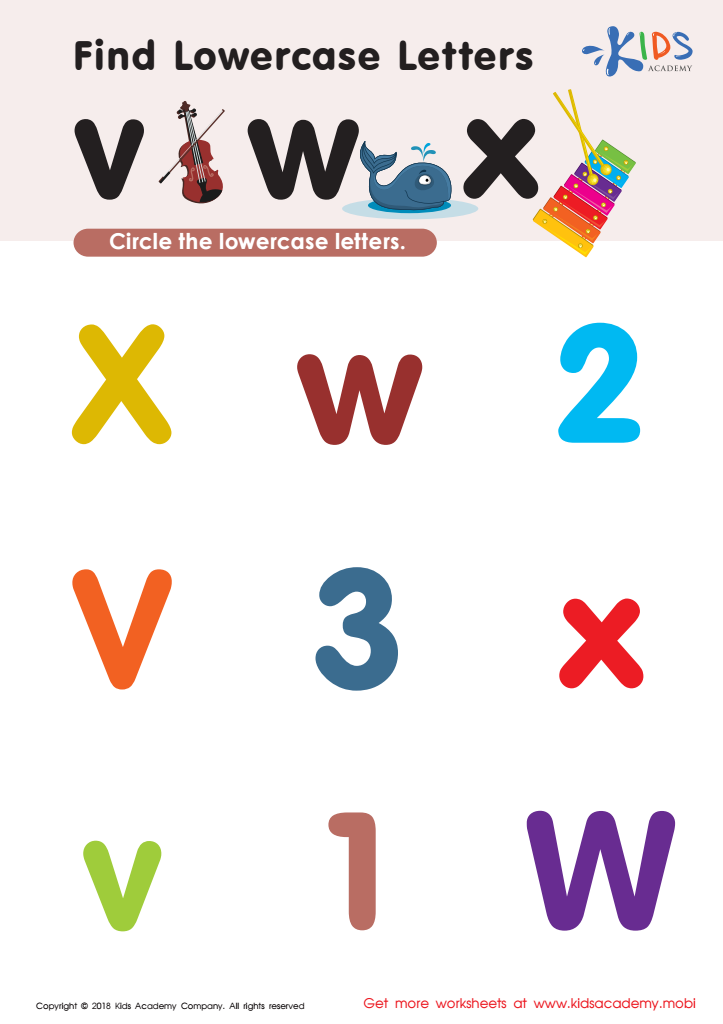
Find Lowercase Letters v w x Worksheet
If your child doesn't know the alphabet, get them this helpful worksheet. It's an easy exercise to build their understanding of the alphabet and lowercase letters. Find the letters v, w, and x among other uppercase letters and numbers in the downloadable PDF.
Find Lowercase Letters v w x Worksheet
Worksheet
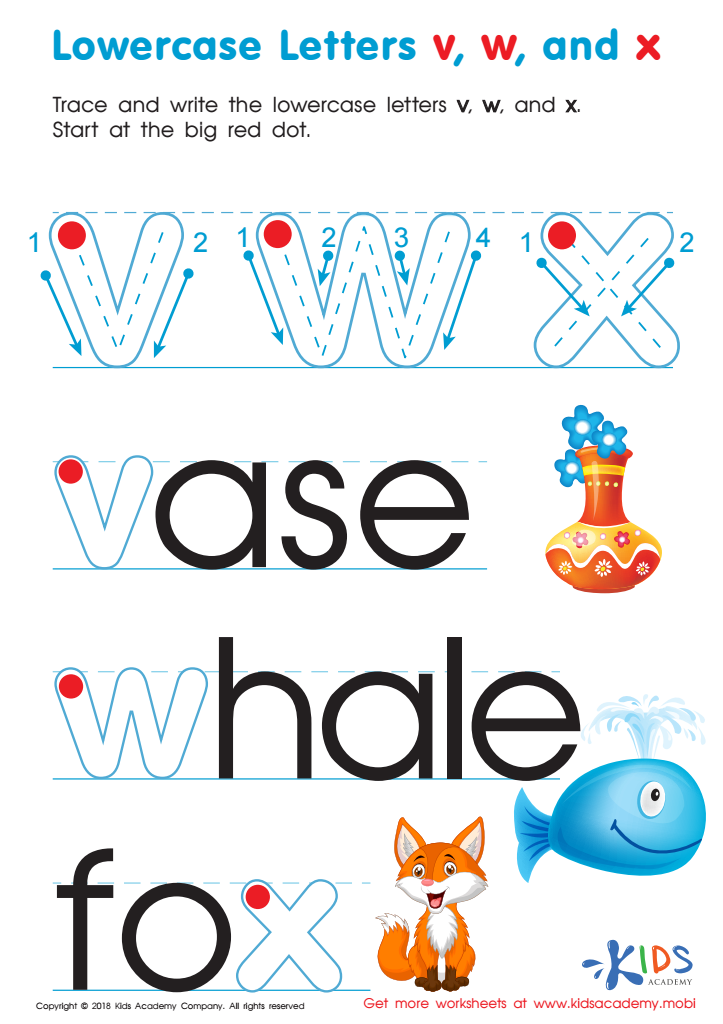
Lowercase Letters v w x Worksheet
Help your child learn to write lowercase letters v, w, and x, starting at the big red dot. This activity will help them develop writing skills and correctly identify the letters. Guide them as they trace the letters and enjoy watching them improve!
Lowercase Letters v w x Worksheet
Worksheet
Join Kids Academy for Free
Who is primarily going to use this learning content?


Fine motor skills are essential for children ages 6-8 as they develop the precision necessary for handwriting, particularly with lowercase or small letters. At this age, children are at a critical stage where they transition from print to cursive and refine their writing abilities. Mastery of fine motor skills significantly impacts their academic performance and confidence.
Firstly, well-developed fine motor skills aid in legible handwriting, enabling clear communication of ideas, which is foundational for effective learning. If children struggle with writing small letters, their work may become messy, causing frustration or even hindering their ability to keep pace with classroom activities.
Secondly, practicing small letters requires greater control and coordination of the hand muscles. Engaging in activities that encourage this precision, like tracing letters or using manipulatives, can strengthen these muscles and improve dexterity, benefiting other daily tasks such as buttoning clothes, using utensils, and tying shoelaces.
Moreover, consistent fine motor practice can influence cognitive development. Tasks that involve sequential hand movements enhance concentration, memory, and fine motor planning skills critical for problem-solving.
In essence, prioritizing fine motor skill activities involving small letters supports overall educational outcomes and daily life independence, setting a solid foundation for children's continued growth and success.