Rhyming skills development Rhyming Worksheets for Ages 6-8
4 filtered results
-
From - To
Enhance your child's rhyming skills with our expertly crafted Rhyming Worksheets for ages 6-8. Designed to boost literacy and phonemic awareness, these engaging activities make learning fun and effective. Our worksheets focus on identifying, matching, and creating rhymes, helping children develop essential reading foundations. With colorful illustrations and interactive exercises, kids stay motivated while mastering rhyming concepts. Ideal for classroom use or at-home practice, our Rhyming Worksheets cater to diverse learning styles, ensuring every child can thrive. Give your child the gift of reading confidence with our top-quality resources, and watch their skills soar. Visit Kids Academy for more!
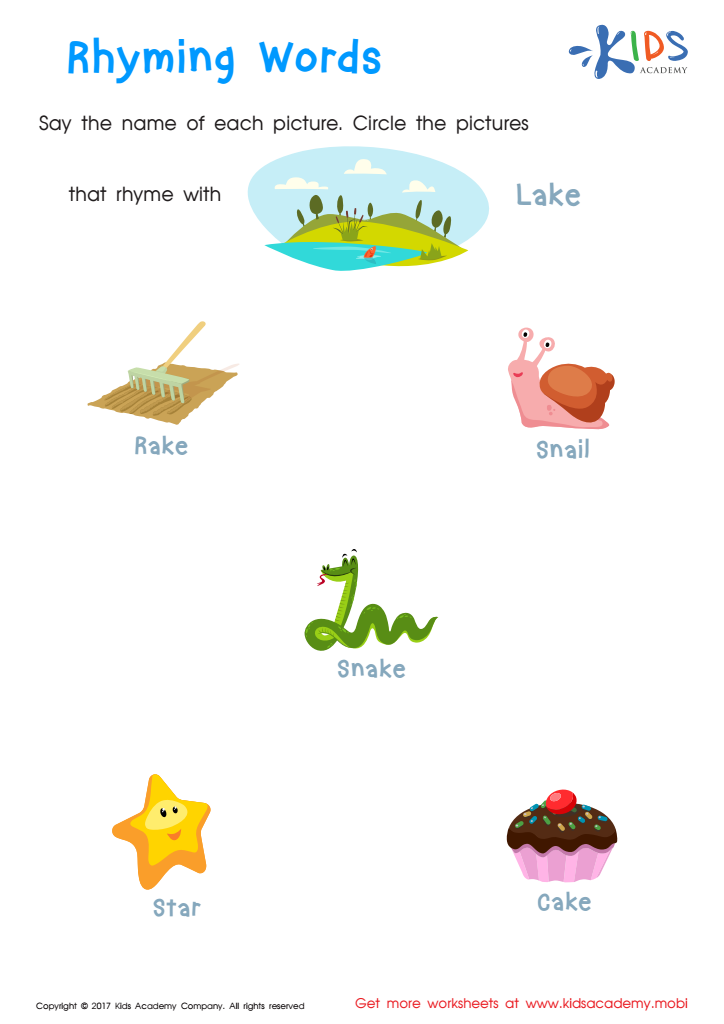
Rhyming Words Rhyming Worksheet
 Assign to My Students
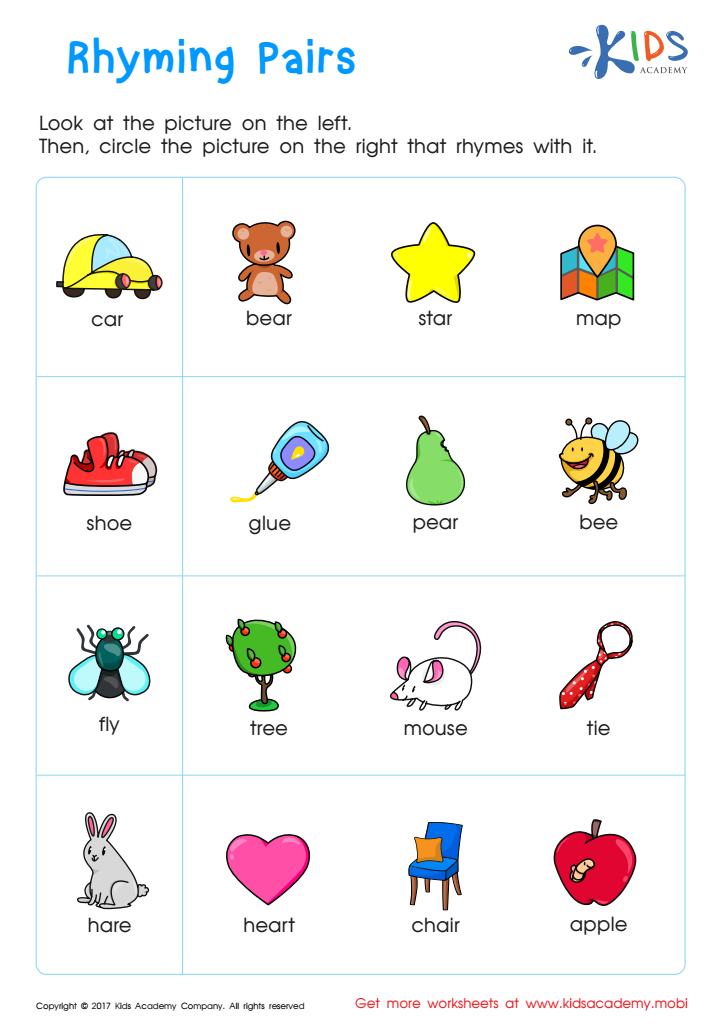
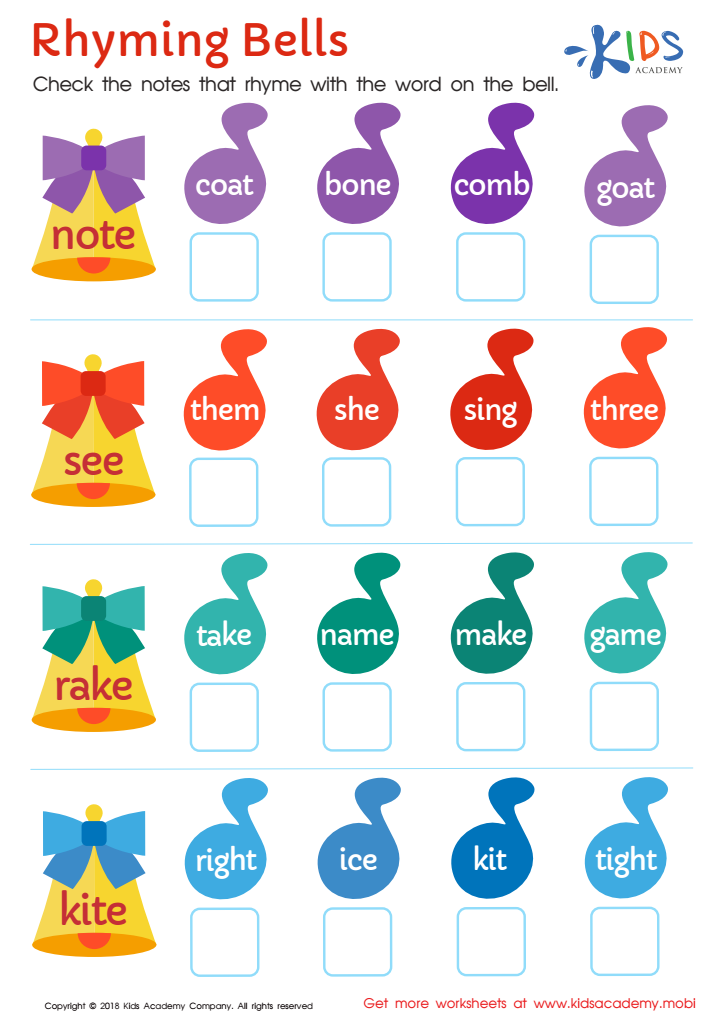
Rhyming Bells Worksheet
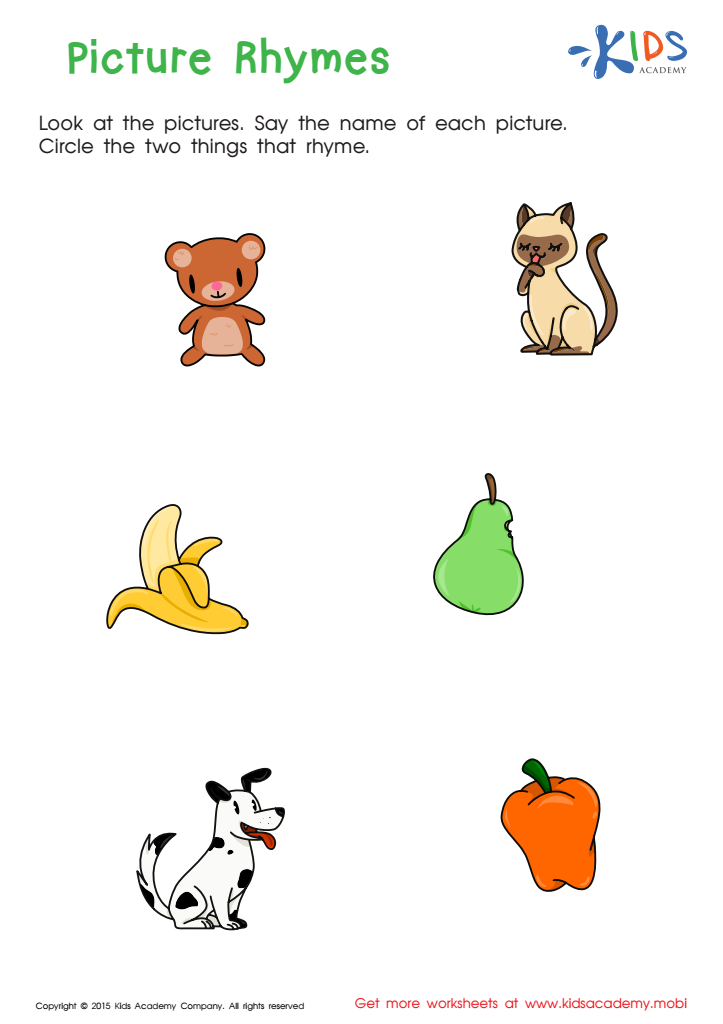
First Words: Picture Rhymes Worksheet








Parents and teachers should care about developing rhyming skills in children aged 6-8 because rhyming is foundational to early literacy. Rhyming helps kids understand how language works by hearing and recognizing patterns in sounds. For children in this age group, such skills are crucial as they transition from recognizing letters and sounds to reading fluently.
First, rhyming enhances phonemic awareness—the ability to hear, identify, and manipulate individual sounds (phonemes) in words. This understanding is essential for decoding words during reading and is a strong predictor of later reading success. When children are able to pick out rhyming words, they are demonstrating an understanding of word families, which helps in spelling and writing, because it teaches them to recognize common elements within different words.
Second, rhyming fosters a love for language and boosts memory. Fun, rhyming activities and songs make learning engaging and enjoyable, encouraging children to practice their reading skills more often.
Additionally, rhyming expands vocabulary. When kids engage in rhyming games or poetry, they encounter new words and concepts, which strengthens their ability to understand and use a richer vocabulary.
In summary, by developing rhyming skills, children build a strong foundation in phonemic awareness, improve their reading and writing abilities, and develop a lifelong love for language. This makes rhyming an invaluable tool in early childhood education.







