Filters

6 filtered results

Clear all filters
Favorites
With answer key
Interactive

6 filtered results

Difficulty Level

Grade


Subject

    Looking for effective ways to boost your child's vocabulary? Our Two Letter Phonics Worksheets are perfect for children ages 6-8! These engaging printables focus on blending sounds to form two-letter words, laying a foundation for reading and spelling. Each worksheet features fun, interactive activities designed to enhance vocabulary while making learning enjoyable. By practicing regularly, kids will grasp the basics of phonics, enriching their word bank and providing a head start in literacy skills. Give your child the tools to succeed with our expertly crafted vocabulary enhancement worksheets. Visit our website to download and start today!

    Check out this FREE Trial Lesson on Two Letter Phonics for age 6-8!

    Review Blends

    Favorites
    With answer key
    Interactive
    • 6-8
    • Vocabulary enhancement
    • Two Letter Phonics
    Ar and or words phonics worksheet
    Ar and or words phonics worksheet

    Ar and Or Words Phonics Worksheet

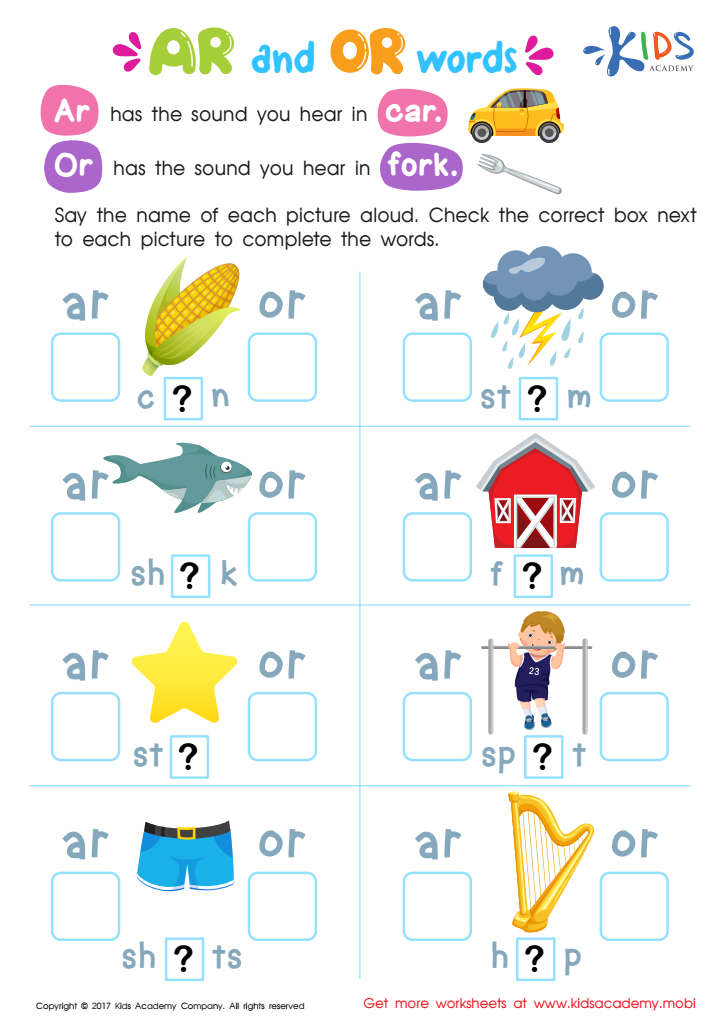
    Master the distinct digraphs 'ar' and 'or' with this fun phonics worksheet from Kids Academy! With meaningful illustrations, it'll guide your child to choose the right one. Get ready for the great results!
    Ar and Or Words Phonics Worksheet
    Worksheet
    Vowel team ee Worksheet
    Vowel team ee Worksheet

    Vowel team ee Worksheet

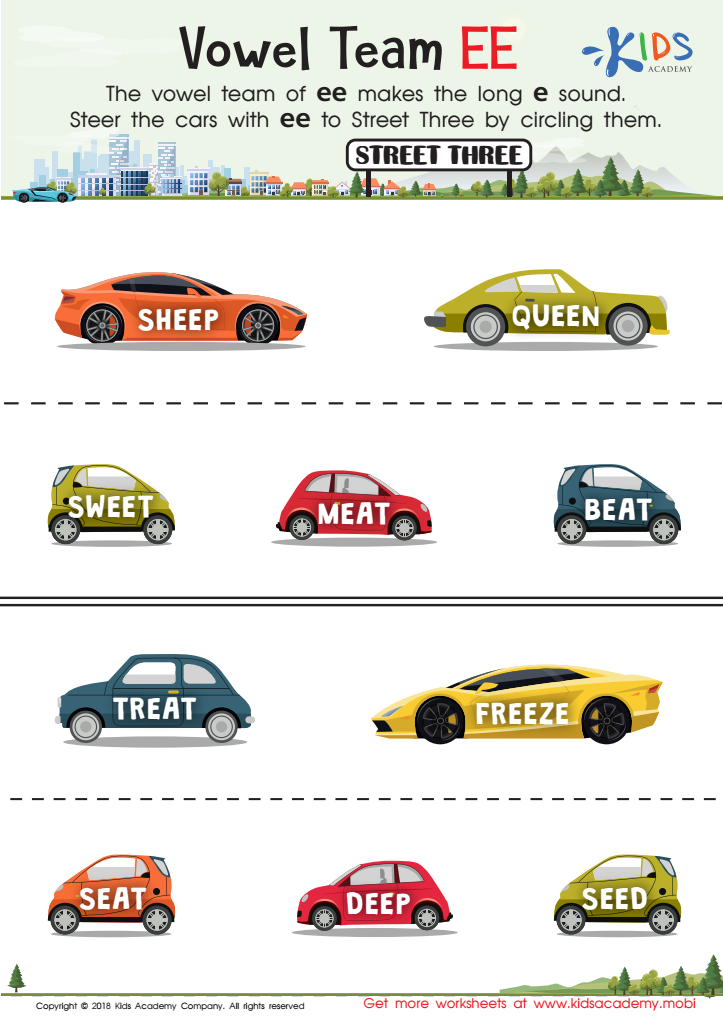
    Revised: Kids will have a blast steering cars with the -ee digraph towards Street Three! This fast-paced worksheet reinforces that -ee makes the long -e sound while boosting fine motor skills. Kids will love the bright colors and stay engaged with this fun printable. Get ready for hours of off-road excitement!
    Vowel team ee Worksheet
    Worksheet
    Digraph Th Printable Worksheet
    Digraph Th Printable Worksheet

    Digraphs: Think About "th" Worksheet
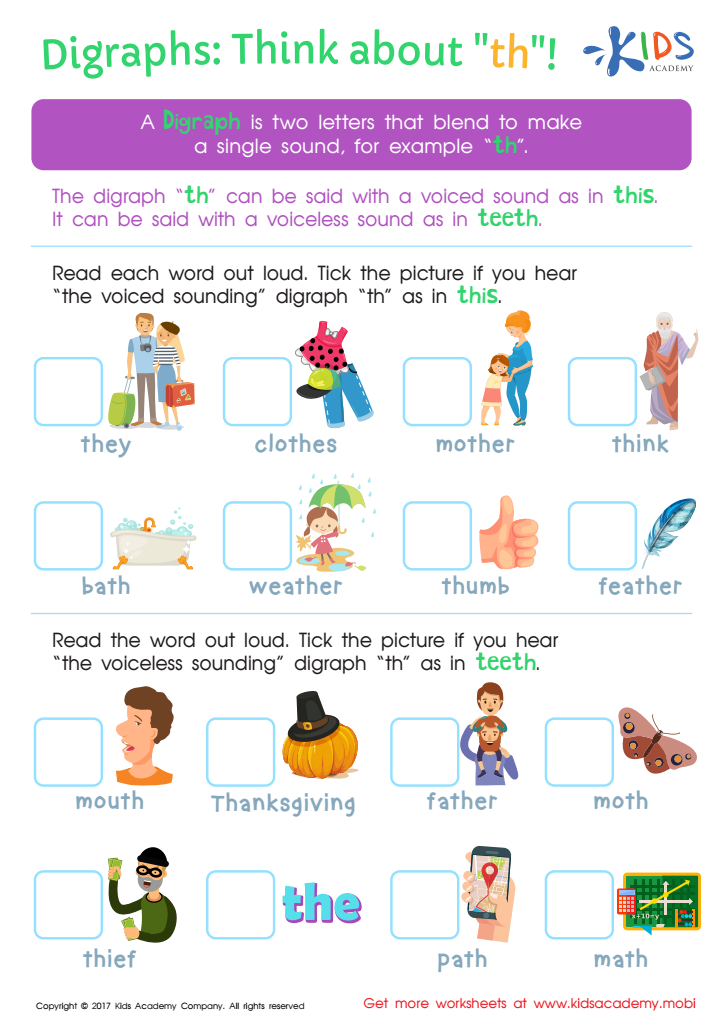
    Help your child master phonics with this illustrated digraph Th printable worksheet. It will help recognize "Th" words, differentiate voiced and voiceless sounds and understand key concepts. Use similar words while they work to reap its full benefits!
    Digraphs: Think About "th" Worksheet
    Worksheet
    Words with ea Worksheet
    Words with ea Worksheet

    Words with ea Worksheet

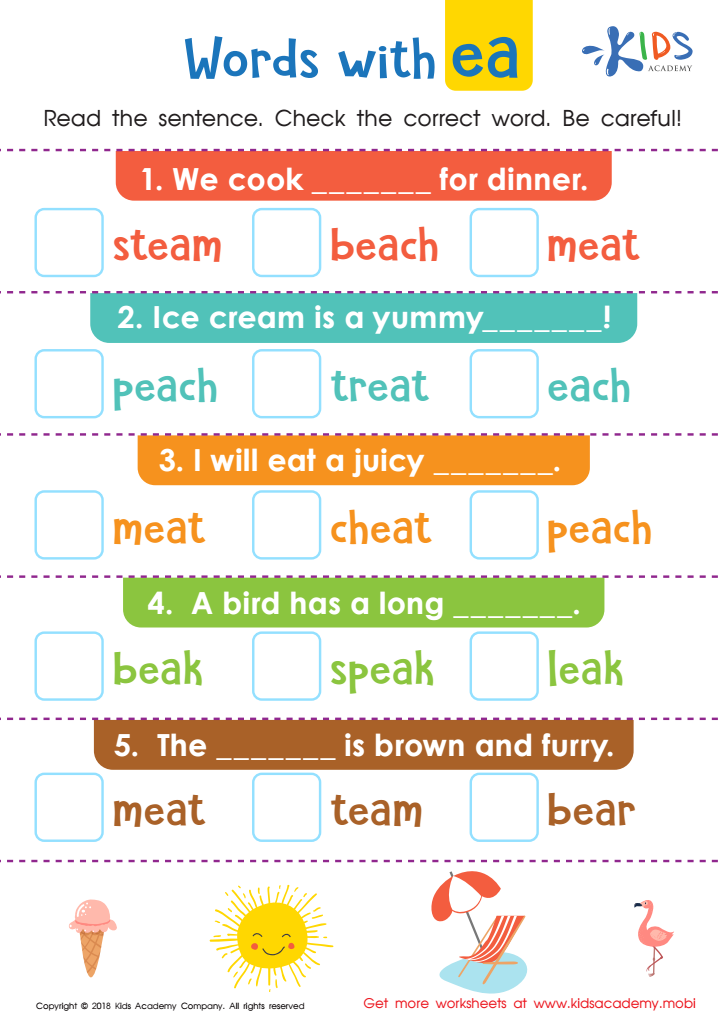
    Beginning readers may struggle with -ea vowel digraphs, which can have multiple sounds and be tricky to decode. This cheerful worksheet helps kids practice reading sentences with missing -ea words, using context clues to fill in the blanks. They'll also be exposed to various -ea sound examples, and build their sight word knowledge.
    Words with ea Worksheet
    Worksheet
    Consonant Blends Pl, Cl, and Sl Printable Worksheet
    Consonant Blends Pl, Cl, and Sl Printable Worksheet

    L Blends: "Pl", "Cl" and "Sl" Printable
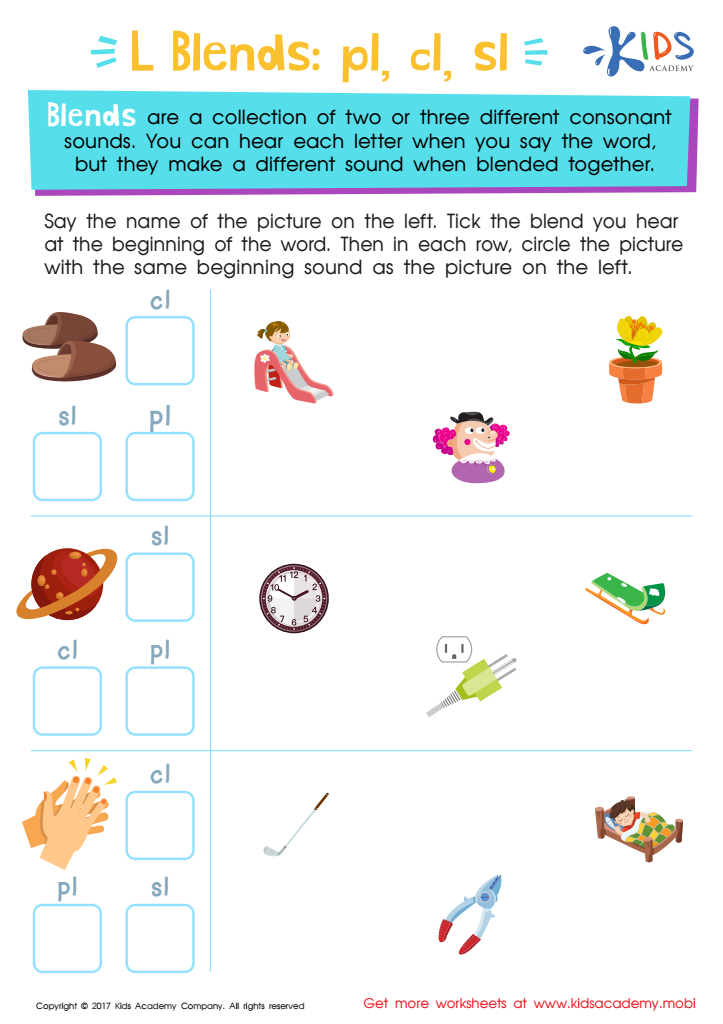
    This printable worksheet will help your child recognize and identify the Pl, Cl, and Sl consonant blends, sound them out, and identify them in print. Improve your child's reading and writing skills with fun and colorful phonics practice!
    L Blends: "Pl", "Cl" and "Sl" Printable
    Worksheet
    Ir ur er words worksheet
    Ir ur er words worksheet

    IR UR ER Words Worksheet

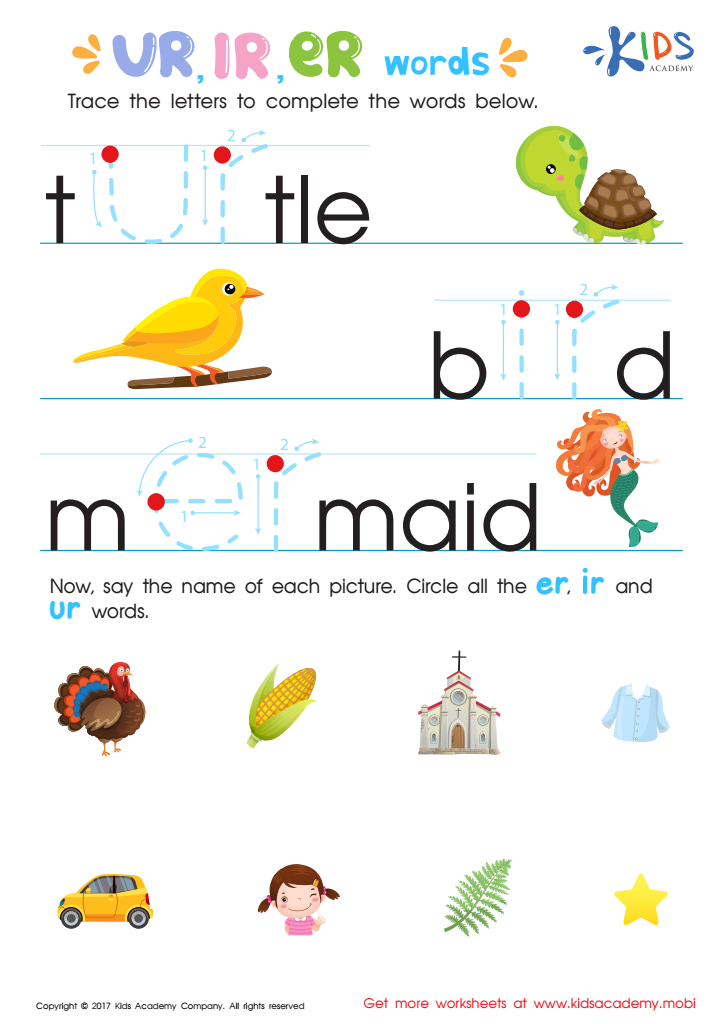
    Trouble spelling words with the same initial vowel sound? Our worksheet is here to help! With its exercises to help your child learn to read and spell turtle, bird, and mermaid, it'll make differentiating these tricky digraphs a snap.
    IR UR ER Words Worksheet
    Worksheet


    Vocabulary enhancement through two-letter phonics for ages 6-8 is crucial for several key reasons. Firstly, it lays a foundational groundwork for reading proficiency and literacy development. By mastering simple phonics, children can decode words more easily, allowing them to read with greater fluency and confidence. This early success boosts self-esteem and encourages a lifelong love of reading.

    Secondly, understanding two-letter combinations sharpens listening and speaking skills, essential for effective communication. Young learners become more articulate, comprehending and constructing sentences with improved clarity and coherence. This linguistic competence is not only vital for academic achievement but also for social interactions.

    Moreover, early phonics training has been linked to better cognitive development. It enhances memory, attention to detail, and problem-solving abilities. As children recognize phonetic patterns, they develop analytical skills that are transferrable to other subjects like math and science.

    Lastly, engaging parents and teachers in vocabulary enhancement creates a supportive learning environment. When children see the importance their caregivers place on their education, they are more motivated and engaged. This collaborative effort maximizes the educational benefits, setting children on a path to academic success and effective communication.

    Therefore, focusing on two-letter phonics at this formative age is a simple yet highly impactful strategy for holistic educational development.