Letter-sound association Upper & Lowercase Letters Worksheets for Ages 6-8
3 filtered results
-
From - To
Enhance your child's literacy skills with our engaging Letter-Sound Association Worksheets designed for ages 6-8. These printable resources focus on helping young learners connect uppercase and lowercase letters with their corresponding sounds, fostering phonemic awareness. Each worksheet provides interactive activities, allowing children to practice letter recognition and sound pronunciation in a fun and creative way. Perfect for homeschooling or classroom settings, these exercises motivate kids to explore the alphabet while building foundational reading skills. Empower your child's learning journey today with our colorful and educational worksheets that make mastering letter-sound connections an enjoyable experience!
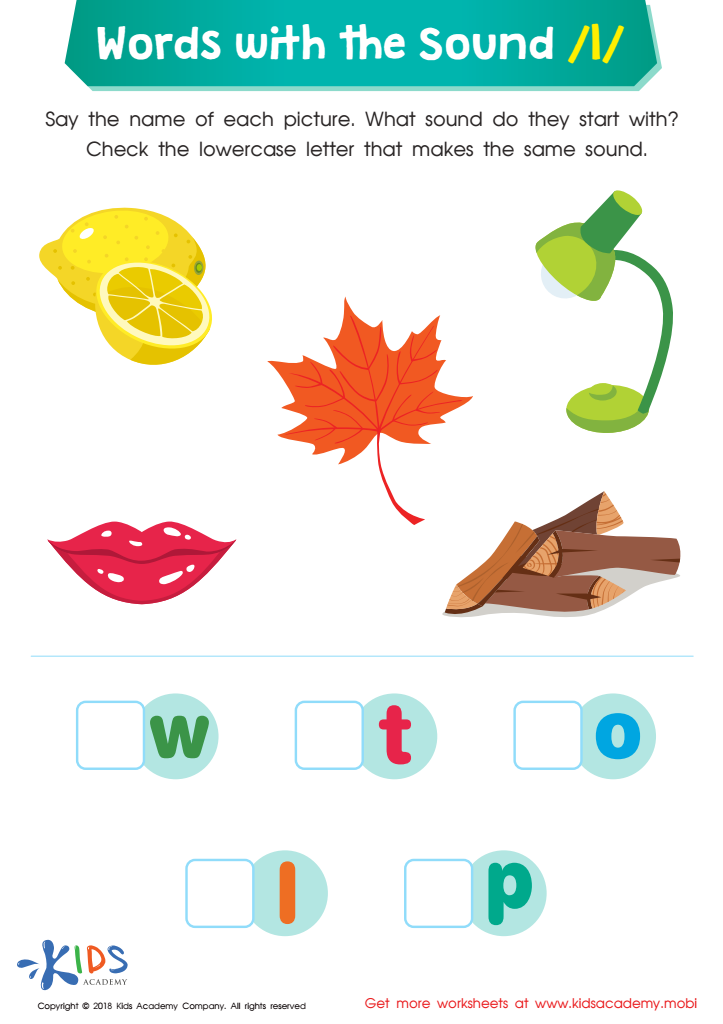
Words with Sound L Reading Worksheet
 Assign to My Students

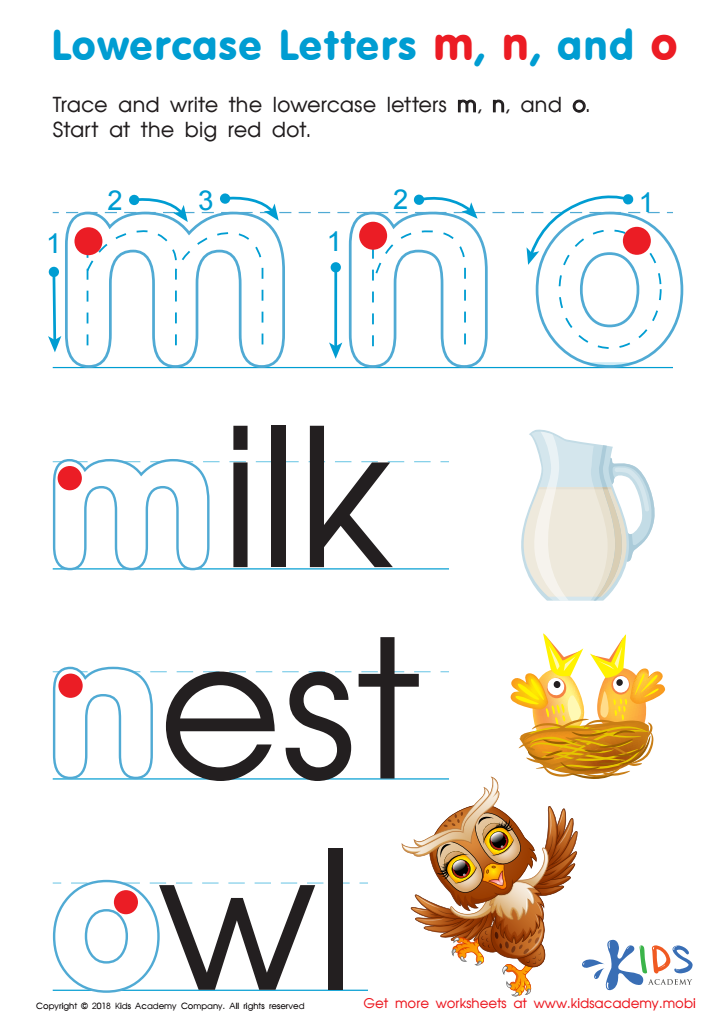
Lowercase Letters m n o Worksheet
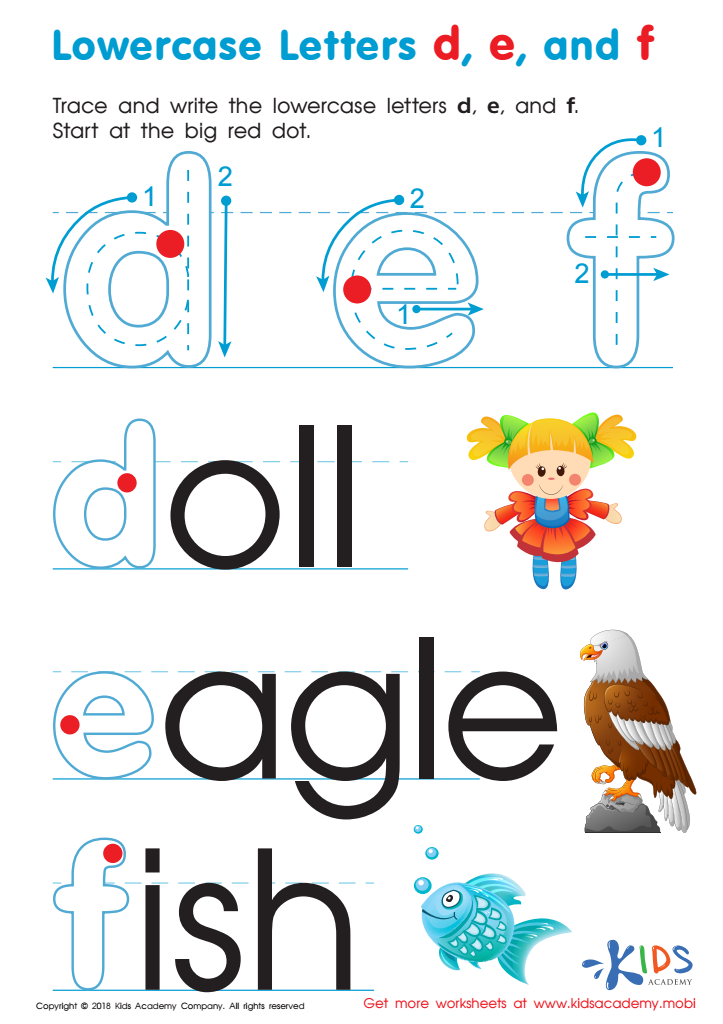
Lowercase Letters d e f Worksheet






Letter-sound association is a fundamental skill for early readers, particularly for children aged 6-8, as it serves as the bridge between spoken language and written text. Parents and teachers should prioritize this concept because it lays the foundation for literacy development. Understanding that each letter represents specific sounds enables children to decode words, which is essential for reading fluency.
At this age, recognizing both uppercase and lowercase letters is crucial. Uppercase letters are often seen in titles and the beginning of sentences, while lowercase letters are commonly used in body text. Familiarity with both forms helps children navigate texts more effectively, enhancing their reading confidence and comprehension.
Moreover, mastering letter-sound associations encourages spelling skills and vocabulary expansion, which are vital components of overall literacy. As children learn to blend sounds and recognize letters, they become more adept at independent reading and writing, fostering a love for literature.
Involving parents in this process can reinforce learning at home through activities and games, creating a supportive environment that nurtures a child’s literacy. Ultimately, understanding letter-sound associations equips kids with the tools they need for academic success, paving the way for lifelong learning and communication skills.







