Lowercase letter writing Upper & Lowercase Letters Worksheets for Ages 6-8
3 filtered results
-
From - To
Enhance your child's writing skills with our engaging Lowercase Letter Writing worksheets designed for kids ages 6-8. These vibrant, interactive activities provide a fun way to help young learners practice forming lowercase letters correctly. Each worksheet offers step-by-step guidance, focusing on letter recognition and formation to boost confidence and fine motor skills. With a variety of tracing, coloring, and independent writing exercises, children can explore the alphabet while developing essential handwriting abilities. Perfect for classroom use or at-home learning, our resources make mastering lowercase letters enjoyable and stress-free. Start your child's literacy journey today with these thoughtfully crafted materials!
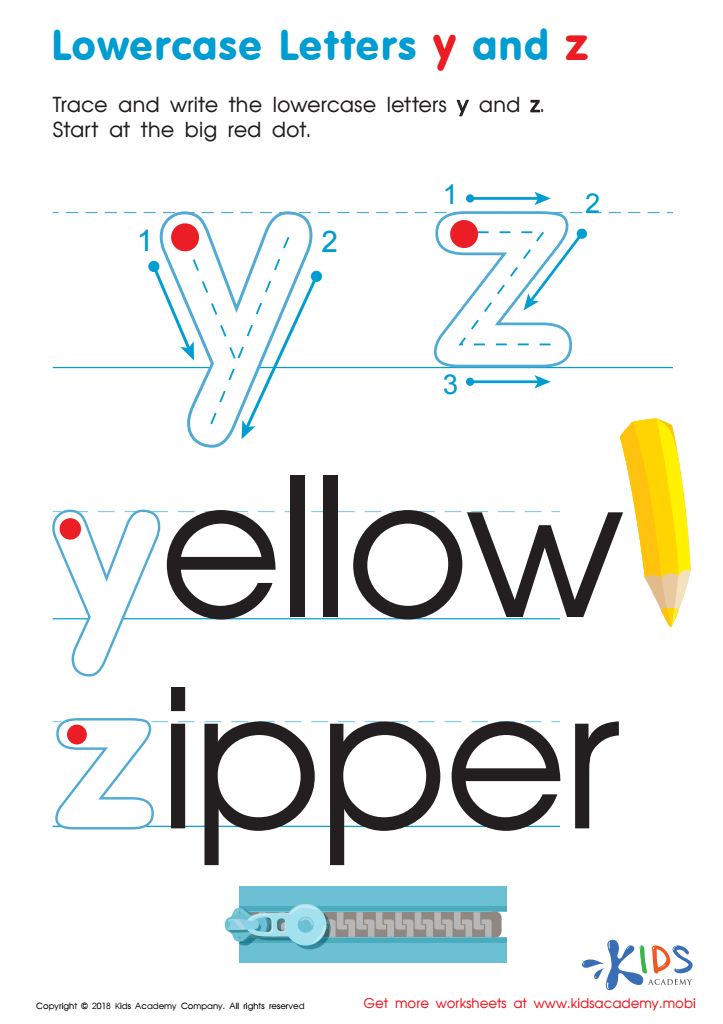
Lowercase Letters y z Worksheet
 Assign to My Students

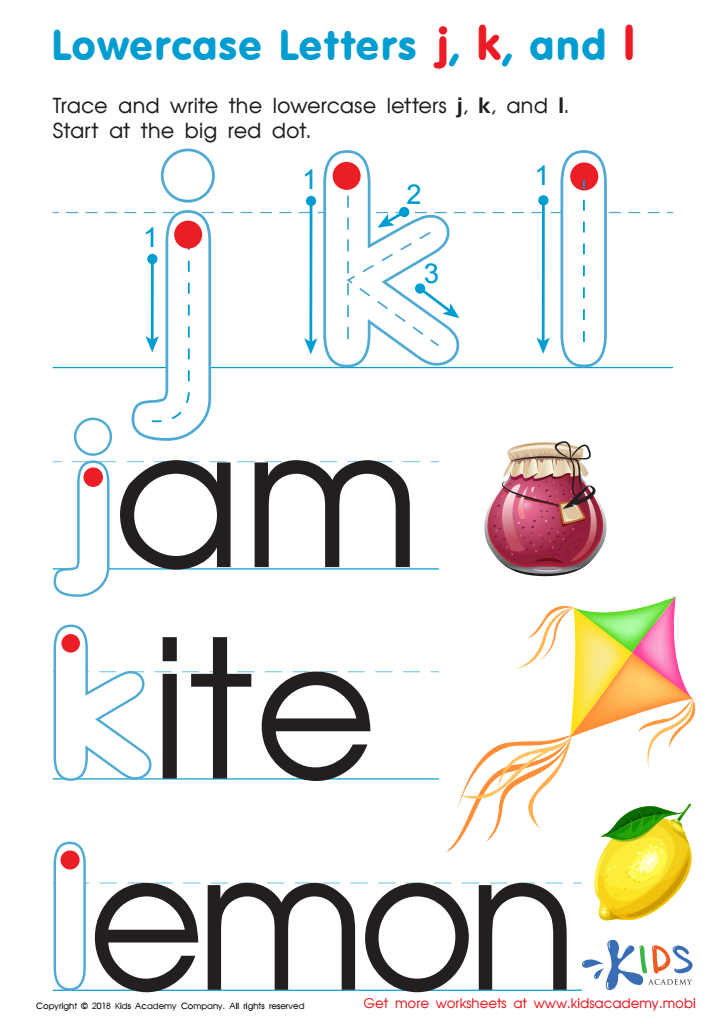
Lowercase Letters j k l Worksheet
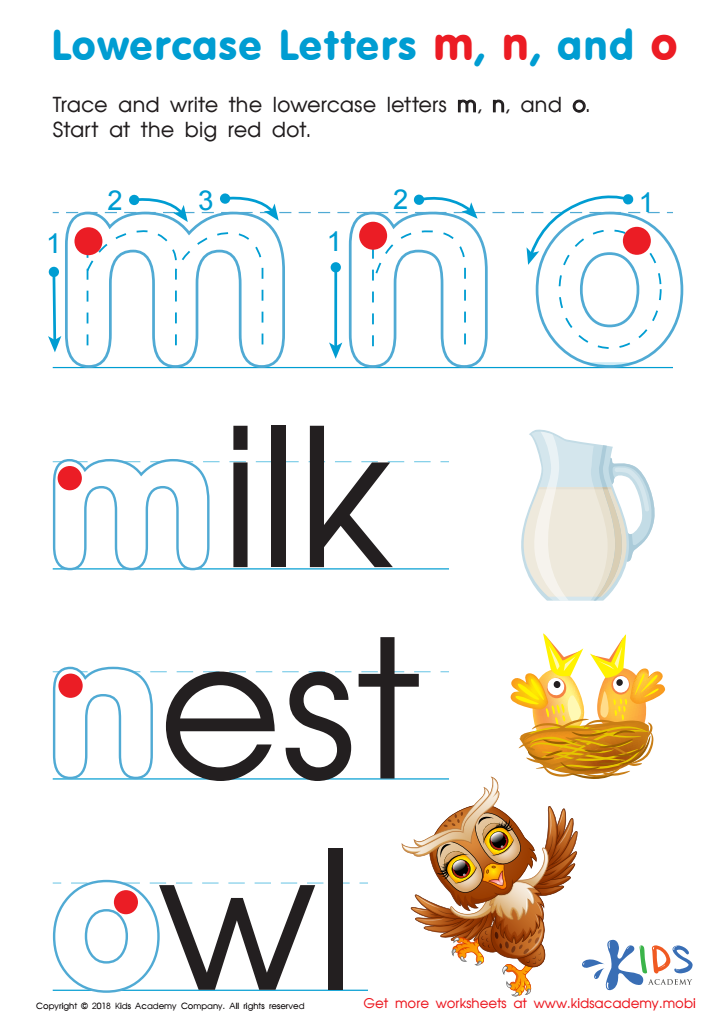
Lowercase Letters m n o Worksheet






Teaching children to write both lowercase and uppercase letters is crucial for their literacy development, especially for ages 6-8. During this stage, children are refining their motor skills and beginning to connect sounds with letters, which lays the foundation for reading and writing. Understanding the differences between uppercase and lowercase letters enhances their ability to recognize words, improving reading fluency and comprehension.
Lowercase letters constitute the majority of text they will encounter in books and everyday life. By focusing on lowercase writing, children learn to read sentences fluently, since most words utilize lowercase forms. However, uppercase letters hold significance as they signal the beginning of sentences and proper nouns, which helps children grasp basic grammar conventions.
Moreover, learning letter formation is important for developing fine motor skills. Writing each letter correctly promotes handwriting clarity, fostering effective communication. A solid foundation in writing can contribute to positive self-esteem as children see their abilities improve.
In conclusion, encouraging practice in writing both letter types offers children advantages in literacy skills, motor development, and confidence—an essential trifecta for their academic journey and overall learning success. Parents and teachers should prioritize this aspect of education to build a strong base for future literacy endeavors.







