Vocabulary Enrichment Vowels Worksheets for Ages 6-8
3 filtered results
-
From - To
Enhance your child's vocabulary with our engaging Vowels Worksheets designed for ages 6-8! These printable activities focus on key vowel sounds, helping young learners explore and expand their word bank. Through fun exercises such as word matching, fill-in-the-blanks, and creative sentence building, children will strengthen their understanding of vowel usage in vocabulary. Each worksheet promotes critical thinking and language skills while nurturing a love for reading and writing. Perfect for classroom use or at-home learning, these worksheets provide a valuable resource for parents and educators seeking to enrich vocabulary development. Get started on a journey of linguistic discovery today!
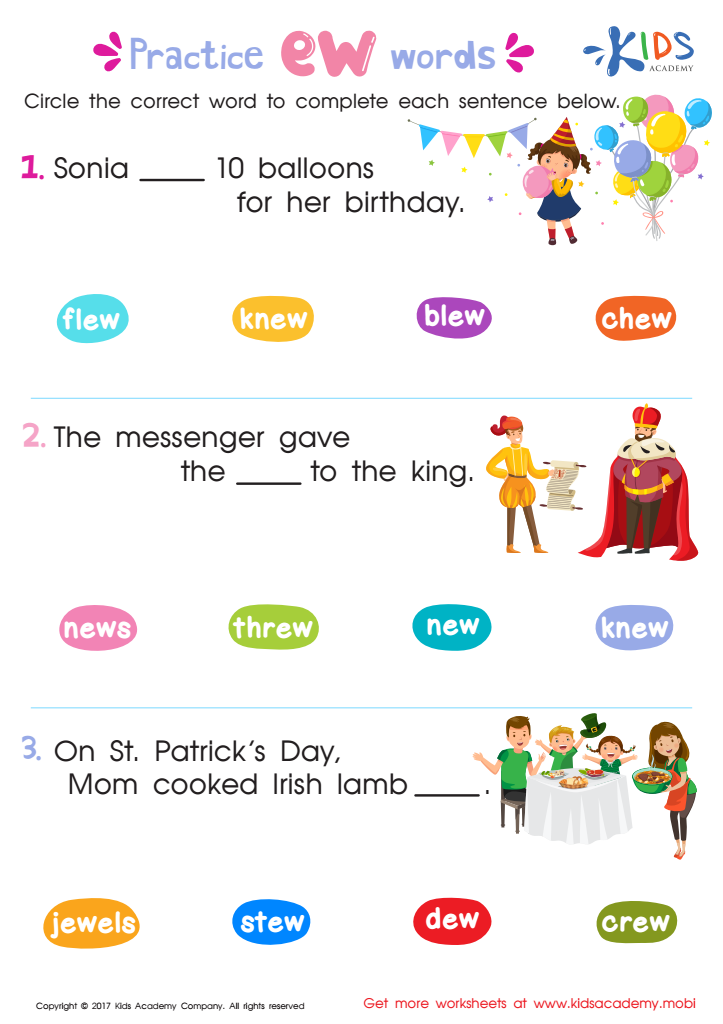
EW Words Worksheet
 Assign to My Students
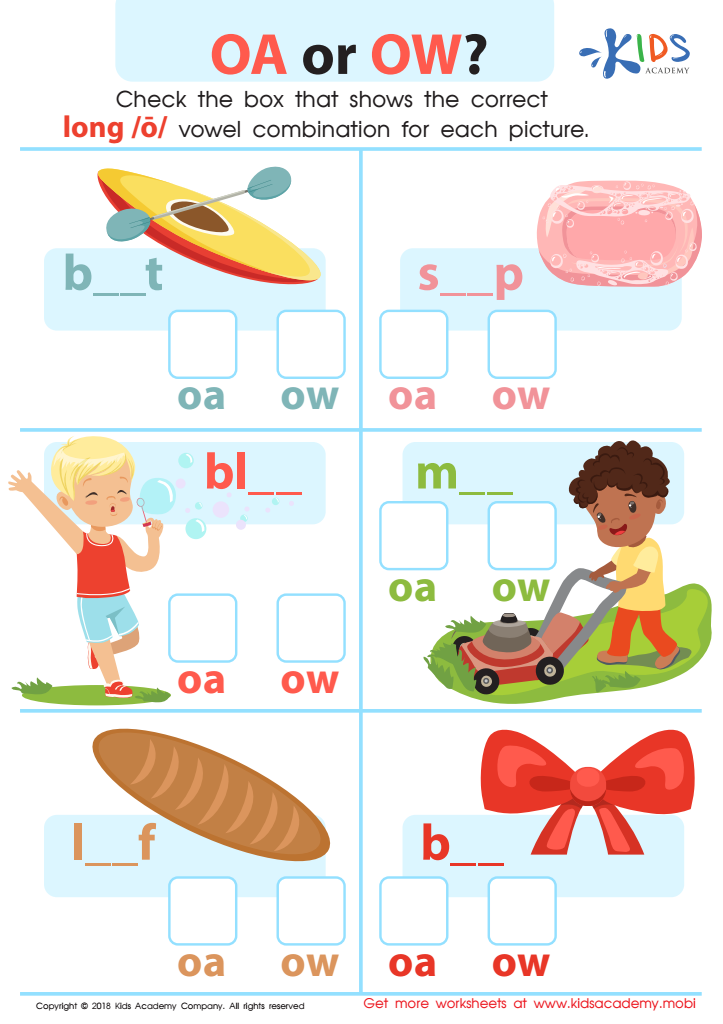
Reading: OA or OW Worksheet
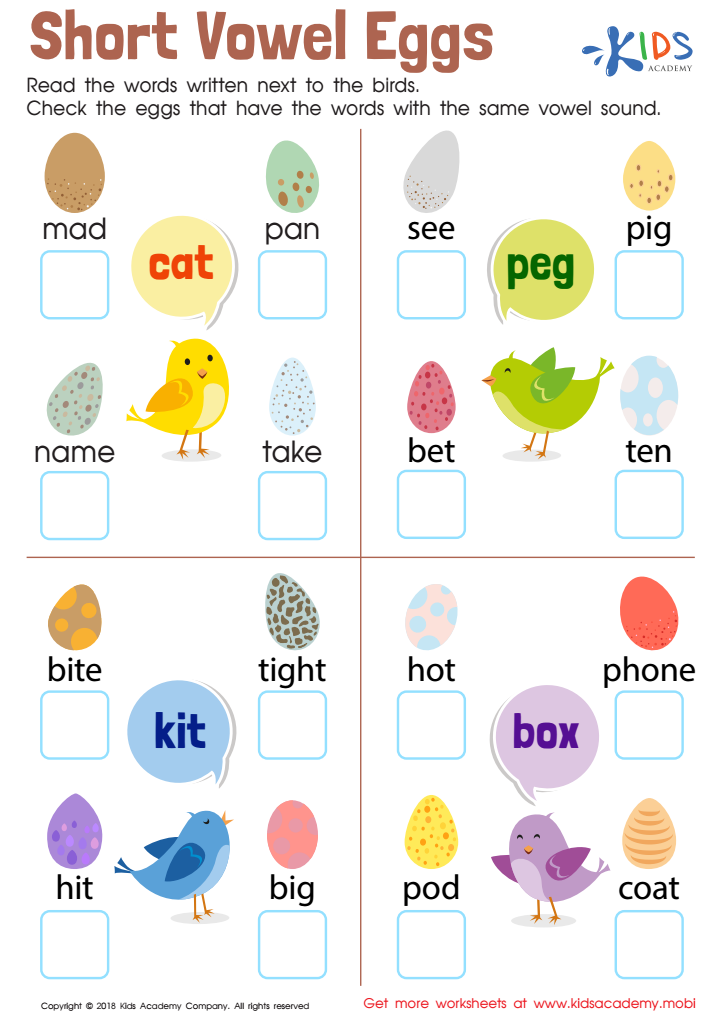
Short Vowel Eggs Worksheet





Vocabulary Enrichment Vowels is a crucial aspect of early literacy development for children aged 6-8. At this stage, children are beginning to explore more complex language structures, and expanding their vocabulary directly impacts their reading comprehension and communication skills.
Firstly, a rich vocabulary enhances a child's ability to understand and process information in various subjects, including science, mathematics, and social studies. This foundational knowledge supports academic success throughout their schooling.
Secondly, distinguishing and practicing vowels is an essential part of phonics education. Mastery of vowels improves decoding skills, paving the way for fluent reading. This fluency not only boosts comprehension but also helps build confidence in literacy.
Moreover, engaging children in vocabulary enrichment creates opportunities for meaningful conversations at home and in the classroom, fostering social skills and emotional intelligence. When parents and teachers actively participate in this enrichment, they cultivate a love for words and learning, setting the stage for lifelong literacy habits.
Lastly, strong vocabulary skills contribute to better writing abilities, enabling children to express thoughts and ideas more articulately. By prioritizing vocabulary development during these formative years, both parents and teachers can significantly enhance children's language capabilities, overall learning experiences, and future success.







