Logical thinking improvement Chess Worksheets for Ages 6-8
3 filtered results
-
From - To
Enhance your child's logical thinking skills with our engaging Chess Worksheets designed specifically for ages 6-8! These fun and interactive worksheets combine the excitement of chess with essential problem-solving exercises, encouraging kids to think critically and strategically. Each worksheet provides age-appropriate challenges that promote logical reasoning, decision-making, and pattern recognition. Whether your child is a beginner or has some chess experience, these resources will help them develop vital cognitive skills while making learning enjoyable. Let your little ones dive into the fascinating world of chess and watch their thinking skills soar with our carefully crafted worksheets!
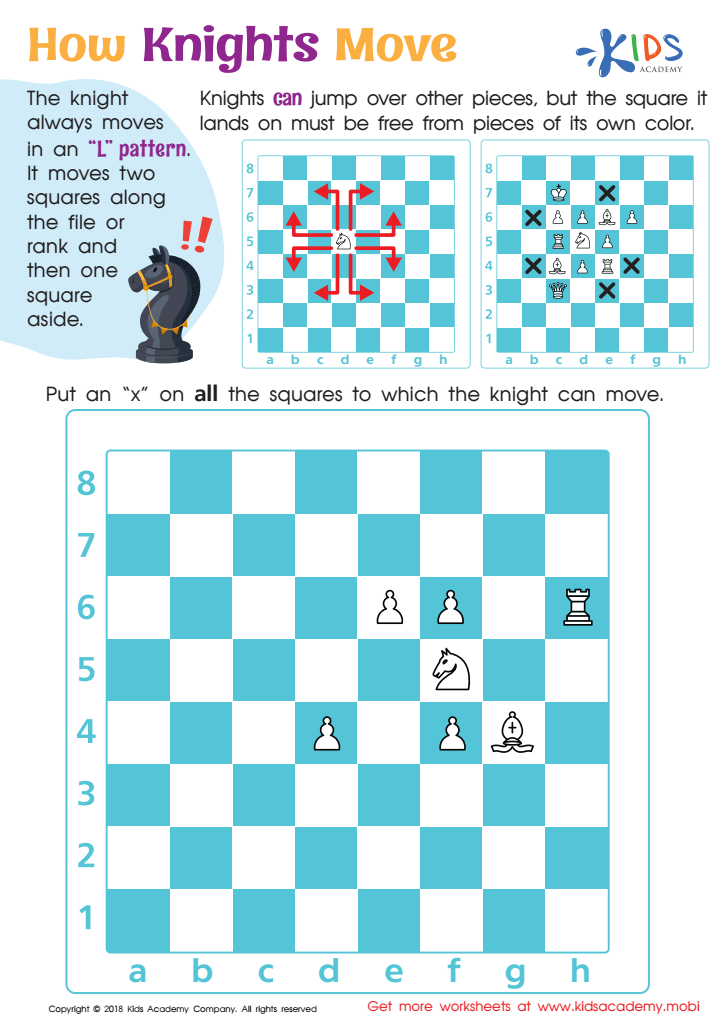
How Knights Move Worksheet
 Assign to My Students
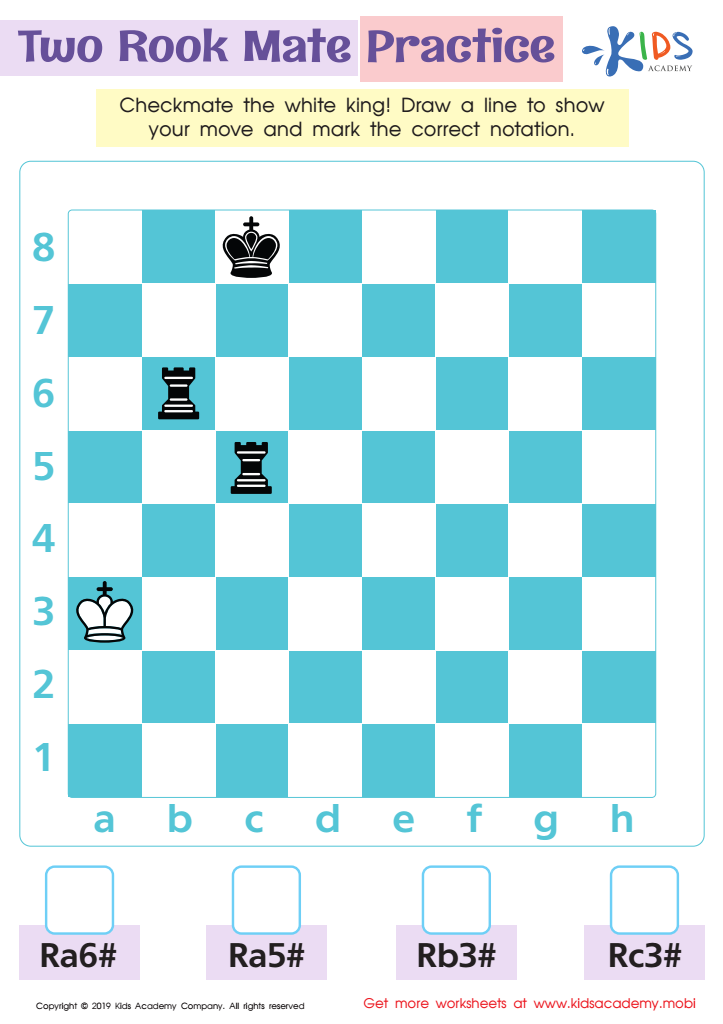
Two Rook Mate Practice Worksheet
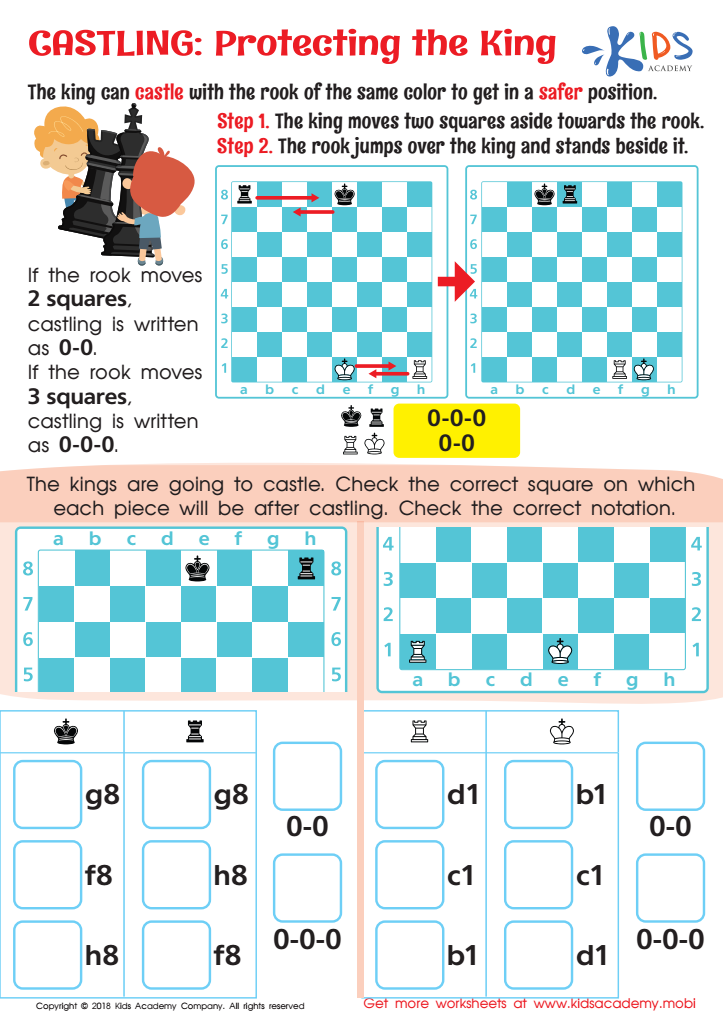
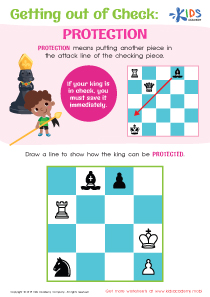
Castling: Protecting the King Worksheet







Logical thinking is a crucial skill that supports various aspects of a child's development, especially for those aged 6-8. Introducing chess at this early age provides a structured way to enhance these essential cognitive abilities.
First, chess requires players to think several steps ahead, evaluating potential consequences of their moves and planning strategically. This practice develops critical reasoning skills and decision-making abilities, which can translate into better performance in school-related tasks, such as problem-solving in mathematics and understanding complex narratives in reading.
Additionally, playing chess teaches kids how to recognize patterns and relationships, further enriching their logical reasoning. These skills are beneficial not only academically but also socially, as children learn to negotiate and anticipate the actions of their peers—important skills for teamwork and collaboration.
Furthermore, chess promotes patience and persistence. As children face challenges on the board, they learn to analyze their failures constructively and adapt their strategies, fostering resilience—a key component for success in academics and life.
Incorporating chess into a child's routine can thus create a fun yet challenging environment that nurtures logical thinking skills, setting a strong foundation for lifelong learning and problem-solving. For parents and teachers, promoting these activities can ultimately help children thrive in and out of the classroom.