Problem-solving abilities Chess Worksheets for Ages 6-8
3 filtered results
-
From - To
Unlock your child's potential with our engaging "Problem-Solving Abilities Chess Worksheets" designed for ages 6-8! These worksheets introduce young learners to critical thinking and strategic planning through the fascinating game of chess. Featuring colorful illustrations and age-appropriate challenges, children will develop essential problem-solving skills while enhancing their concentration and analytical abilities. Each activity encourages creativity and perseverance, making learning enjoyable and effective. Perfect for parents and educators, these printable resources provide a fun way to boost cognitive skills. Start your child's journey into the captivating world of chess today and watch them solve problems like a pro!
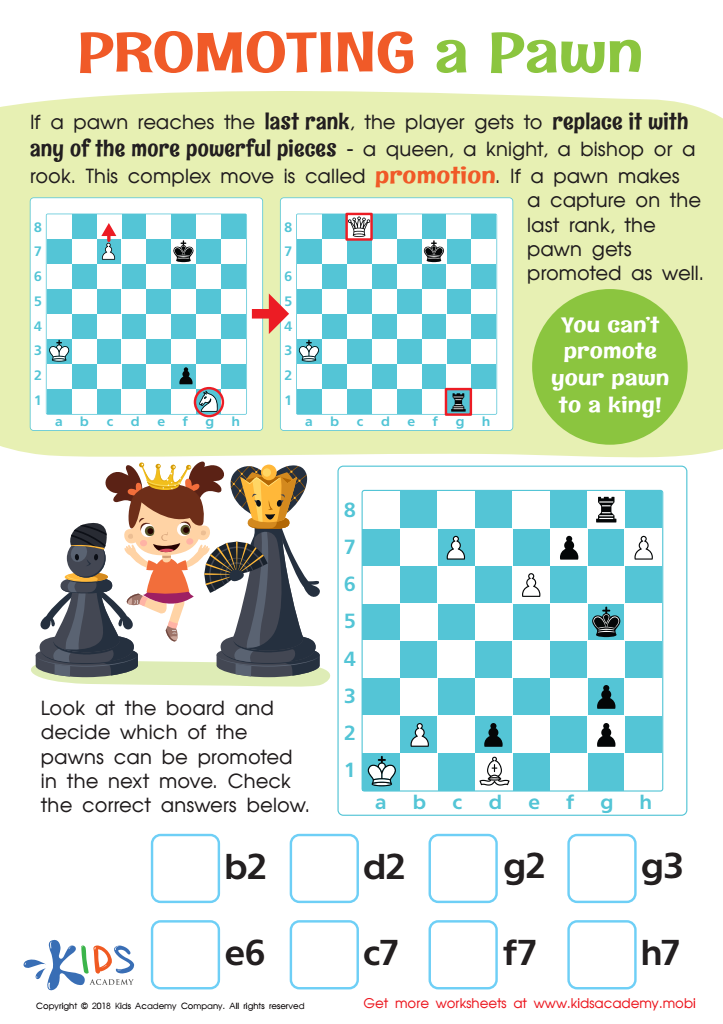
Promoting a Pawn Worksheet
 Assign to My Students
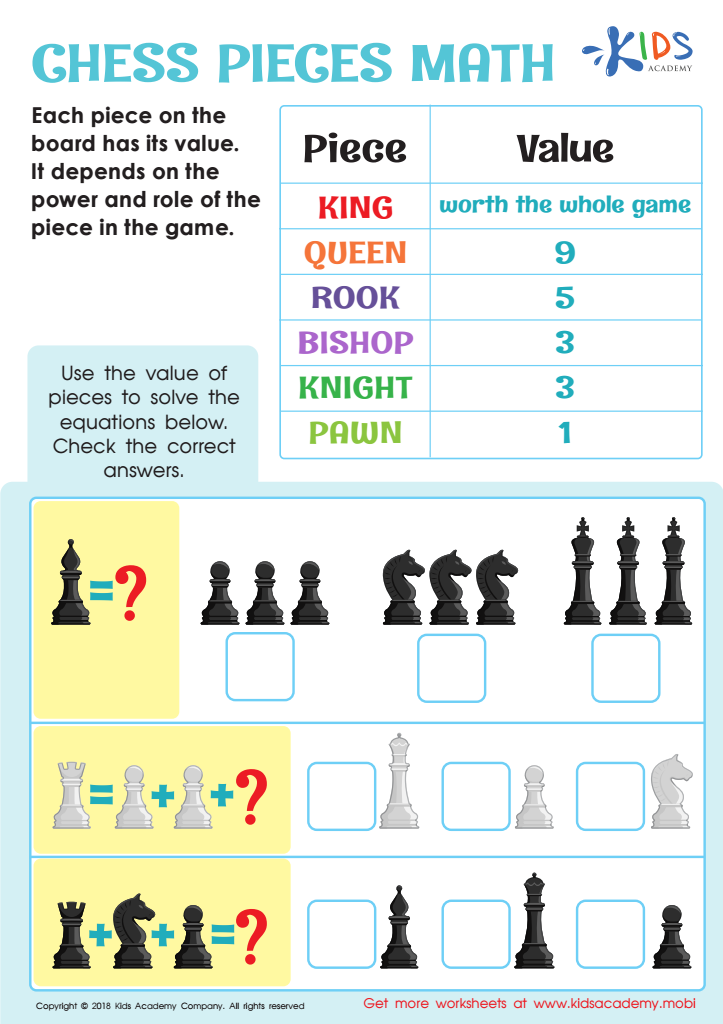
Chess Pieces Math Worksheet
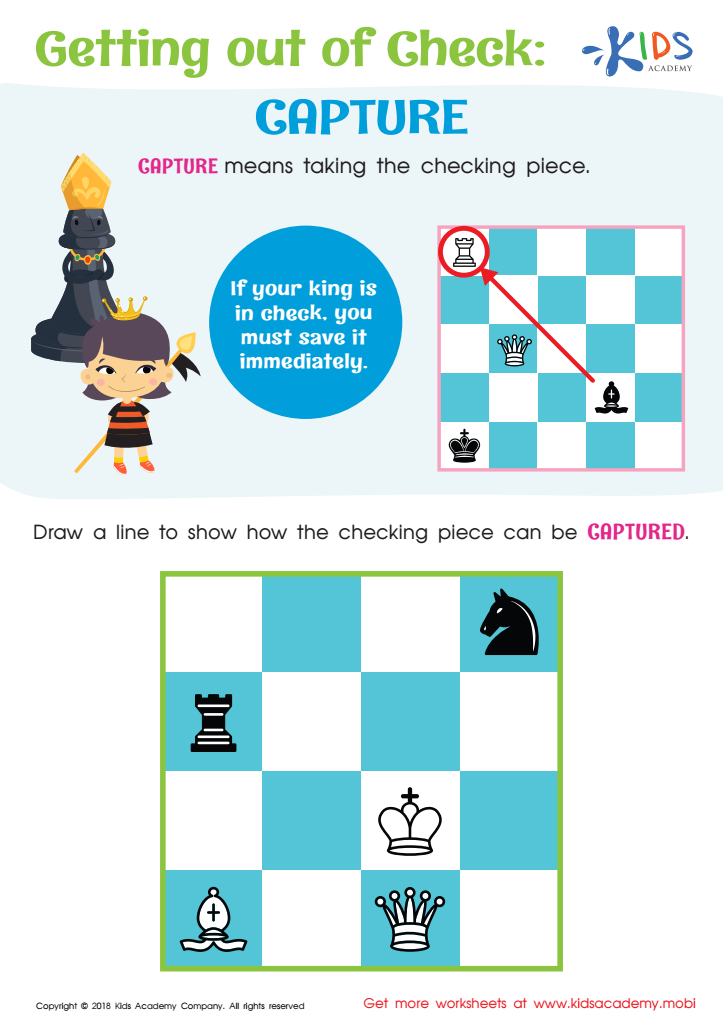
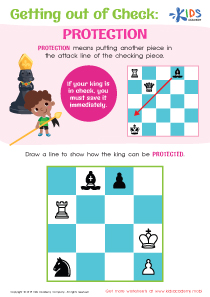
Getting out of Check: Capture





Problem-solving abilities are crucial for the development of children, and introducing chess to ages 6-8 can significantly enhance these skills. Chess is not just a game; it is a complex activity that promotes critical thinking, strategy formulation, and decision-making. As children learn to navigate the chessboard, they encounter various challenges that require them to think ahead, anticipate their opponent's moves, and consider the consequences of their actions. This fosters analytical mindset and improves their cognitive flexibility.
Moreover, chess encourages patience and resilience. Kids learn to analyze multiple options before making a decision, fostering a sense of responsibility for their choices. When faced with challenges or setbacks in the game, children practice perseverance and learn that setbacks are part of the learning process. These experiences translate into improved problem-solving abilities in real-life situations, enhancing their academic performance and interpersonal relationships.
Parents and teachers play a vital role in nurturing these skills by integrating chess into learning environments. By supporting problem-solving through chess, they equip children with essential life skills that promote self-confidence, creativity, and emotional intelligence, making it an invaluable investment in a child's developmental journey.