Problem-solving skills development Chess Worksheets for Ages 6-8
3 filtered results
-
From - To
Enhance your child's problem-solving skills with our engaging Chess Worksheets tailored for ages 6-8! These expertly designed worksheets provide a fun and interactive way for young learners to develop critical thinking and strategic planning abilities through the classic game of chess. By solving captivating chess-related puzzles and challenges, children will strengthen their cognitive skills while enjoying the excitement of gameplay. Each worksheet encourages creativity and fosters an understanding of various chess concepts, making learning both effective and enjoyable. Equip your child with essential problem-solving tools that will benefit them beyond the chessboard. Explore our worksheets today!
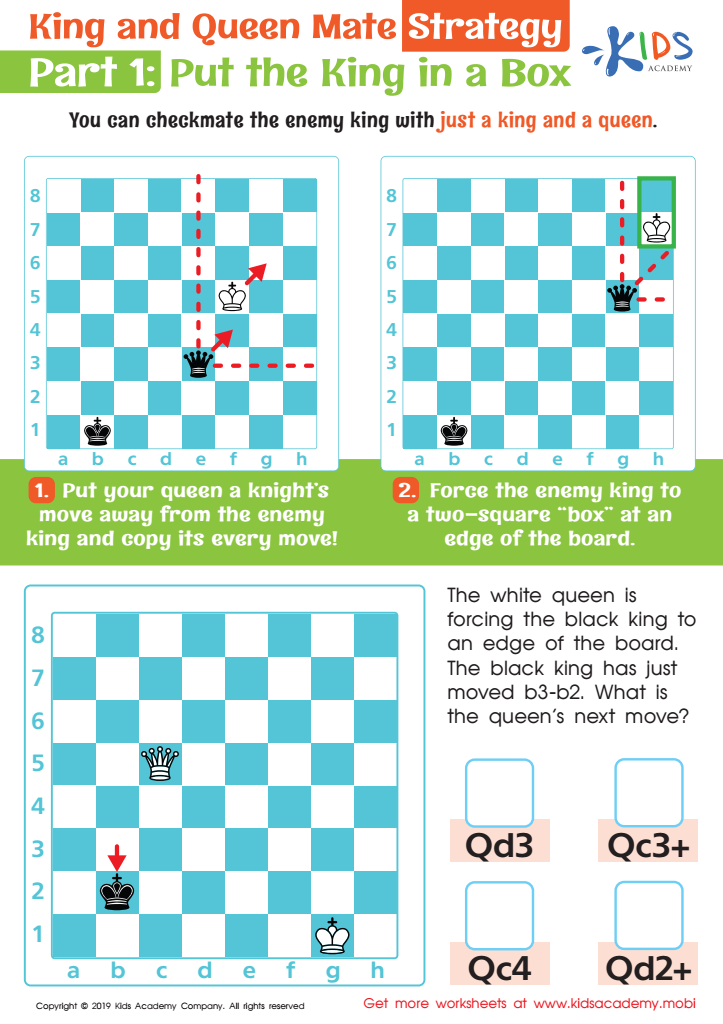
King and Queen Mate Strategy: Part 1 Worksheet
 Assign to My Students
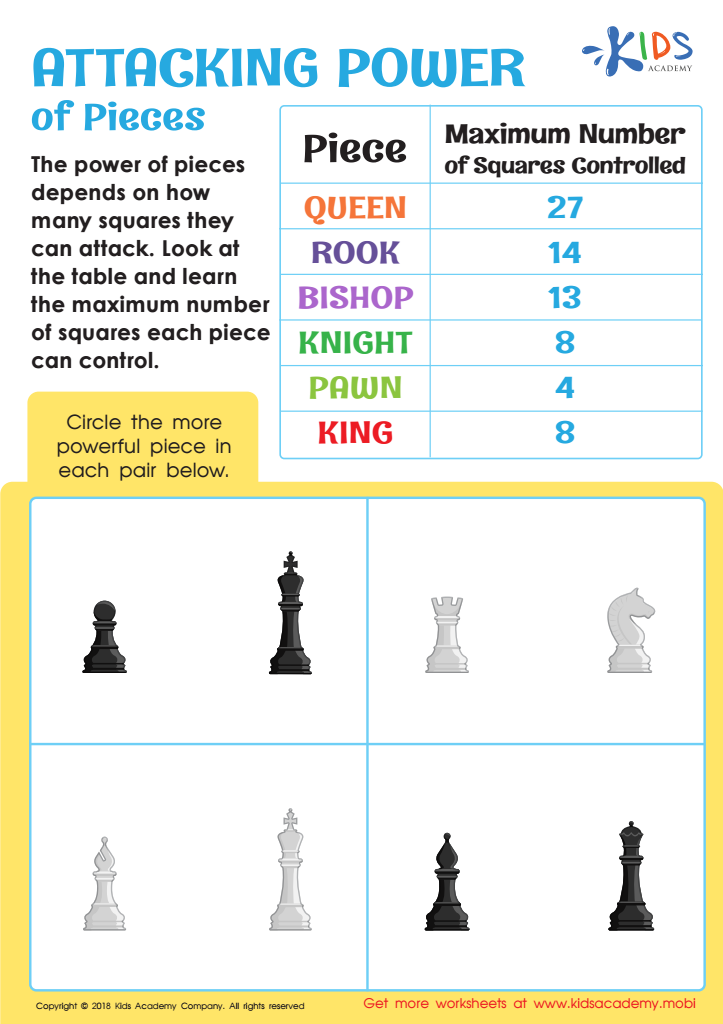
Attacking Power of Chess Pieces Worksheet
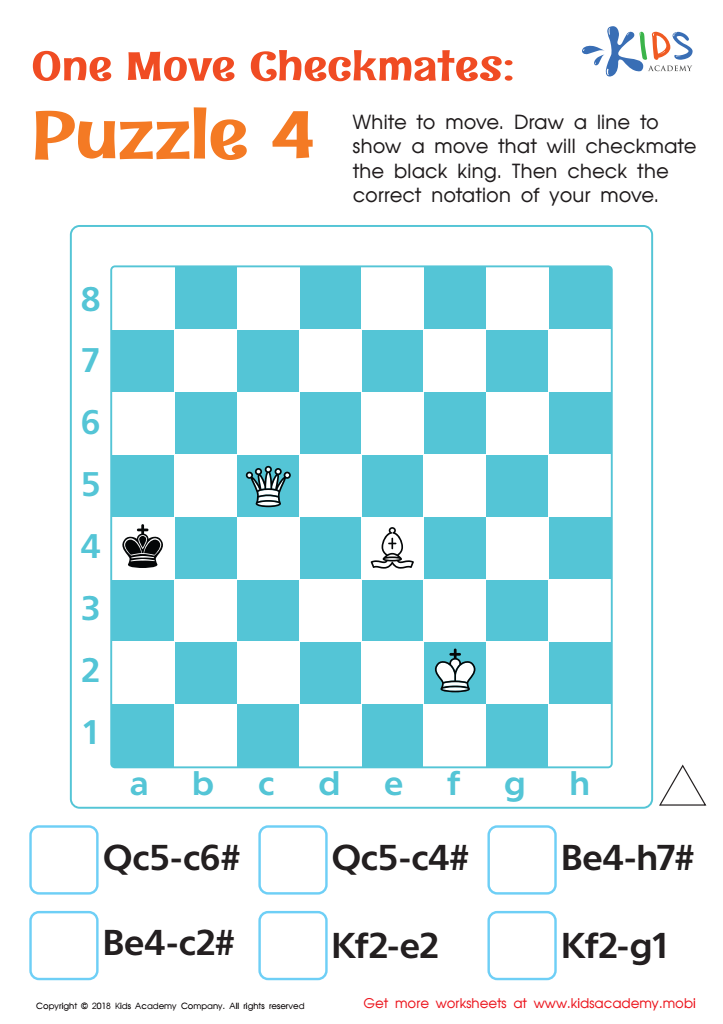
One Move Checkmates: Puzzle 4 Worksheet




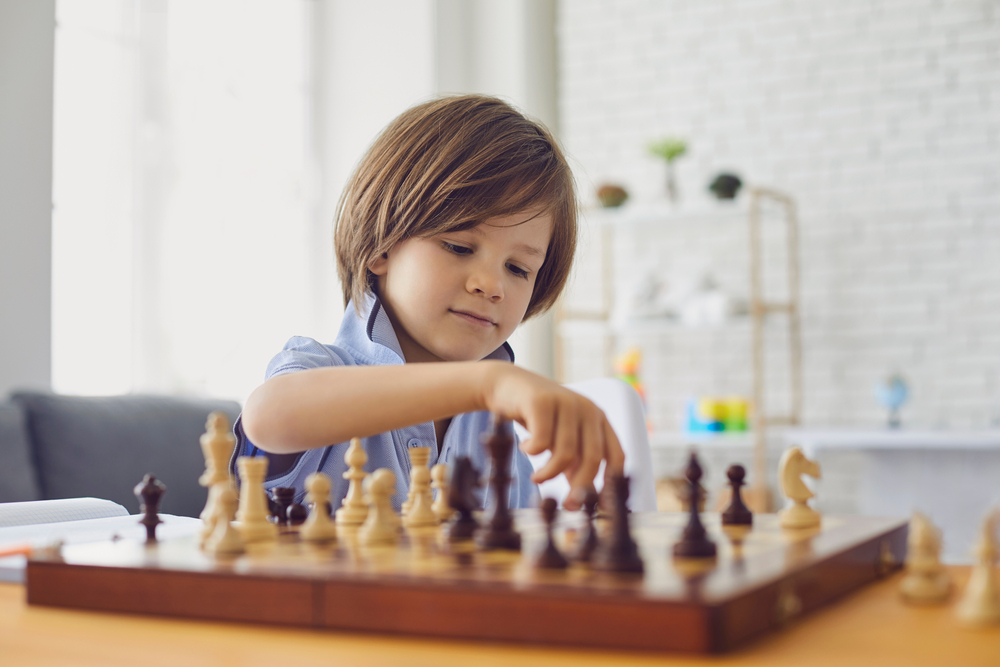
Problem-solving skills are vital for children’s cognitive development and life success, and chess offers an engaging platform for fostering these skills in children aged 6-8. This age group is particularly conducive to learning, as their brains are rapidly developing the ability to think critically and formulate strategies. Chess exposes them to complex situations requiring foresight, analysis, and adaptability, encouraging them to evaluate multiple outcomes before making decisions.
Parents and teachers should care about chess for several reasons. Firstly, the game promotes concentration and persistence, as children learn to focus on the board, plan moves, and recalibrate strategies in response to challenges. Additionally, chess enhances mathematical thinking and pattern recognition, crucial components of early education curricula. By understanding and enjoying the game, children also develop patience and fair play.
Furthermore, introducing chess at a young age builds confidence as children learn to overcome obstacles, promoting a growth mindset. Socially, it provides opportunities for participation, teamwork, and interaction with peers, which are essential skills for personal development. Investing time in developing problem-solving skills through chess not only equips children with essential cognitive tools but also lays the groundwork for critical thinking abilities throughout their lives.