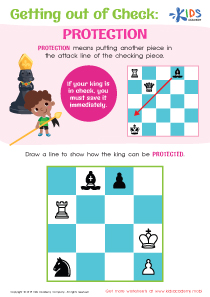
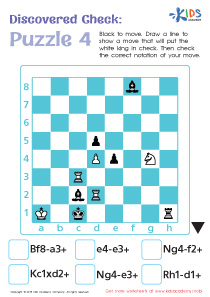
Spatial awareness Chess Worksheets for Ages 6-8
3 filtered results
-
From - To
Enhance your child's spatial awareness skills with our engaging Chess Worksheets designed specifically for ages 6-8. These worksheets provide a fun and interactive way to understand the captivating game of chess while developing critical cognitive abilities. Young learners will explore key concepts such as positioning, movement, and strategy, all in a playful format. Our colorful and easy-to-follow activities not only make learning enjoyable but also foster problem-solving and critical thinking skills. Dive into the world of chess and equip your child with essential spatial reasoning skills that will benefit them in many areas of life. Start their chess journey today!
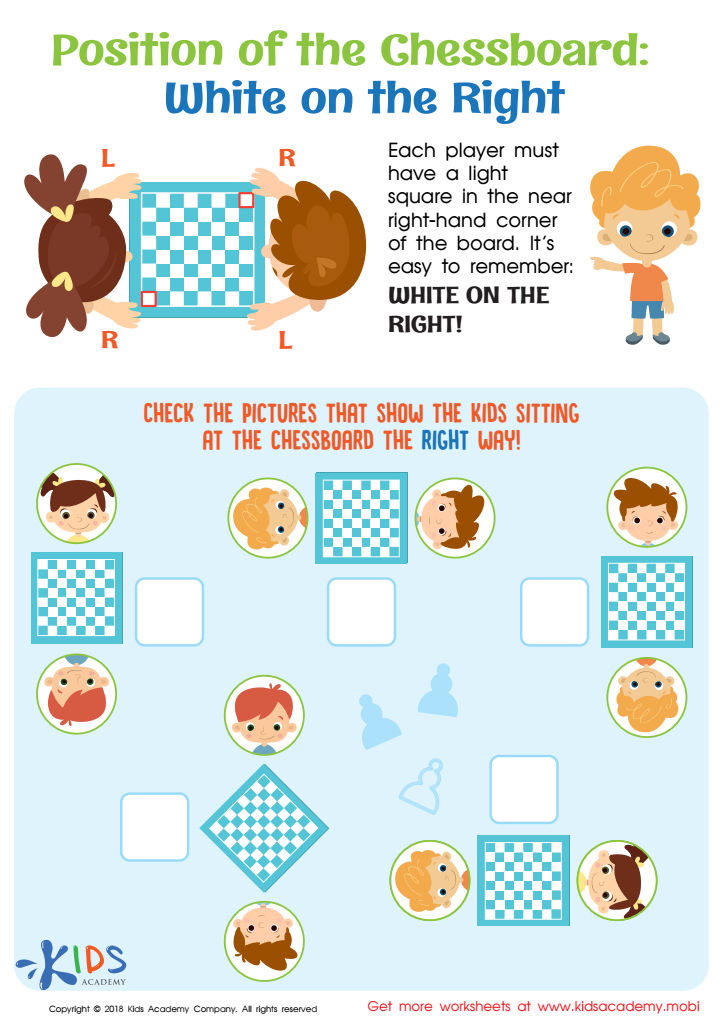
Position of the Chessboard: White on the Right Worksheet
 Assign to My Students
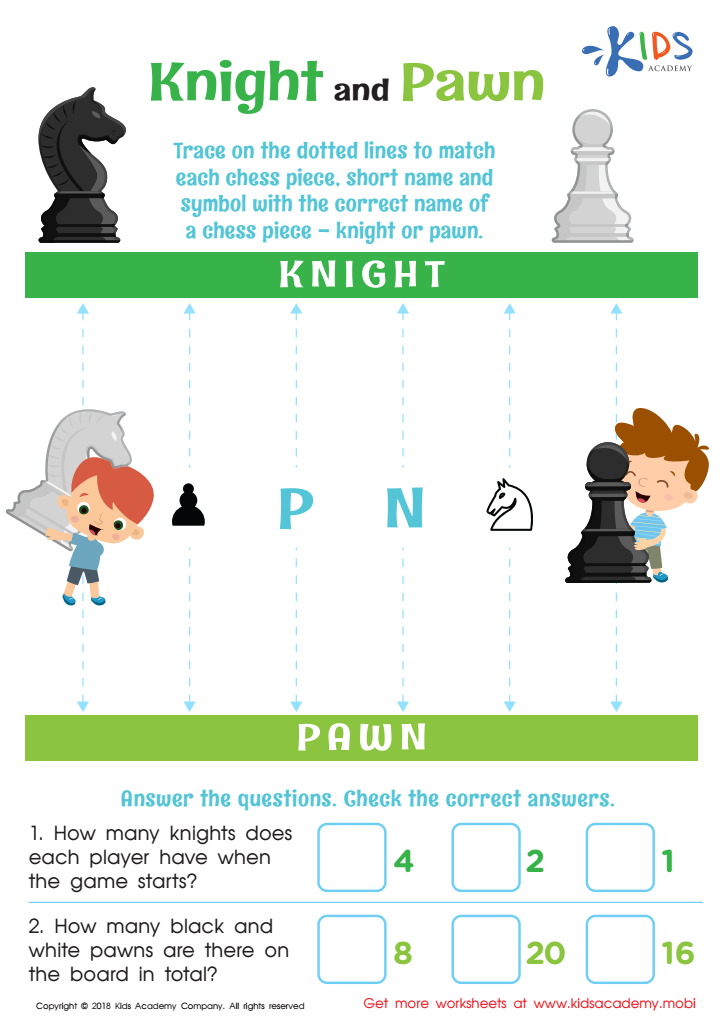
Knight and Pawn Worksheet
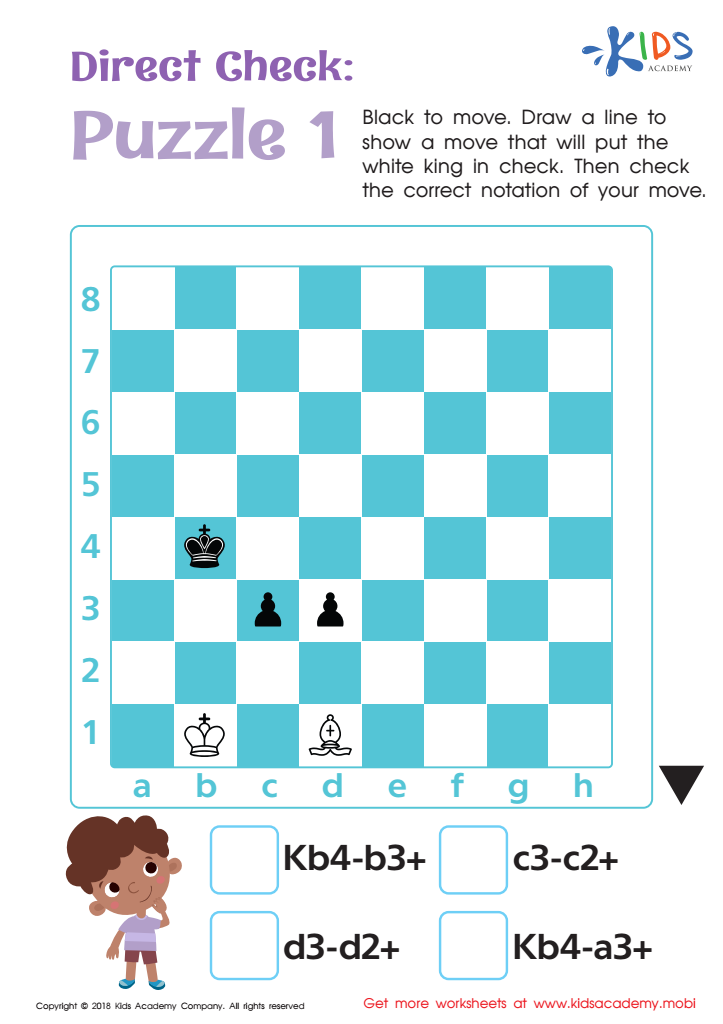
Direct Check: Puzzle 1 Worksheet





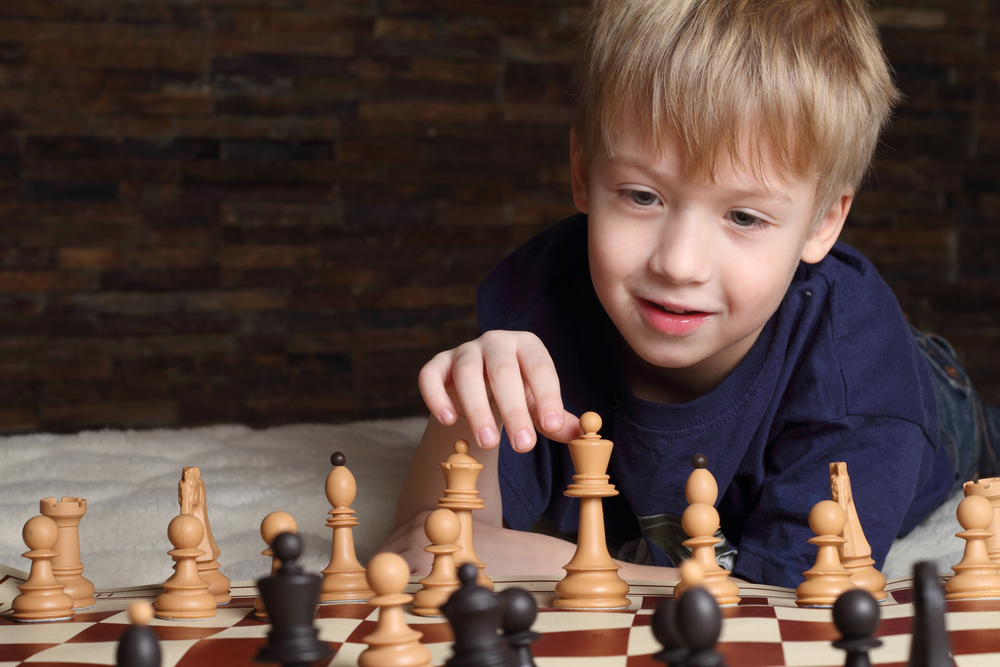
Parents and teachers should care about teaching chess and its emphasis on spatial awareness to children aged 6-8 due to its numerous cognitive and developmental benefits. Chess is a game that inherently involves understanding and manipulating space - children learn to visualize the board, anticipate their opponent's moves, and strategize their own. Such skills are invaluable as they enhance critical thinking, problem-solving, and decision-making abilities.
At this young age, children are developing their spatial reasoning, which is crucial for subjects like math and science. Engaging in chess helps strengthen these skills; it encourages abstract thinking, improves concentration, and develops the ability to think several steps ahead. Moreover, the game requires recognizing patterns and relationships, both of which boost overall cognitive development.
Additionally, chess fosters emotional intelligence through wins and losses, teaching kids resilience, patience, and sportsmanship. The social aspect of the game promotes interaction with peers, enhancing communication skills and building friendships.
By incorporating chess into educational settings or home activities, parents and teachers can aid children in developing lifelong skills that benefit both their academic achievements and personal growth, ultimately cultivating well-rounded individuals ready to tackle future challenges.