Letter tracing skills English for Beginners Worksheets for Ages 6-8
3 filtered results
-
From - To
Boost your child's handwriting and letter recognition with our "Letter Tracing Skills English for Beginners Worksheets" designed for ages 6-8. These engaging worksheets emphasize essential tracing practices to help young learners master alphabet writing. Perfect for beginners or those learning English as a second language, each worksheet provides clear guidelines and fun activities that build fine motor skills and enhance confidence in writing. Foster a love for learning with exercises that combine educational content with playful elements, ensuring your child remains interested and motivated. Unlock their potential with our expertly crafted tracing resources at Kids Academy!
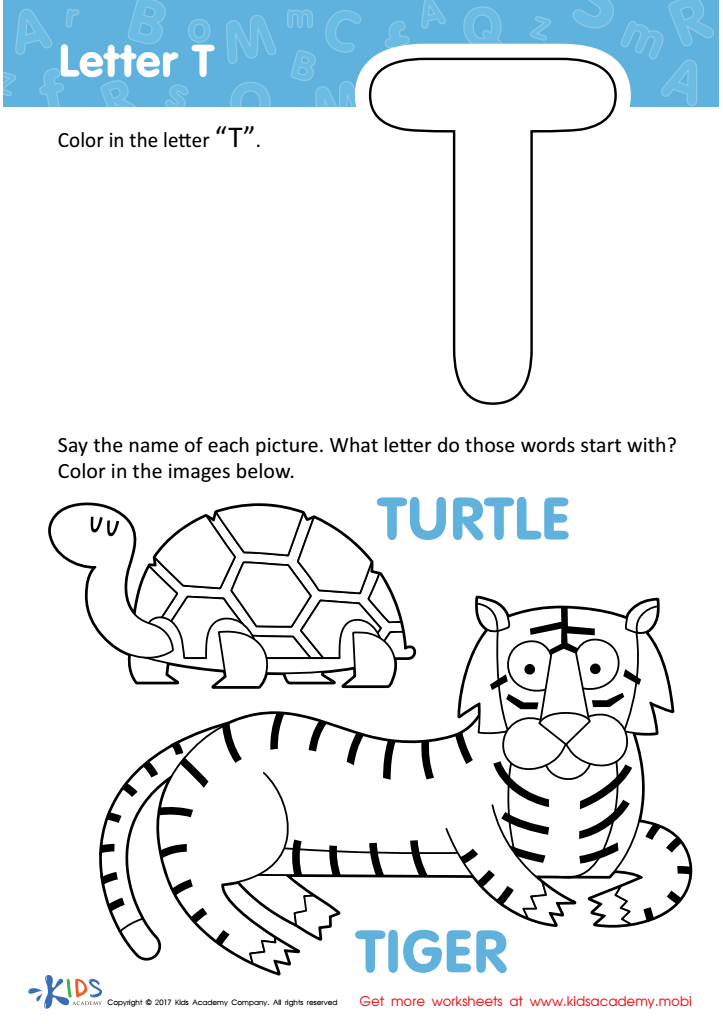
Letter T Coloring Sheet
 Assign to My Students
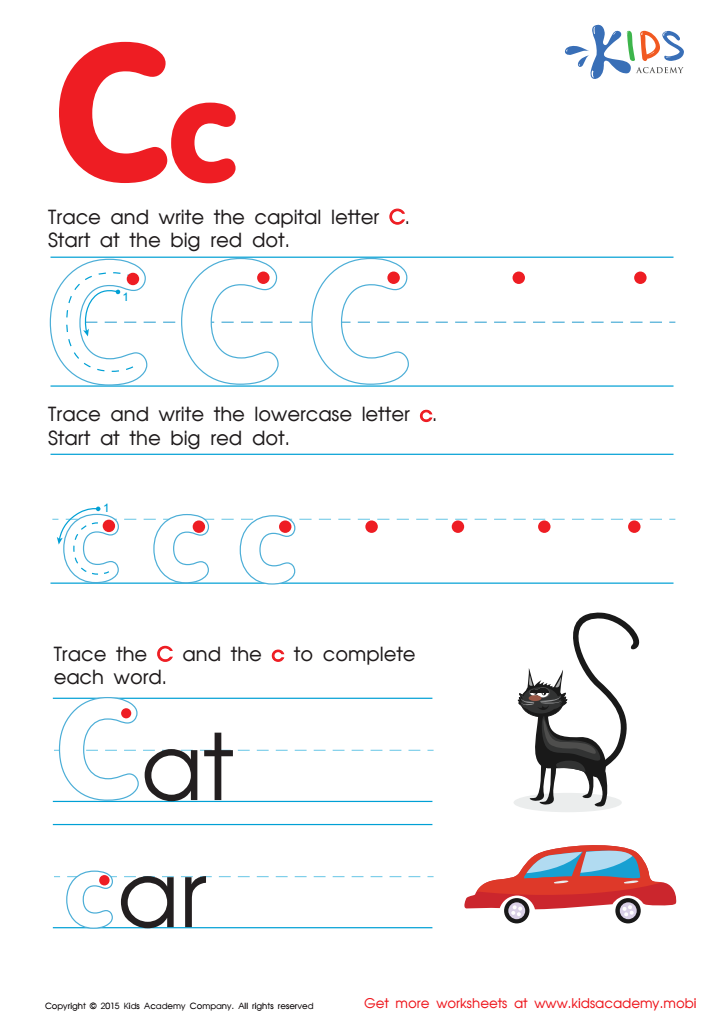
Letter C Tracing Page
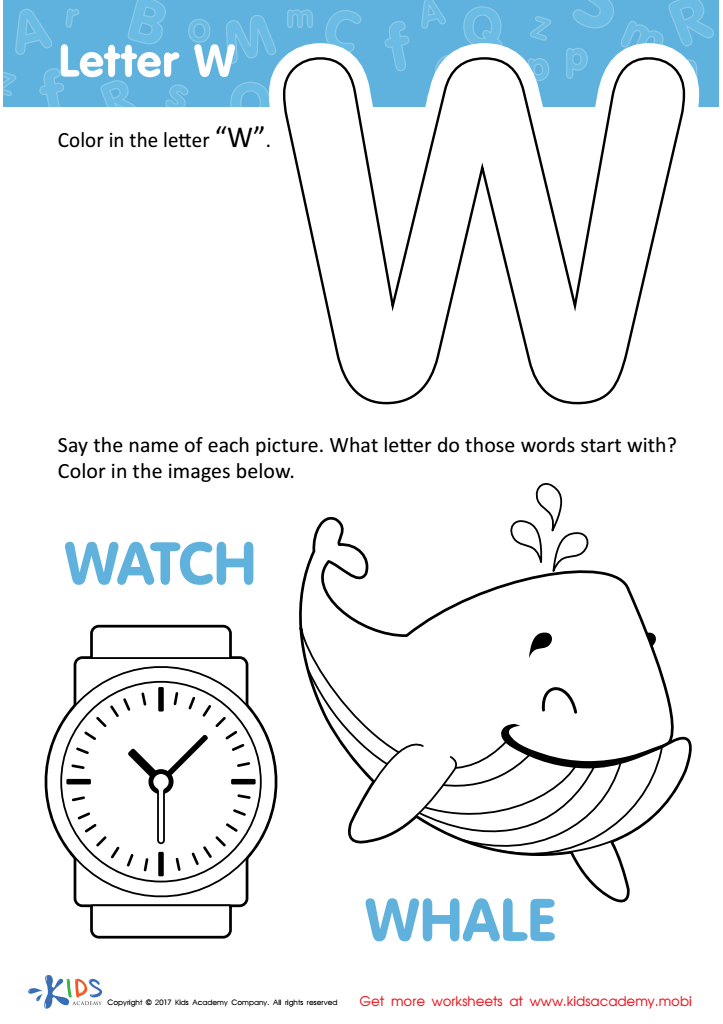
Letter W Coloring Sheet
Assign to My Students





Letter tracing skills are crucial for children aged 6-8, as they form the foundation for literacy development. At this age, children are beginning to recognize letters, understand their sounds, and learn how to form them correctly. Letter tracing activities provide a structured and tactile method for practicing these skills, offering multiple benefits that parents and teachers should not overlook.
Firstly, letter tracing helps children develop fine motor skills. As they trace, they strengthen the small muscles in their hands and fingers, improving their control and dexterity, which are essential for writing. Secondly, it reinforces letter recognition and memory. By repeatedly tracing each letter, children internalize its shape, aiding in quicker and more accurate identification.
Additionally, letter tracing connects visual and kinetic learning. Seeing the letter and simultaneously using hand movements to trace it help create a multisensory learning experience, which is great for young learners who have varied learning styles. This integrated approach can make learning to read and write more intuitive and less daunting.
Moreover, early success with letter tracing builds confidence. When children can reproduce letters accurately, they feel a sense of accomplishment, making them more eager to engage with other aspects of literacy, like reading and writing sentences. Lastly, letter tracing lays the groundwork for future academic tasks, as neat and legible handwriting remains a vital skill well into higher grades.
In summary, fostering letter tracing skills supports physical, cognitive, and emotional development, setting a critical foundation for lifelong literacy and learning.