
Alphabetical order practice Worksheets for Ages 6-8
3 filtered results
Difficulty Level
Grade
Age
-
From - To
Subject
Activity
Standards
Boost your child's literacy skills with our Alphabetical Order Practice Worksheets designed for ages 6-8. These engaging worksheets from Kids Academy will help young learners master the art of arranging words alphabetically. Each printable is crafted to challenge and delight, featuring fun themes and colorful illustrations that turn learning into an adventure. Ideal for both classroom activities and at-home practice, these worksheets foster better organization and reinforce alphabetical concepts. Equip your child with essential language skills that will serve them well throughout their educational journey. Explore our collection and make learning the alphabet a fun and rewarding experience.
Favorites
With answer key
Interactive
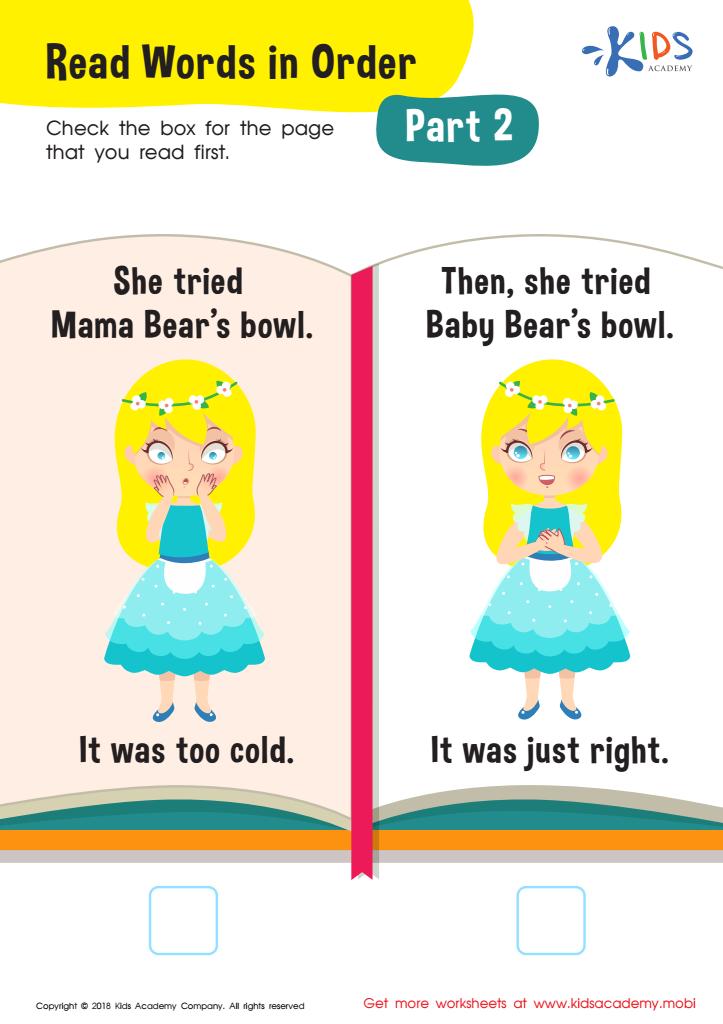
Read Words Order Part 2 Worksheet
Help your students make progress with reading by using this easy worksheet. It includes two pictures with short sentences your child should be able to read. Ask them to read these out loud, and if they're struggling, help them. Then, they should check the box that shows the page they'd read first.
 Assign to My Students
Read Words Order Part 2 Worksheet
Worksheet
Join Kids Academy for Free
Who is primarily going to use this learning content?







Practicing alphabetical order is foundational for children ages 6-8 because it strengthens essential literacy skills. First, it enhances their understanding of the alphabet, a fundamental building block for reading and writing. As students sort and arrange letters, they become more fluent in recognizing their sequence, which directly impacts their spelling and word identification abilities.
Alphabetical order practice also supports cognitive development by bolstering memory and attention to detail. When children classify words and objects based on their initial letters, they engage in patterns recognition and critical thinking. These mental exercises foster organizational skills useful across academic disciplines and daily life.
Moreover, proficiency in alphabetical order is practical. It aids in using dictionaries, encyclopedias, and libraries more efficiently. Developing this habit early allows children to retrieve information quickly, fostering independent learning and a sense of empowerment.
Socially, collaborative alphabetical exercises encourage teamwork and communication as children work together to solve a common task. Emotional development benefits as well, as successful completion of such tasks bolsters confidence and a positive attitude toward learning challenges.
Overall, incorporating alphabetical order practice helps equip children with vital academic, cognitive, and life skills, supporting well-rounded development both in and out of the classroom.








