Basic problem-solving Worksheets for Ages 6-8
3 filtered results
-
From - To
Enhance your child's critical thinking skills with our Basic Problem-Solving Worksheets for Ages 6-8! Designed to engage young minds, these worksheets offer a variety of fun and interactive challenges that help develop essential problem-solving abilities. Children will encounter puzzles, riddles, and scenarios that encourage logical thinking, creative solutions, and reasoning skills. Tailored to align with early educational standards, these worksheets make learning enjoyable while reinforcing foundational concepts. Perfect for home or classroom use, they ensure that kids remain engaged while mastering important skills. Dive into our collection and watch your child's confidence soar as they learn to tackle problems with ease!
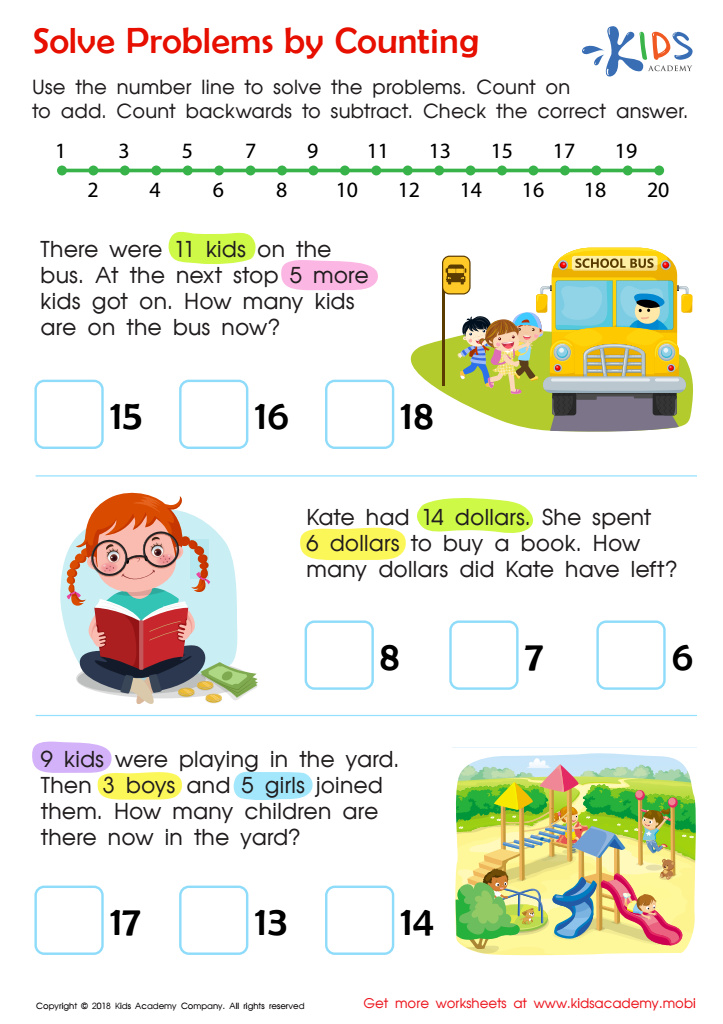
Solve Problems by Counting Worksheet
 Assign to My Students
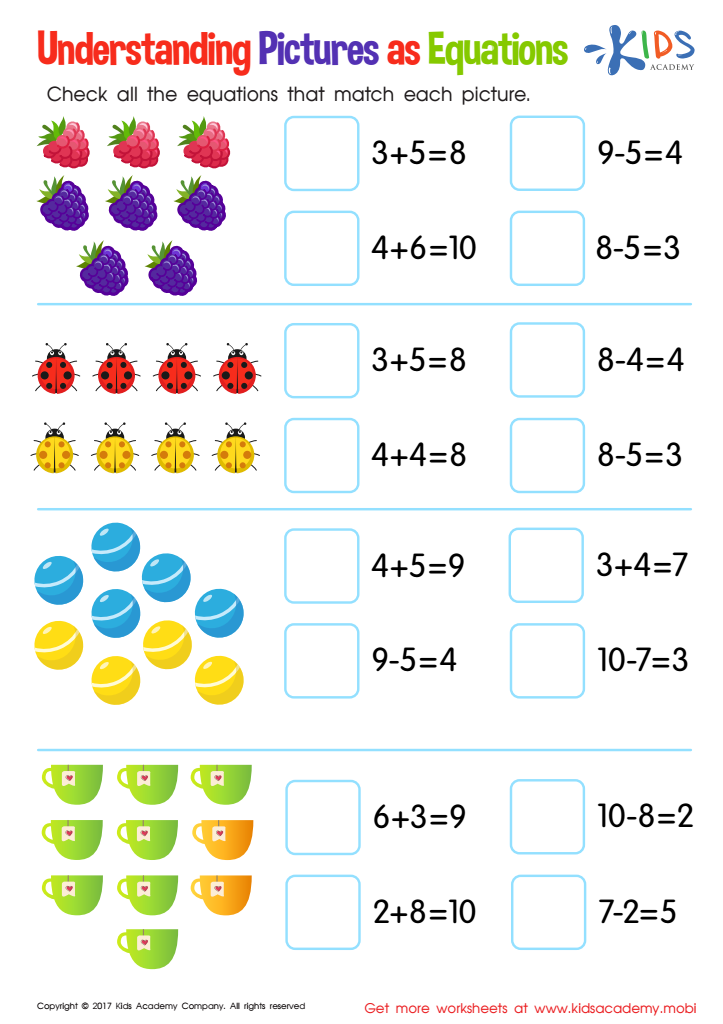
Understanding Pictures as Equations Worksheet
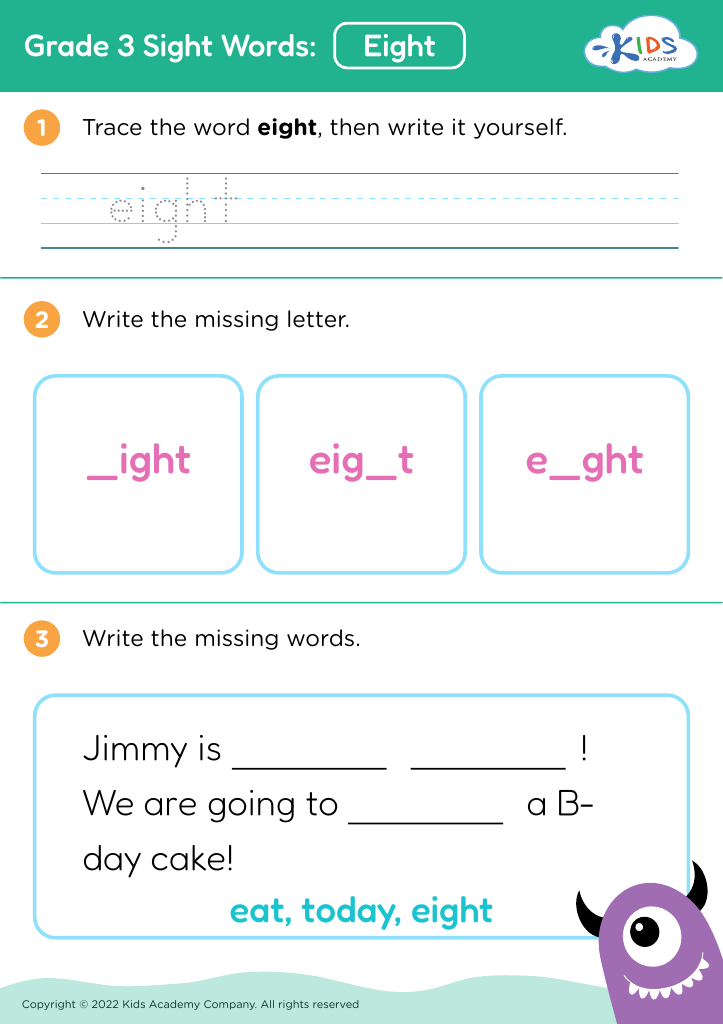








Parents and teachers should prioritize basic problem-solving skills for children ages 6-8 because these foundational abilities significantly impact a child's cognitive development and everyday functioning. At this stage, children are beginning to think critically and become more independent learners. Problem-solving fosters creative thinking, enhances decision-making skills, and encourages persistence in the face of challenges.
When children engage in problem-solving activities, they learn to analyze situations, consider various perspectives, and devise solutions. These skills are crucial not just academically—in math and sciences—but also socially, as children navigate friendships and peer interactions. By supporting problem-solving, adults empower children to become confident, resourceful individuals who can tackle challenges rather than shy away from them.
Moreover, teaching problem-solving in exciting settings—such as through games, puzzles, or real-life scenarios—makes learning more engaging and enjoyable. This experience helps children associate learning with fun and exploration. Ultimately, fostering problem-solving skills at an early age lays the groundwork for lifelong learning, emotional resilience, and the ability to adapt to various life situations, making it an essential focus for parents and educators alike.








