
Chess piece identification Worksheets for Ages 6-8
3 filtered results
Difficulty Level
Grade
Age
-
From - To
Subject
Activity
Standards
Enhance your child's chess skills with our engaging Chess Piece Identification Worksheets designed specifically for ages 6-8! These colorful, interactive worksheets provide a fun way for young learners to identify and understand different chess pieces, including the pawn, knight, bishop, rook, queen, and king. Collaborative activities encourage critical thinking while laying a solid foundation for strategic gameplay. Perfect for making chess learning enjoyable, our resources include visual aids, matching exercises, and creative coloring tasks. Whether at home or in the classroom, these worksheets are an excellent tool to foster a love for chess and develop essential cognitive skills. Get started today!
Favorites
With answer key
Interactive
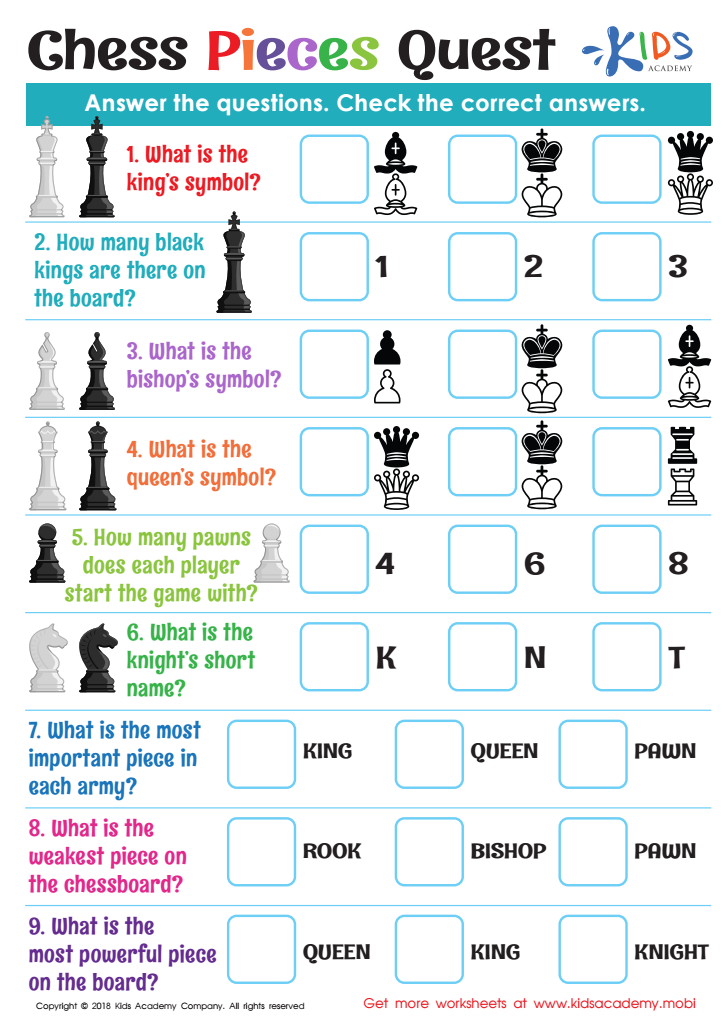
Chess Pieces Quest Worksheet
Help your child prepare for the chess quest by refreshing their knowledge of the symbols and characteristics of each chess piece. Then, have them try the 9 questions on this worksheet. These questions will assess their understanding of the symbols and how many pieces each player starts with.
 Assign to My Students
Chess Pieces Quest Worksheet
Worksheet
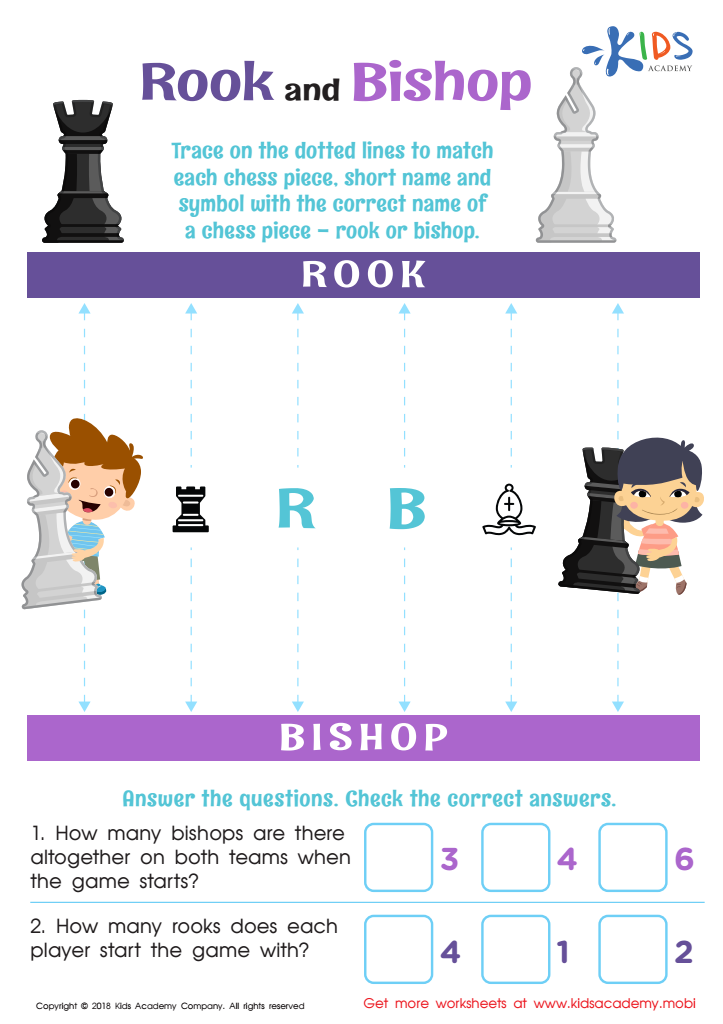
Rook and Bishop Worksheet
This tracing sheet helps your child learn chess pieces by matching each piece, short name and symbol to the correct name. After tracing, have them answer the questions and check their answers. It's a great way for them to become familiarized with chess.
Rook and Bishop Worksheet
Worksheet
Join Kids Academy for Free
Who is primarily going to use this learning content?







Chess piece identification is crucial for children ages 6-8 as it serves as the foundational stepping stone in their chess education and development. Understanding each piece and its unique moves not only builds cognitive skills such as critical thinking, problem-solving, and memory but also enhances concentration and attention to detail. At this age, children are developing the ability to process complex concepts, and learning about chess pieces helps them grasp abstract thinking, as they visualize how each piece operates within the game's framework.
Furthermore, chess teaches kids essential life skills, including patience, discipline, and sportsmanship. By becoming familiar with the chess pieces, children learn to strategize, anticipate opponents’ moves, and tackle challenges, which in turn can benefit their decision-making skills in various aspects of life, both academically and socially.
Engaging in chess also promotes social interaction as children often play in groups or pairs, creating opportunities for teamwork and sportsmanship. For parents and teachers, fostering this skill not only enriches the child’s development but also creates enjoyable and enriching experiences that can lead to long-term interests in strategy-based games or improved academic outcomes. Ultimately, chess piece identification is a critical component in nurturing well-rounded, thoughtful individuals.








