
Constellation identification Worksheets for Ages 6-8
3 filtered results
Difficulty Level
Grade
Age
-
From - To
Subject
Activity
Standards
Introduce young learners to the wonders of the night sky with our "Constellation Identification Worksheets for Ages 6-8." These engaging and educational printables help children discover the shapes and stories of various constellations. Perfect for both classroom activities and at-home learning, each worksheet combines fun visuals with informative content to spark curiosity and improve recognition skills. Whether they are tracing star patterns or connecting dots to unveil old legends, kids will build foundational astronomy knowledge and develop an appreciation for celestial navigation. Ignite your child's love for space with our age-appropriate constellation activities!
Favorites
With answer key
Interactive
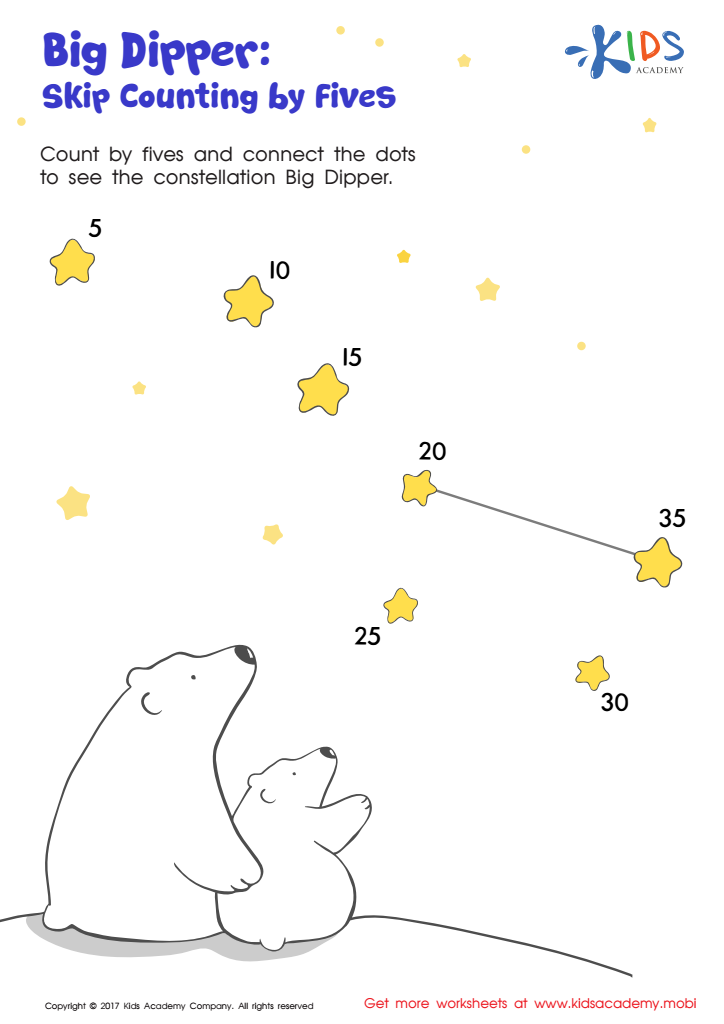
 Assign to My Students
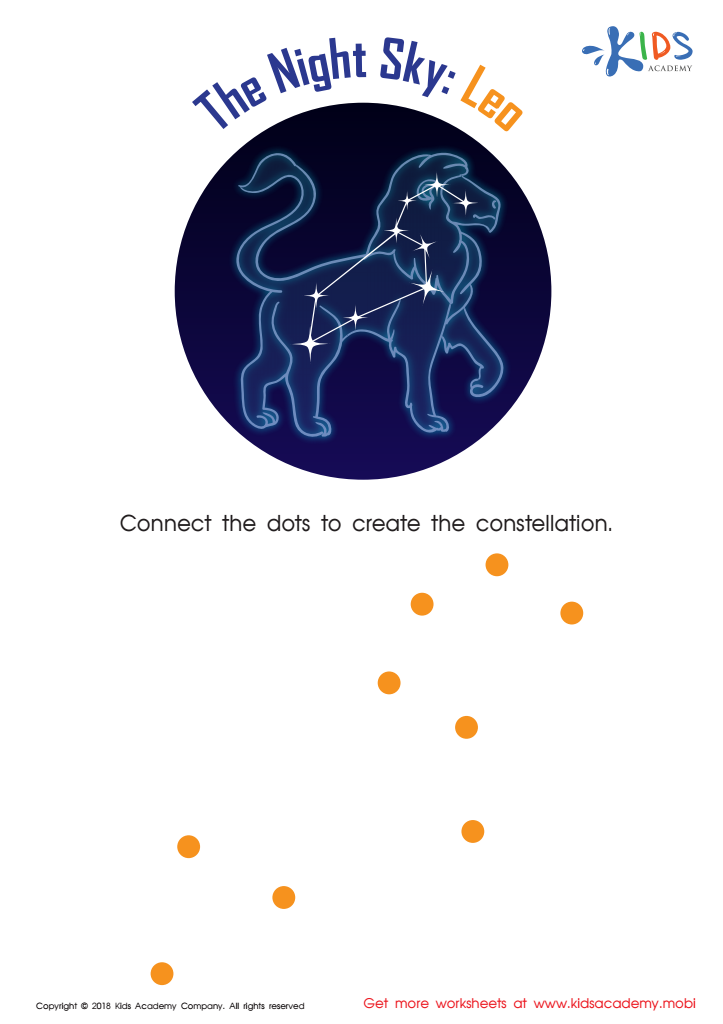
The Night Sky: Leo Worksheet
Let your kids explore the wonders of the stars with this fun worksheet! They'll connect the dots to create the constellation Leo. Night gazing instruments, a telescope or this printout can help your kids learn about constellations and horoscopes. Download the worksheet and let the star watching begin!
The Night Sky: Leo Worksheet
Worksheet
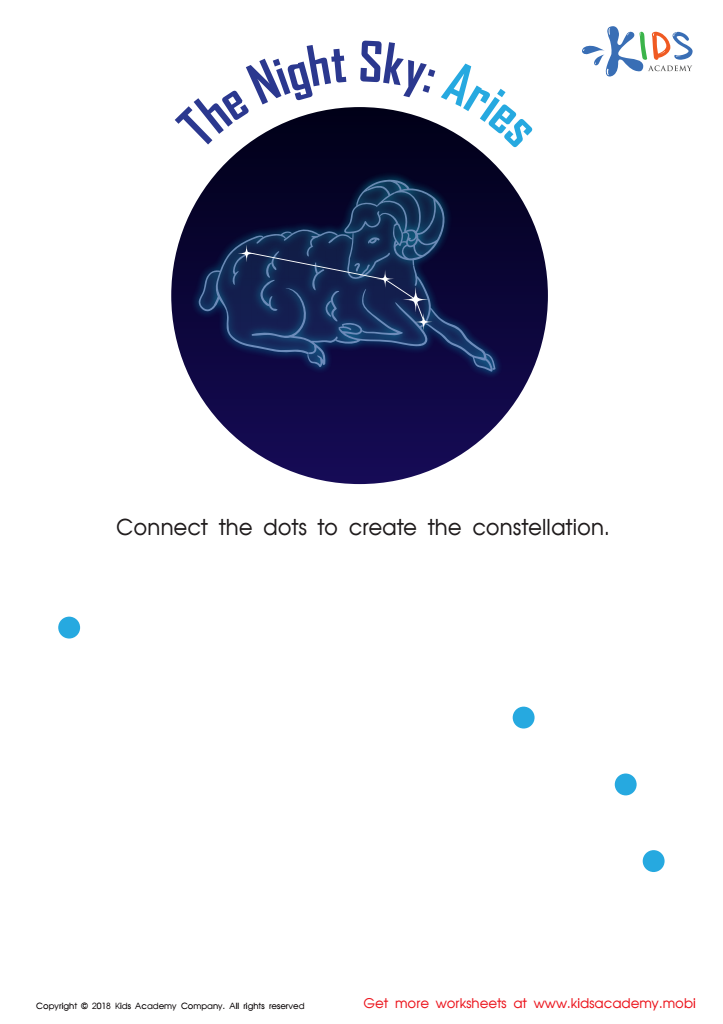
The Night Sky: Aries Worksheet
Does your child know constellations and horoscope? If you've got them interested in horoscope readings and star gazing, the Aries constellation in the pdf should be familiar. Have them look at the picture and identify it. If they can't, tell them it's Aries. Then, help them connect the dots to form the constellation.
The Night Sky: Aries Worksheet
Worksheet
Join Kids Academy for Free
Who is primarily going to use this learning content?








Introducing children ages 6-8 to constellation identification is beneficial for both educational and developmental reasons. For parents and teachers, guiding children in exploring constellations ignites curiosity about the natural world and the universe, promoting a lifelong interest in science and astronomy. This early exposure lays the foundation for STEM (Science, Technology, Engineering, and Mathematics) learning, crucial in today’s educational landscape.
Engaging with constellations also enhances observational skills. As kids search the night sky for different patterns, they develop attention to detail and improve their ability to focus—skills that are transferable to many other learning areas. Moreover, learning constellations intertwines storytelling and cultural history, offering a multidisciplinary approach. Every constellation has a myth or story that can make lessons more engaging and enrich knowledge of different cultures’ folklore and history.
Furthermore, stargazing encourages family bonding—parents and children can share learning experiences and create lasting memories together. Importantly, constellations can act as an introduction to complex scientific concepts in an easily digestible manner. Identifying stars and patterns broadens children’s horizons and encourages them to think beyond their immediate surroundings, fostering a sense of wonder and a desire to explore the unknown. For teachers and parents alike, cultivating this early enthusiasm for astronomy can set the stage for future academic and personal growth.








