
Develop subtraction skills Worksheets for Ages 6-8
3 filtered results
Difficulty Level
Grade
Age
-
From - To
Subject
Activity
Standards
Enhance your child's subtraction skills with our engaging worksheets designed specifically for ages 6-8! Our collection features fun and interactive exercises that make learning subtraction enjoyable and effective. Each worksheet is tailored to reinforce essential subtraction concepts, helping young learners grasp the idea of taking away and understanding number relationships. From simple subtraction problems to more complex scenarios, these worksheets cater to various learning levels, ensuring children build confidence as they advance. Ideal for classroom use or home practice, our subtraction skills worksheets provide the perfect blend of learning and play, empowering kids to master essential math skills effortlessly!
Favorites
With answer key
Interactive
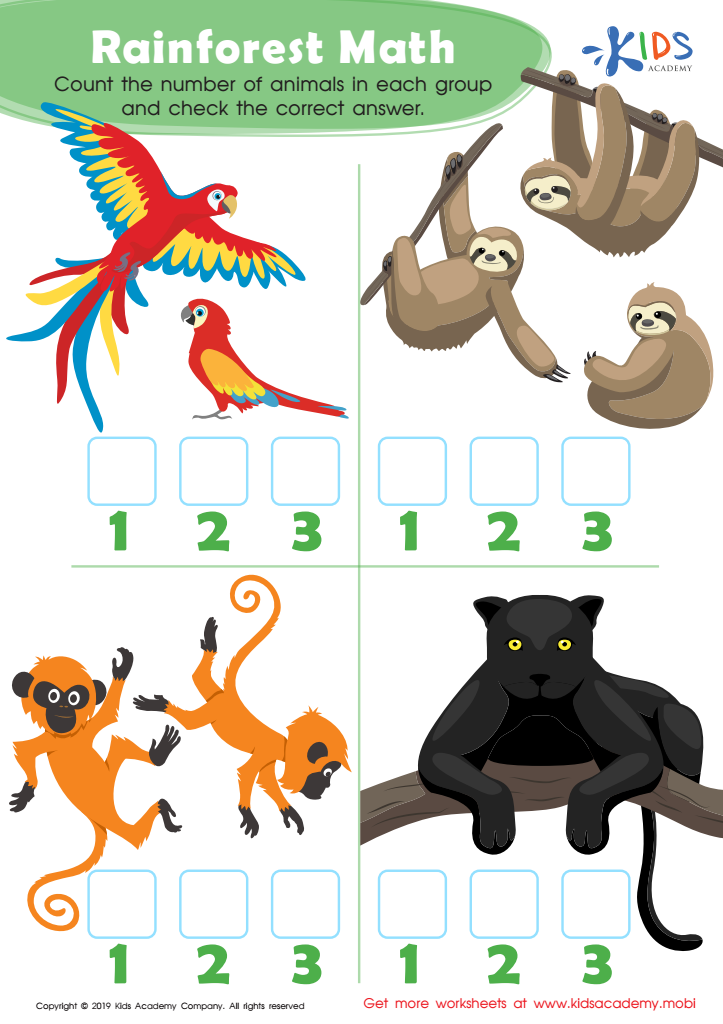
Rainforest Math Worksheet
Kids love learning about rainforest animals! This worksheet helps them with counting and number sense. It features recognizable rainforest animals and asks children to choose the correct number from the answer choices. It's a fun way for children to build their skills - without even knowing it!
 Assign to My Students
Rainforest Math Worksheet
Worksheet
Join Kids Academy for Free
Who is primarily going to use this learning content?






Developing subtraction skills in children aged 6-8 is crucial for their overall mathematical foundation and cognitive growth. At this age, children are transitioning from concrete to more abstract thinking, and subtraction serves as a key area where they can practice problem-solving and critical thinking skills. Mastering subtraction not only aids in understanding basic arithmetic but also enhances their ability to tackle more complex mathematical concepts in the future.
Subtraction skills contribute to real-world applications, such as managing money, telling time, and measuring. As children engage in daily activities—like shopping or playing games—they will often find themselves using subtraction, reinforcing its relevance in their lives. Moreover, a strong grasp of subtraction helps build confidence and encourages a positive attitude towards math.
For teachers and parents, fostering subtraction proficiency allows for monitoring academic progress and identifying any learning gaps early on. It creates opportunities for enriching educational experiences. Engaging with children through fun activities, games, and practical scenarios not only makes learning enjoyable but also establishes a solid foundation for their future educational journeys. Ultimately, investing time and effort into developing subtraction skills is essential for nurturing a child's love for math and helping them succeed in their academic endeavors.








