Fractions understanding Worksheets for Ages 6-8
3 filtered results
-
From - To
Discover an engaging collection of fractions understanding worksheets designed specifically for kids ages 6 to 8! Our resources aim to build foundational math skills through fun and interactive activities. Each worksheet encourages young learners to explore the concept of fractions with colorful visuals, relatable examples, and step-by-step instructions. Students will grasp essential ideas like identifying fractions, comparing sizes, and understanding the role of numerators and denominators. Perfect for classroom use or at-home practice, these worksheets empower children to develop confidence in their mathematical abilities while enjoying the learning process. Enhance your child's fraction skills today!
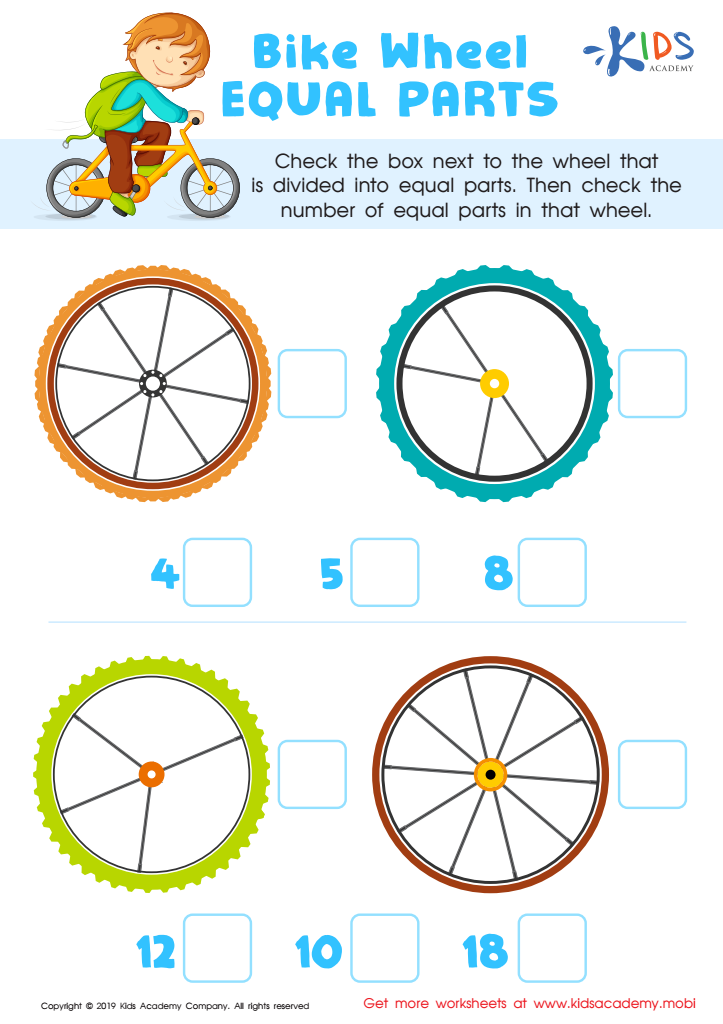
Bike Wheel Equal Parts Worksheet
 Assign to My Students
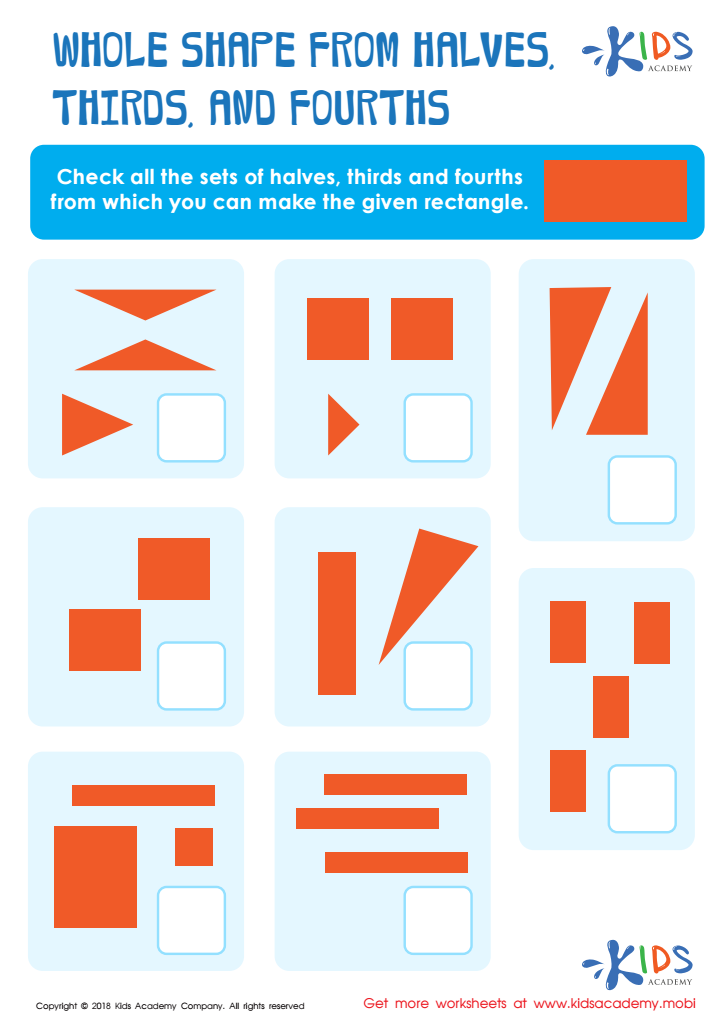
Whole Shape from Halves, Thirds and Fourths Worksheet






Understanding fractions is fundamental for children aged 6-8 as it serves as a building block for numerous mathematical concepts and real-life applications. During this developmental stage, children are progressively moving from concrete to abstract thinking. Teaching fractions helps them develop critical reasoning skills, enhances their ability to recognize part-whole relationships, and lays the groundwork for future math subjects such as division and ratios.
Moreover, a grasp of fractions fosters a sense of number sense and proportional reasoning. Children learn to represent and manipulate these numbers through visual aids like pie charts or fraction strips, fostering confidence in problem-solving. Real-life connections, such as sharing food or dividing groups, help them see the relevance of fractions beyond the classroom.
Additionally, engaging with fractions can improve students' communication skills as they discuss, compare, and explain their thinking with peers and adults. A solid understanding of fractions not only promotes academic success but also empowers children to face everyday challenges effectively.
Ultimately, parents and teachers play a crucial role in nurturing this understanding, creating a stronger foundation for future learning. Prioritizing fraction comprehension will equip children with the necessary skills and confidence to succeed in mathematics and beyond.








