
Grouping skills Worksheets for Ages 6-8
4 filtered results
Difficulty Level
Grade
Age
-
From - To
Subject
Activity
Standards
Enhance your child's learning experience with our engaging Grouping Skills Worksheets designed specifically for ages 6-8. These worksheets offer a fun and interactive way for children to develop essential grouping skills, such as categorizing objects, recognizing similarities and differences, and organizing data. With a variety of activities, including sorting, matching, and visual challenges, students will strengthen their comprehension and critical thinking. Our user-friendly format caters to different learning styles, making it easy for educators and parents to incorporate these resources into their teaching. Download now and help your child master grouping skills while having fun!
Favorites
With answer key
Interactive
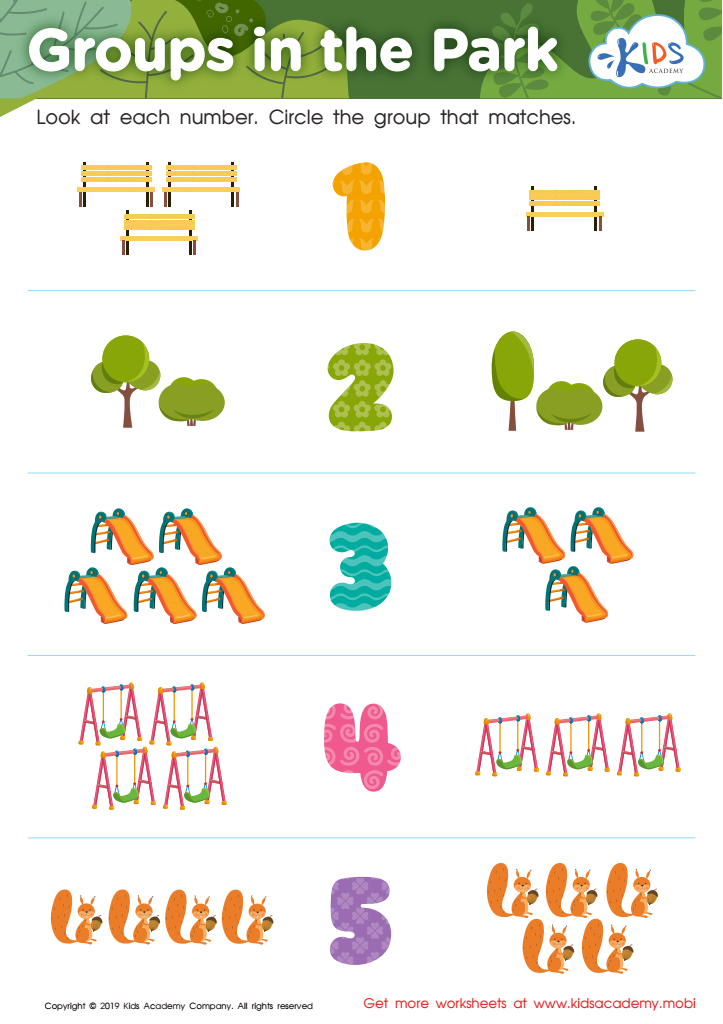
Groups in the Park Worksheet
Take your kids to the park and let them enjoy the freedom to play! Ask them what they love doing most and study a picture together - name items and count objects in the sets, then circle the correct one. It's a fun way for your kids to learn.
Groups in the Park Worksheet
Worksheet
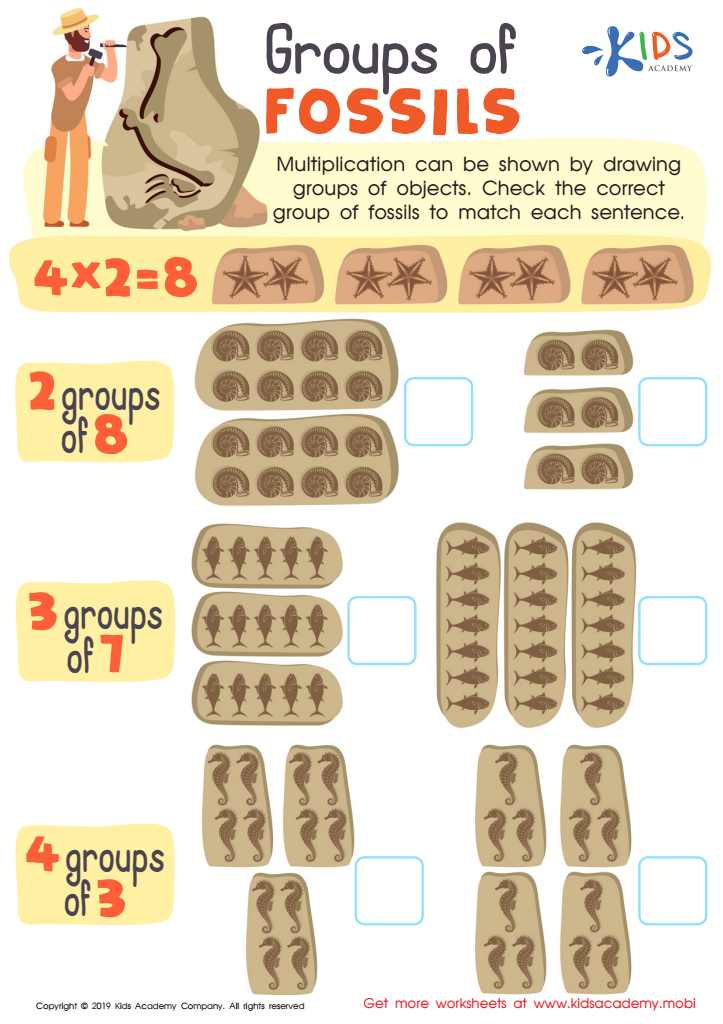
Groups of Fossils Worksheet
Kids need to learn multiplication after mastering addition and subtraction. To make it fun, use worksheets like this one. Have kids draw objects to match each sentence - this helps them understand multiplication better. With this approach, they'll be sure to learn the concepts.
Groups of Fossils Worksheet
Worksheet
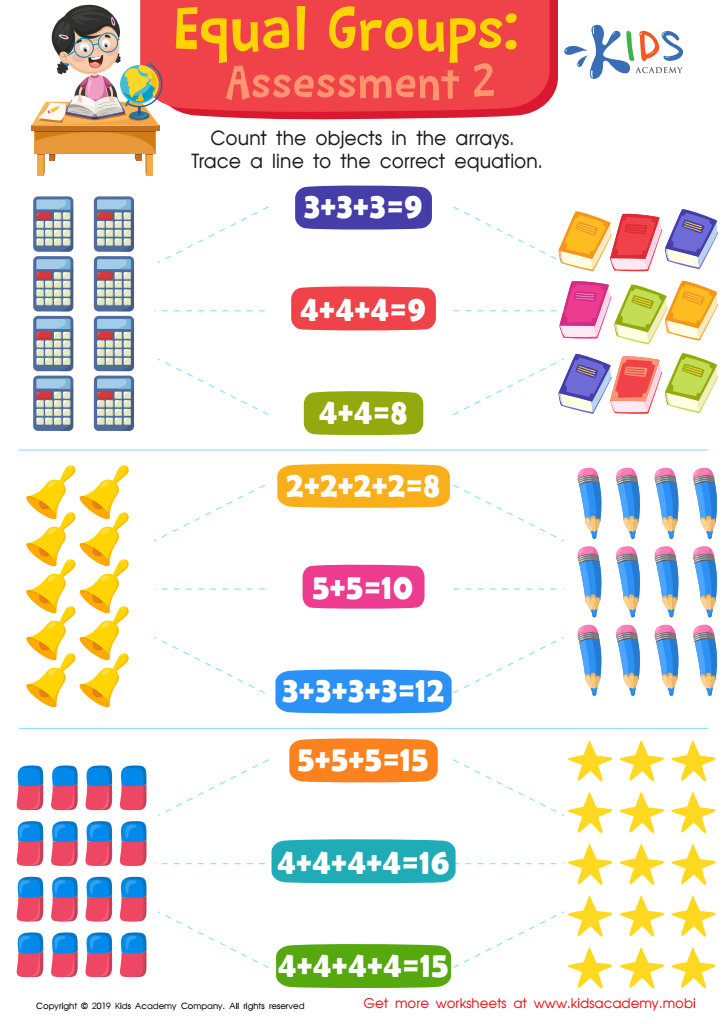
Equal Groups: Assessment 2 Worksheet
Get your kids to pay attention to learning with familiar objects, bright colors, and this worksheet. It has six arrays - ask kids to identify them and count the objects. Then, help them trace a line to the correct equation.
Equal Groups: Assessment 2 Worksheet
Worksheet
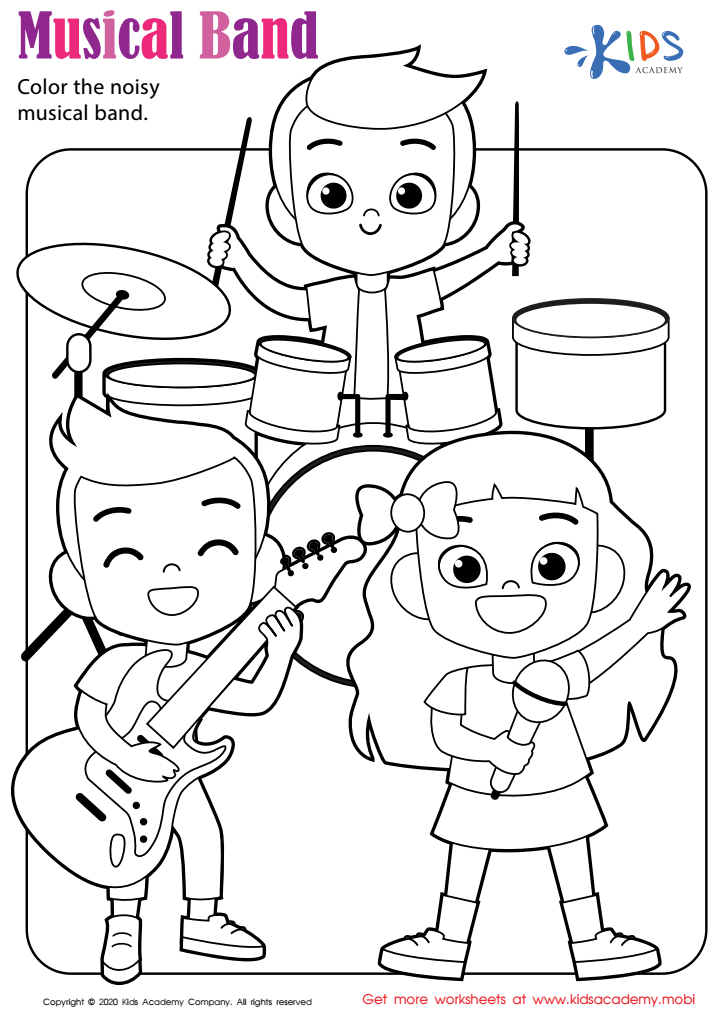
Musical Band Worksheet
Introduce music to your kids with this free printable coloring worksheet! Ask them to name the instruments and their sounds, then let them get creative with the colors. A band is formed when several people play instruments together - help your child learn this concept and get inspired to join a band one day!
Download (PDF)
 Assign to My Students
Assign to My Students
Musical Band Worksheet
Worksheet
Join Kids Academy for Free
Who is primarily going to use this learning content?



.jpg)



Grouping skills, the ability to categorize and organize objects or ideas based on shared attributes, are crucial for children ages 6 to 8. Hosting children at this age, they are developing cognitive abilities and beginning to make sense of the world around them. By fostering grouping skills, parents and teachers can help children enhance critical thinking, problem-solving, and decision-making abilities.
Grouping activities, whether through sorting colors, sizes, or shapes, promote classification skills that are foundational for subjects like math and science. For instance, recognizing patterns and making connections between different items develop their analytical capabilities, which are essential for future learning.
Moreover, these skills encourage social interaction, as children often work together in groups to categorize items, which builds communication and teamwork skills. The practice of sharing ideas and justifying their reasoning helps enhance emotional intelligence and confidence.
Additionally, strong grouping skills contribute to literacy development. When children group words into categories or themes, it supports comprehension and vocabulary growth.
In summary, prioritizing grouping skills not only aids academic achievements but also fosters essential life skills, making it critical for parents and teachers to value and implement these activities in their daily interactions with children.








