
Identifying Animals Worksheets for Ages 6-8
9 filtered results
Difficulty Level
Grade
Age
-
From - To
Subject
Activity
Standards
Explore our Identifying Animals Worksheets designed specifically for children ages 6-8! These engaging resources help young learners develop their animal recognition skills through fun and interactive activities. Each worksheet features colorful illustrations and age-appropriate tasks that promote critical thinking and boost vocabulary. Children will enjoy matching animals with their names, sorting various species, and exploring their habitats, all while enhancing their cognitive abilities. Perfect for classroom use or homeschooling, our worksheets foster a love for wildlife and encourage curiosity about the animal kingdom. Visit our site to download these valuable educational tools today and inspire your child's learning journey!
Favorites
With answer key
Interactive
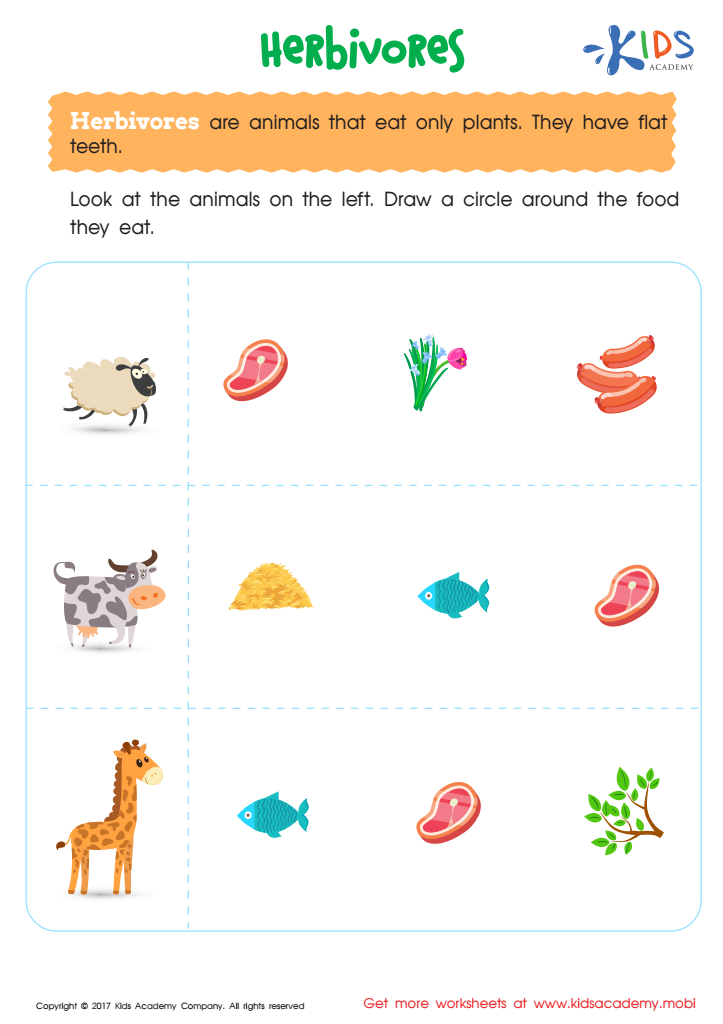
Herbivores Printable
Strengthen their vocab with these fascinating creatures, as they explore an intriguing aspect of beloved animals.
 Assign to My Students
Herbivores Printable
Worksheet
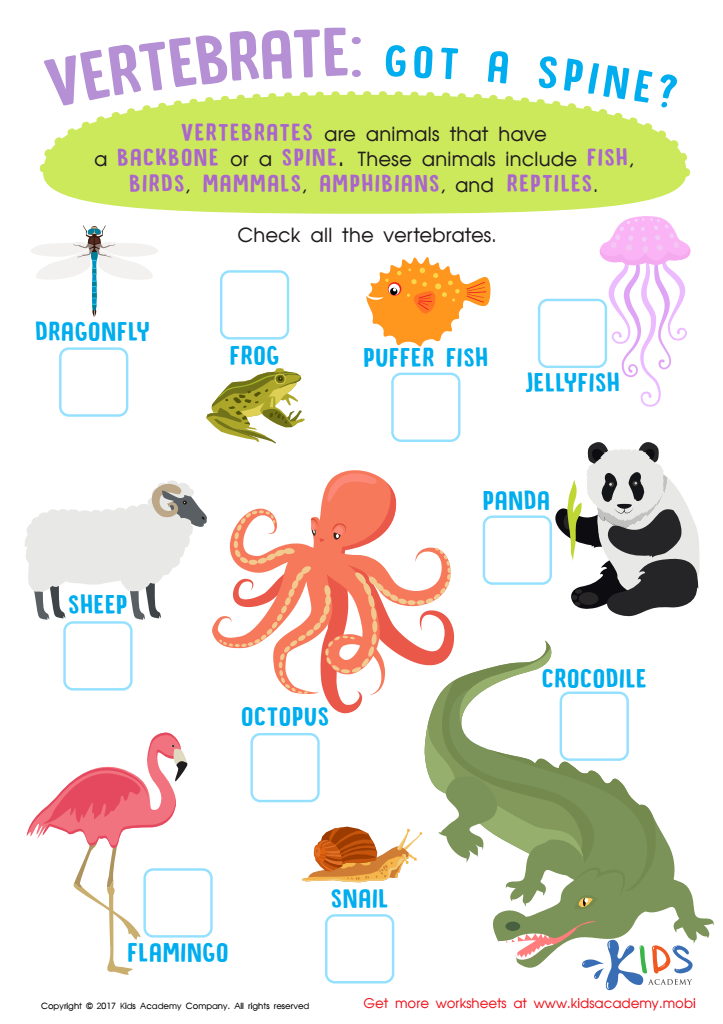
Vertebrates Animals Worksheet for 3rd Grade
This 3rd grade worksheet introduces your child to the wonders of vertebrate animals. They will have fun sorting them from those without a spine, while learning more about the animal kingdom!
Vertebrates Animals Worksheet for 3rd Grade
Worksheet
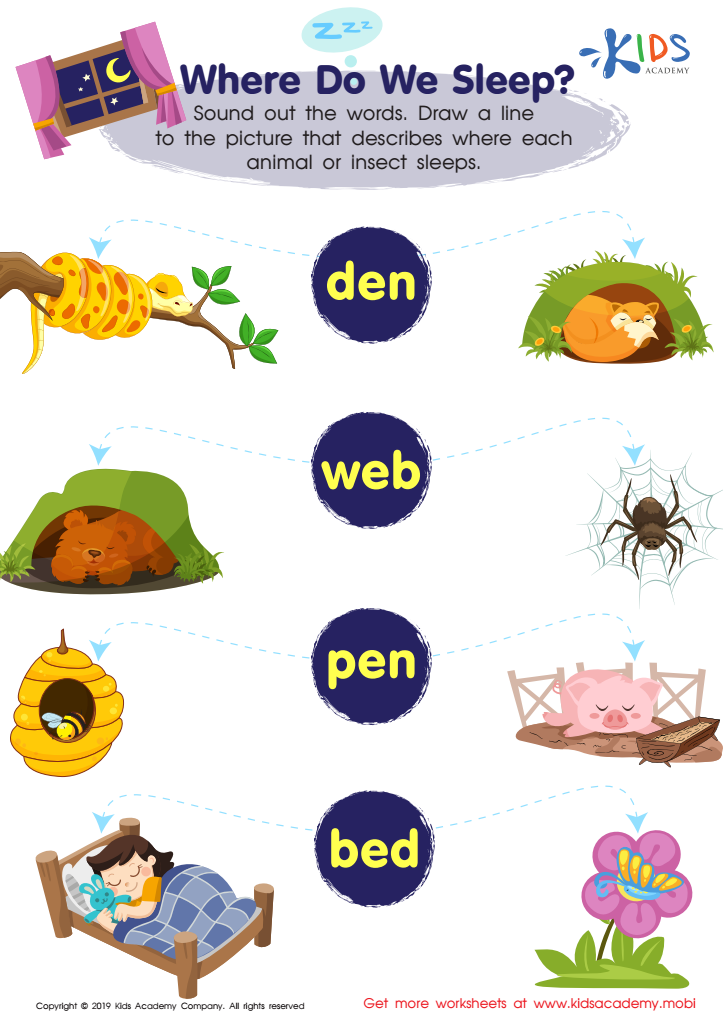
Where Do We Sleep Worksheet
Help your kids understand the importance of a safe space with this activity: Ask them to draw a line connecting the different animals and insects to the words that describe where they sleep. Remind them that everyone needs a sanctuary to rest – like the animals and insects in this printout.
Where Do We Sleep Worksheet
Worksheet
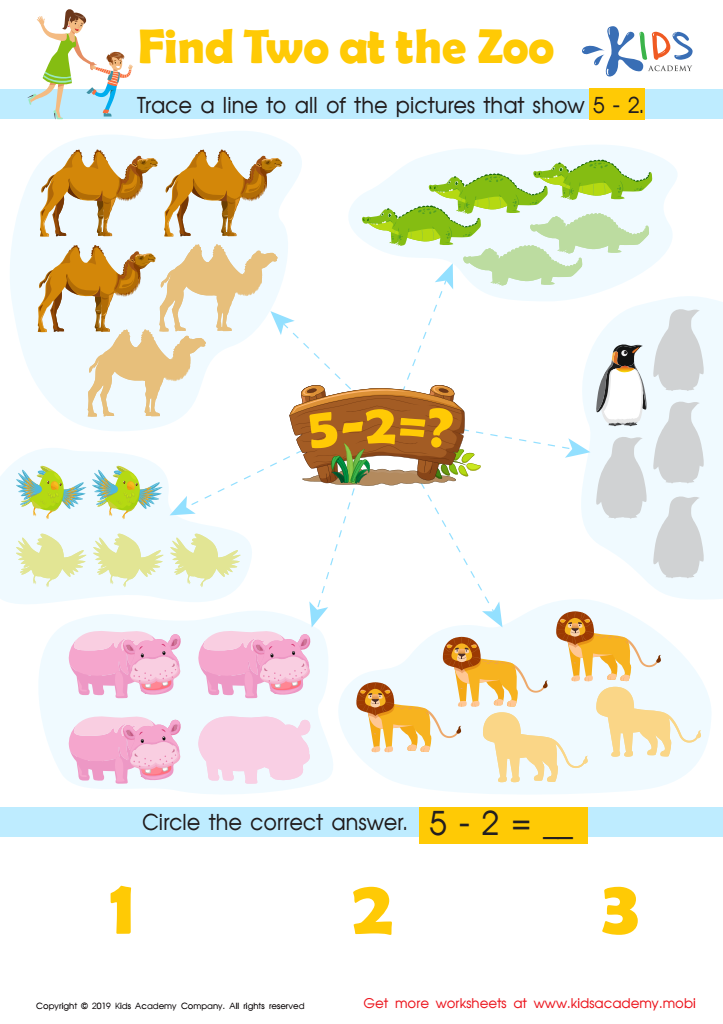
Find Two at the Zoo Worksheet
Help your kids overcome math fears and practice subtracting numbers with this traceable PDF. Ask them to identify the 6 groups of animals in the picture and count the animals in each group. Then, help them trace a line to all of the pictures that illustrate the equation 5-2.
Find Two at the Zoo Worksheet
Worksheet
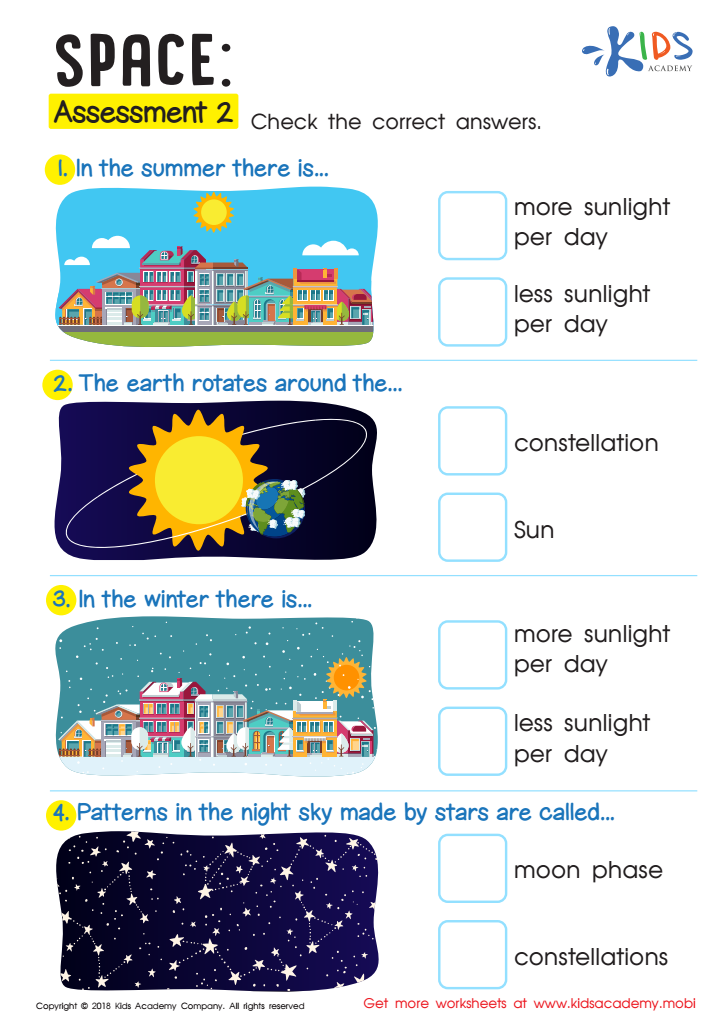
Space: Assessment 2 Worksheet
Test your kids' knowledge of the weather, constellations and Earth with this worksheet. Show them the 4 images and ask what's happening; then read the questions and options and help them pick the right answers. This printout is a helpful and fun way to learn!
Space: Assessment 2 Worksheet
Worksheet
Join Kids Academy for Free
Who is primarily going to use this learning content?







Identifying animals is a crucial learning experience for children aged 6-8, and both parents and teachers play a vital role in fostering this interest. At this age, children are naturally curious about the world around them, and learning to identify animals helps them develop observation and critical thinking skills. Understanding different species enhances their ability to categorize and make sense of their environment.
Moreover, recognizing animals contributes to a child’s empathy and appreciation for nature. As they learn about various species, they become more aware of the challenges these creatures face, including habitat loss and endangerment. This awareness nurtures a sense of responsibility and encourages children to be proactive in environmental conservation.
Additionally, identifying animals can provide rich interdisciplinary learning opportunities. It often involves science, art, and social studies, as children explore animal habitats, characteristics, and the role of animals in different cultures. Engaging in hands-on activities, like visits to parks or zoos, can transform learning into an enjoyable experience.
Overall, fostering animal identification helps children build a strong foundation for lifelong learning, promoting curiosity, stewardship, and a love for the natural world. This is why parents and teachers should prioritize and engage in this educational endeavor.








