Identifying story elements Worksheets for Ages 6-8
4 filtered results
-
From - To
Discover our engaging "Identifying Story Elements Worksheets" designed especially for children aged 6-8! These printable resources help young learners explore the fundamental components of storytelling, including characters, setting, plot, conflict, and resolution. Ideal for both classroom and home use, our worksheets promote critical thinking and comprehension skills while encouraging creativity. With a variety of fun activities and illustrations, children will enjoy identifying and analyzing story elements in a way that makes learning enjoyable and interactive. Support your child's literary journey and inspire a lifelong love for reading and storytelling with our expertly crafted worksheets—available for instant download!
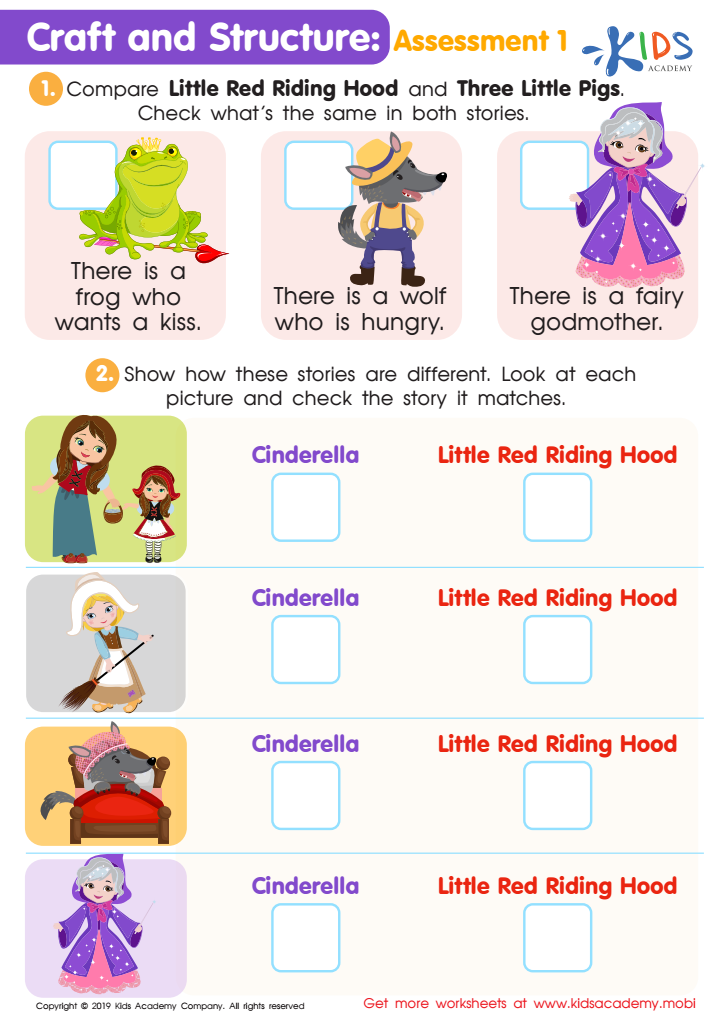
Craft and Structure: Assessment 1 Worksheet
 Assign to My Students
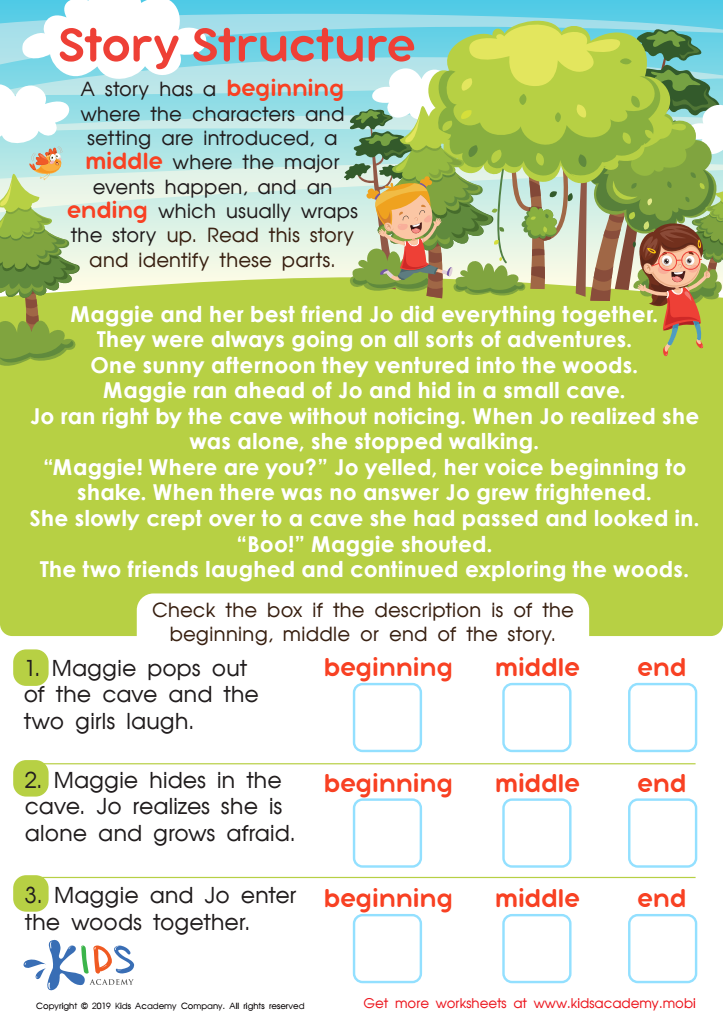
Story Structure Worksheet
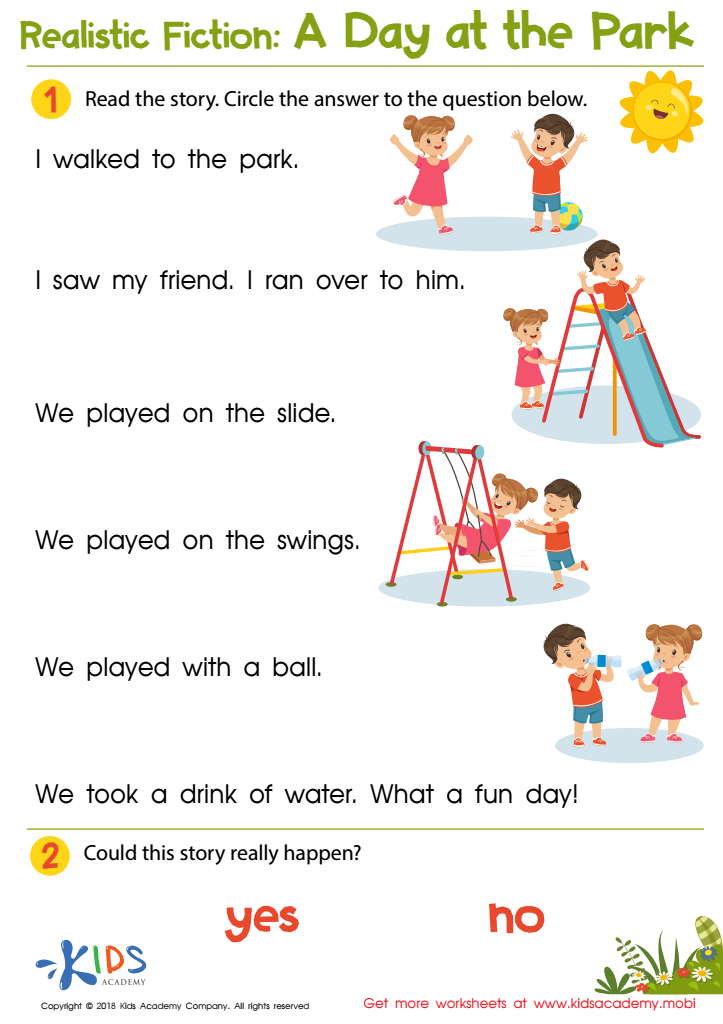
A Day at the Park Worksheet
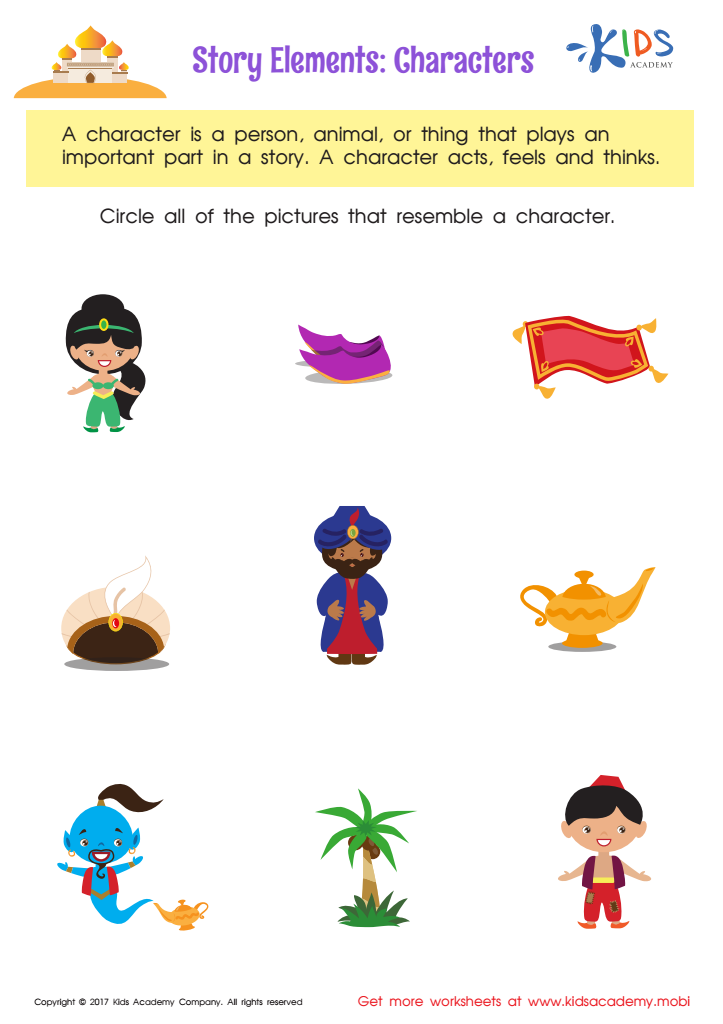
Story Elements Printable






Identifying story elements is crucial for children ages 6-8 as it enhances their reading comprehension and analytical skills. Parents and teachers should prioritize this practice because it helps young learners understand the structure of a narrative, which fosters a deeper appreciation for literature.
At this age, children are beginning to decode text and make connections between stories and their own experiences. By recognizing story elements—such as characters, setting, plot, conflict, and resolution—they learn how these components work together to convey meaning. This skill enriches their vocabulary and promotes critical thinking, enabling them to ask questions about motivations and conflicts within the story.
Furthermore, familiarizing children with story elements cultivates a love for reading, as they begin to identify patterns and anticipate story developments. This engagement not only stimulates their imagination but also improves their creative writing skills by providing a framework for their narratives.
Moreover, discussing story elements fosters communication skills as children articulate their understanding and opinions about the text. Involving parents and teachers in this process reinforces learning, creating an enriching environment that values literacy and encourages open dialogue. Overall, identifying story elements is an essential step in supporting young children's academic development and fostering lifelong literacy skills.








