Improve observational skills Worksheets for Ages 6-8
3 filtered results
-
From - To
Enhance your child's keen eye for detail with our "Improve Observational Skills Worksheets for Ages 6-8." Designed to boost critical thinking and attention to detail, these engaging exercises cleverly blend fun with learning. Each worksheet offers unique activities tailored to young minds, encouraging development in spotting differences, matching, and sequencing. Perfect for both classroom use and at-home practice, these printable sheets are an excellent resource for fostering focus, memory improvement, and cognitive skill enhancement. Unlock your child's potential and watch them thrive with heightened observational abilities that pave the way for future academic success!
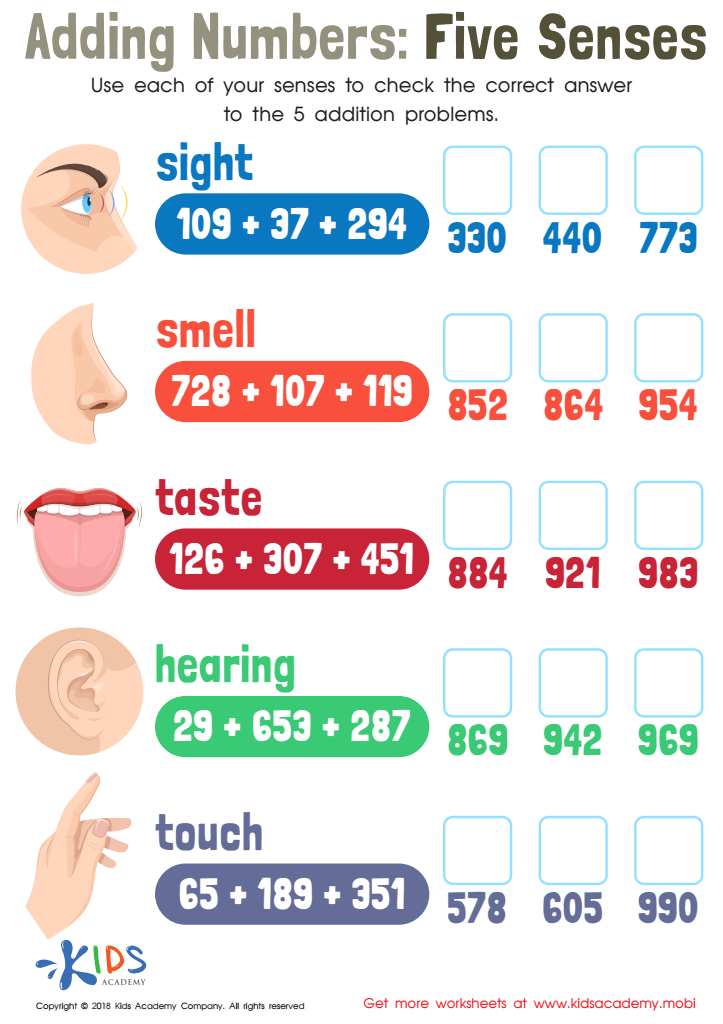
Adding Numbers: Five Senses Worksheet
 Assign to My Students
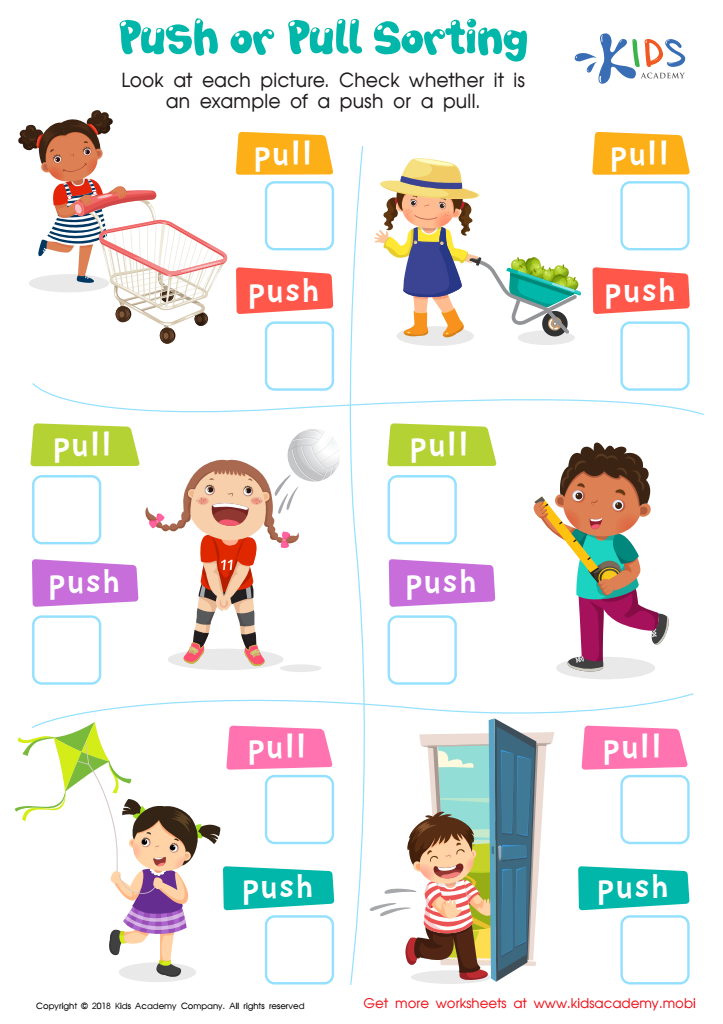
Push or Pull Sorting Worksheet








Improving observational skills in children aged 6-8 is crucial for their cognitive and social development. At this age, kids are naturally curious about the world around them. Enhanced observational skills help them better understand and interact with their environment. For parents and teachers, focusing on these abilities means laying a strong foundation for lifelong learning.
Firstly, observational skills accelerate academic learning. Noticing details can aid children in reading comprehension, solving math problems, and understanding scientific concepts. By attentively observing, they can grasp new information more quickly and accurately.
Secondly, strong observational skills foster critical thinking and problem-solving. Children learn to notice patterns, make connections, and draw conclusions. This analytical mindset is essential for success in various subjects and real-life situations.
Moreover, being observant helps kids develop emotional intelligence. They become more tuned into social cues, body language, and the emotions of others, which is vital for forming healthy relationships and effective communication.
Lastly, encouraging keen observation nurtures creativity and curiosity. Children inclined to notice the world around them tend to ask more questions, explore different perspectives, and find inventive solutions to challenges.
In essence, nurturing observational skills helps children become more attentive learners, keen thinkers, and empathetic individuals, enabling them to thrive both academically and personally.








