Learning addition Worksheets for Ages 6-8
7 filtered results
-
From - To
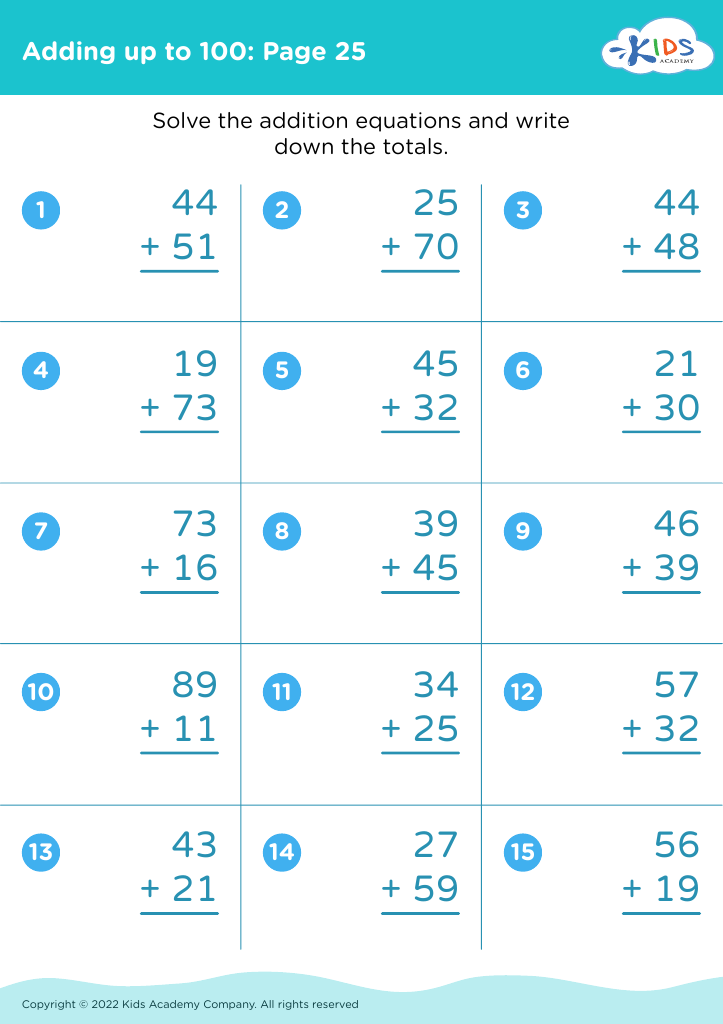
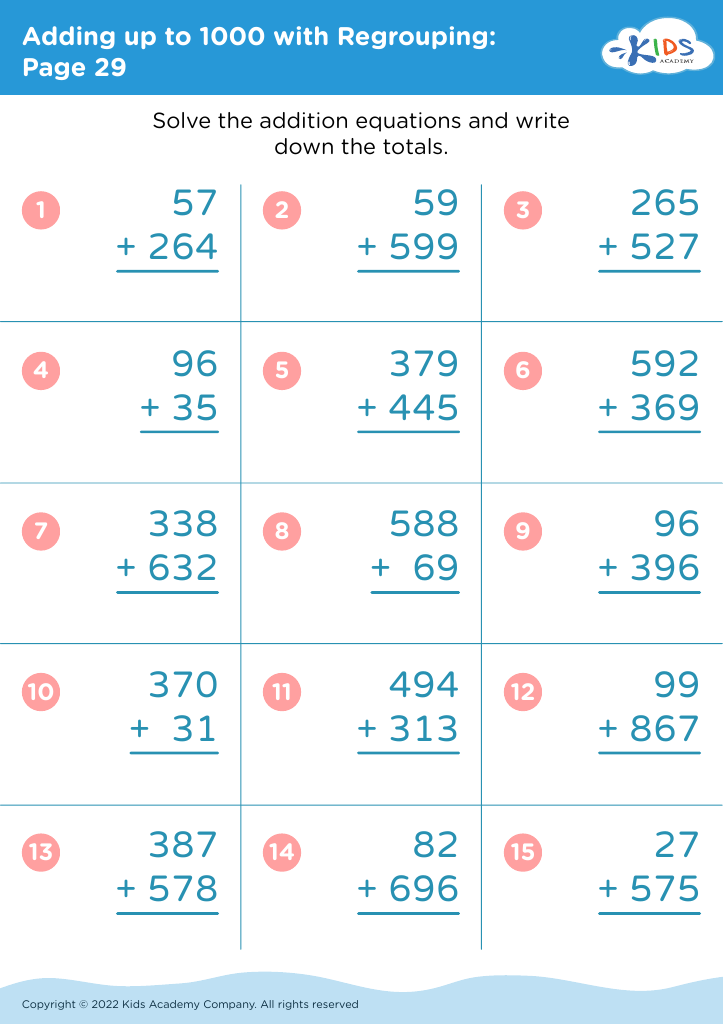
Discover our engaging Learning Addition Worksheets designed for ages 6-8! Perfect for young learners, these worksheets introduce basic addition concepts, enhance arithmetic skills, and boost confidence in math. Featuring fun themes, colorful graphics, and interactive exercises, our printable activities make learning addition enjoyable and effective. Tailored specifically for kids, each worksheet progresses in complexity to support gradual learning and retention. Ideal for parents, teachers, and homeschooling, these resources provide the foundation children need for math success. Start building strong math skills today with our Learning Addition Worksheets at the Kids Academy webpage!
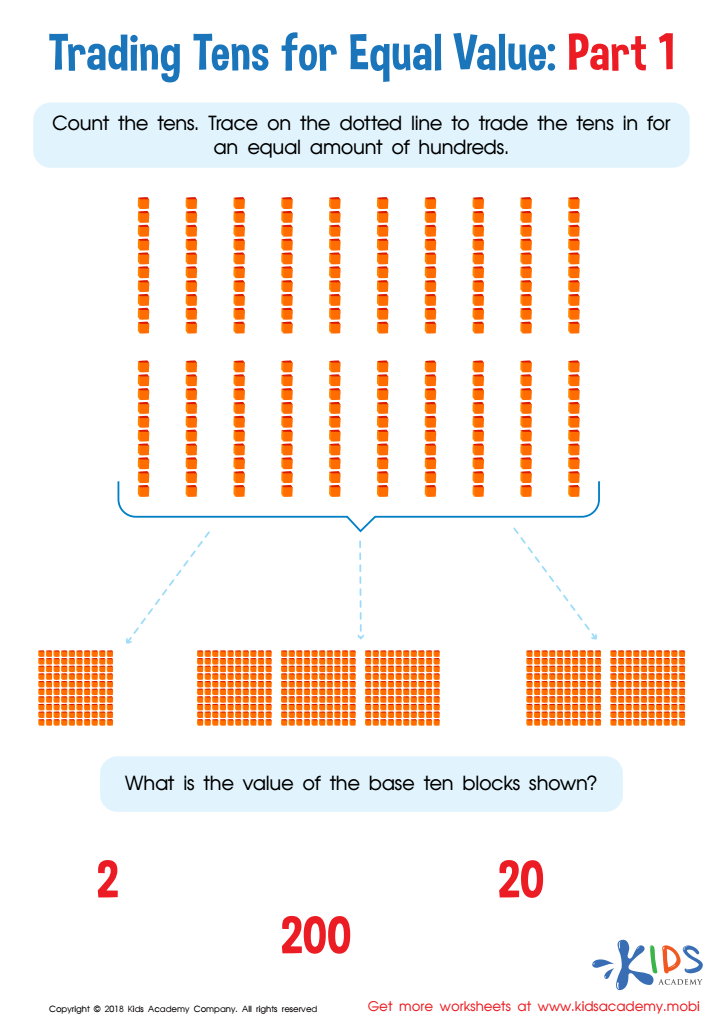
Trading Tens for Equal Value Worksheet: Part 1
 Assign to My Students
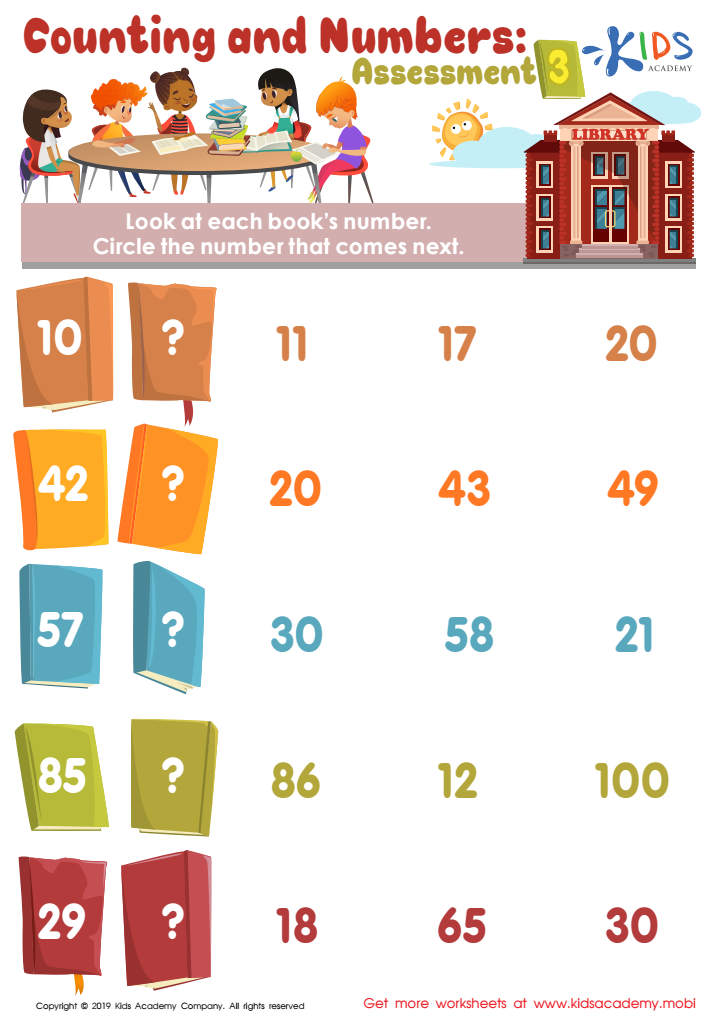
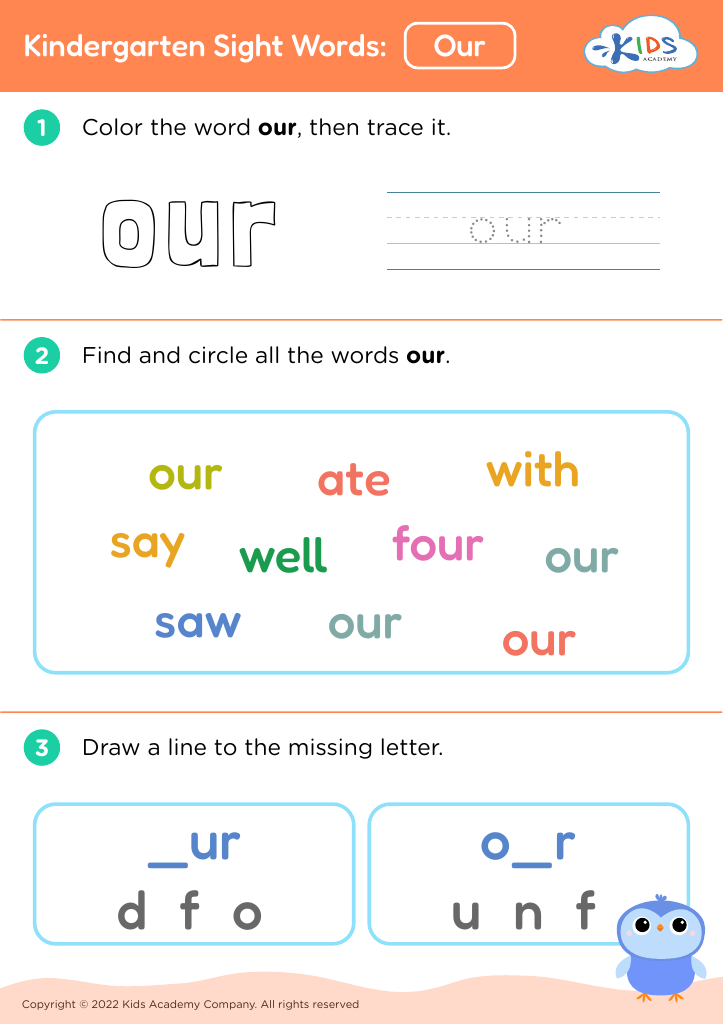
Counting and Numbers: Assessment Worksheet
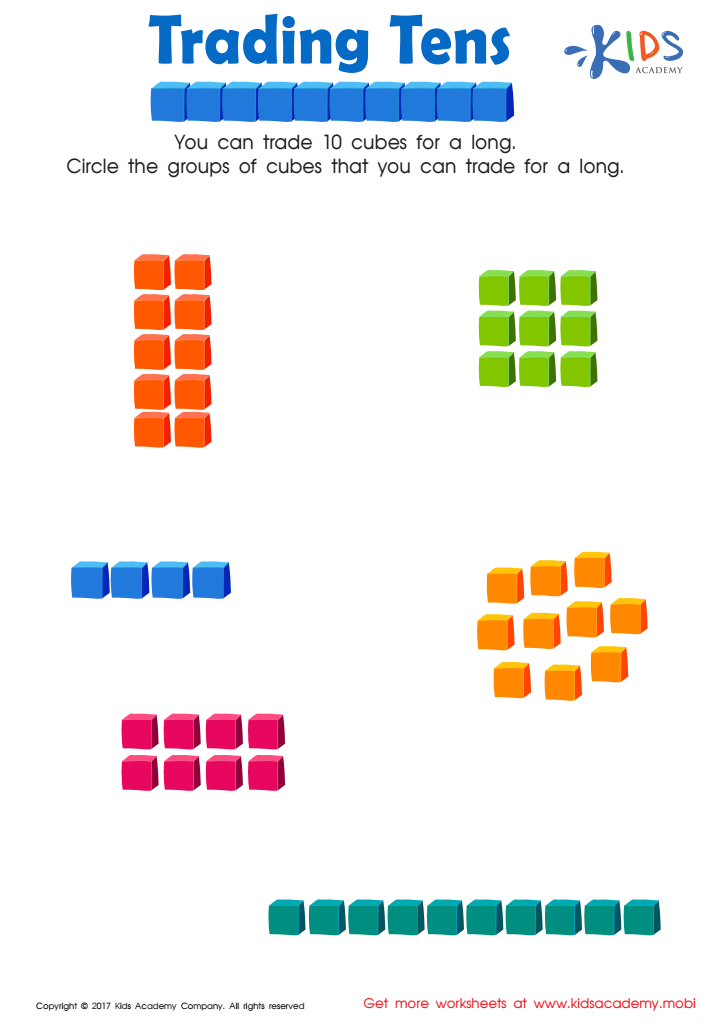
Trading Tens Worksheet
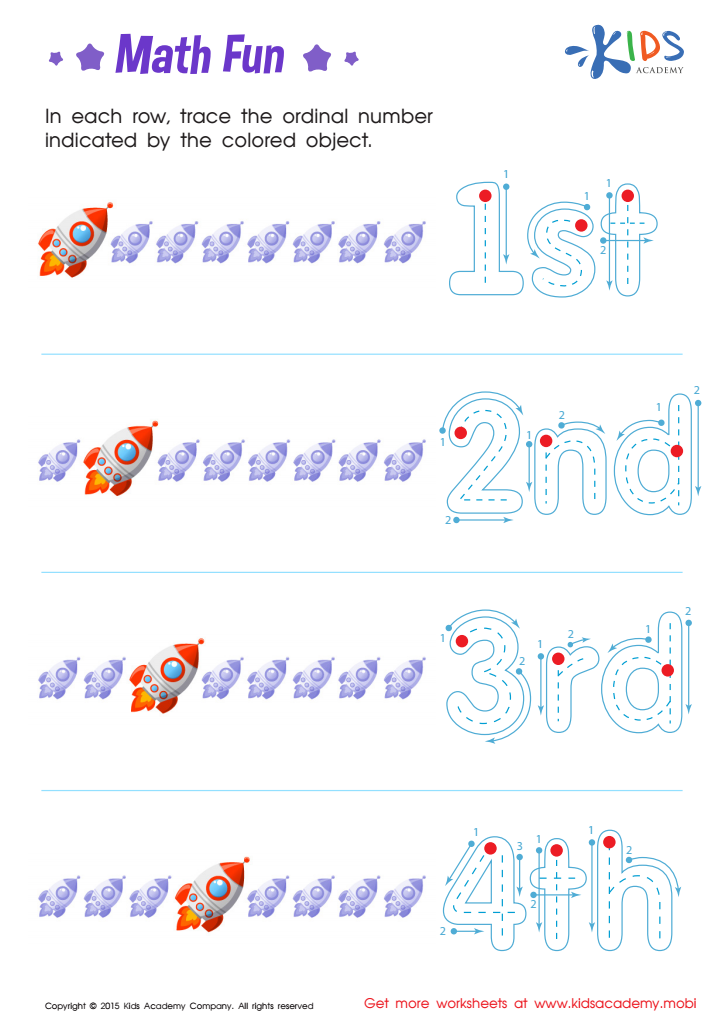
Ordinal Numbers: Math Fun Worksheet







.jpg)
Learning addition is a fundamental skill for children aged 6-8, acting as a cornerstone for their entire mathematical education. At this stage, grasping basic arithmetic lays the groundwork for more complex concepts like subtraction, multiplication, and division. Mastering addition boosts confidence, making children feel competent in their ability to handle numbers, which fosters a positive attitude towards learning math.
Parents and teachers should prioritize this skill because it integrates vital cognitive processes, such as memory, logical reasoning, and problem-solving. These skills extend beyond math, enhancing overall academic performance. Daily activities, like shopping, cooking, or even playing games, often require basic addition, making it a practical life skill.
Moreover, understanding addition helps in the development of number sense— the ability to comprehend, relate, and connect numbers. This understanding is crucial since it promotes analytical thinking and financial literacy, contributing to future successes in various fields. For children, learning in a supportive environment that includes parental and teacher involvement makes arithmetic fun and engaging, ensuring a deep-seated understanding of mathematical principles. Fostering these skills early on equips children with the tools they need for advanced academic pursuits and everyday life, helping them grow into confident and capable individuals.








